REGULATION INSTRUCTIONS
21
1.9 3.1
4
1.2
HI
HWO G CWI
HO
4.9
2.7
3.2
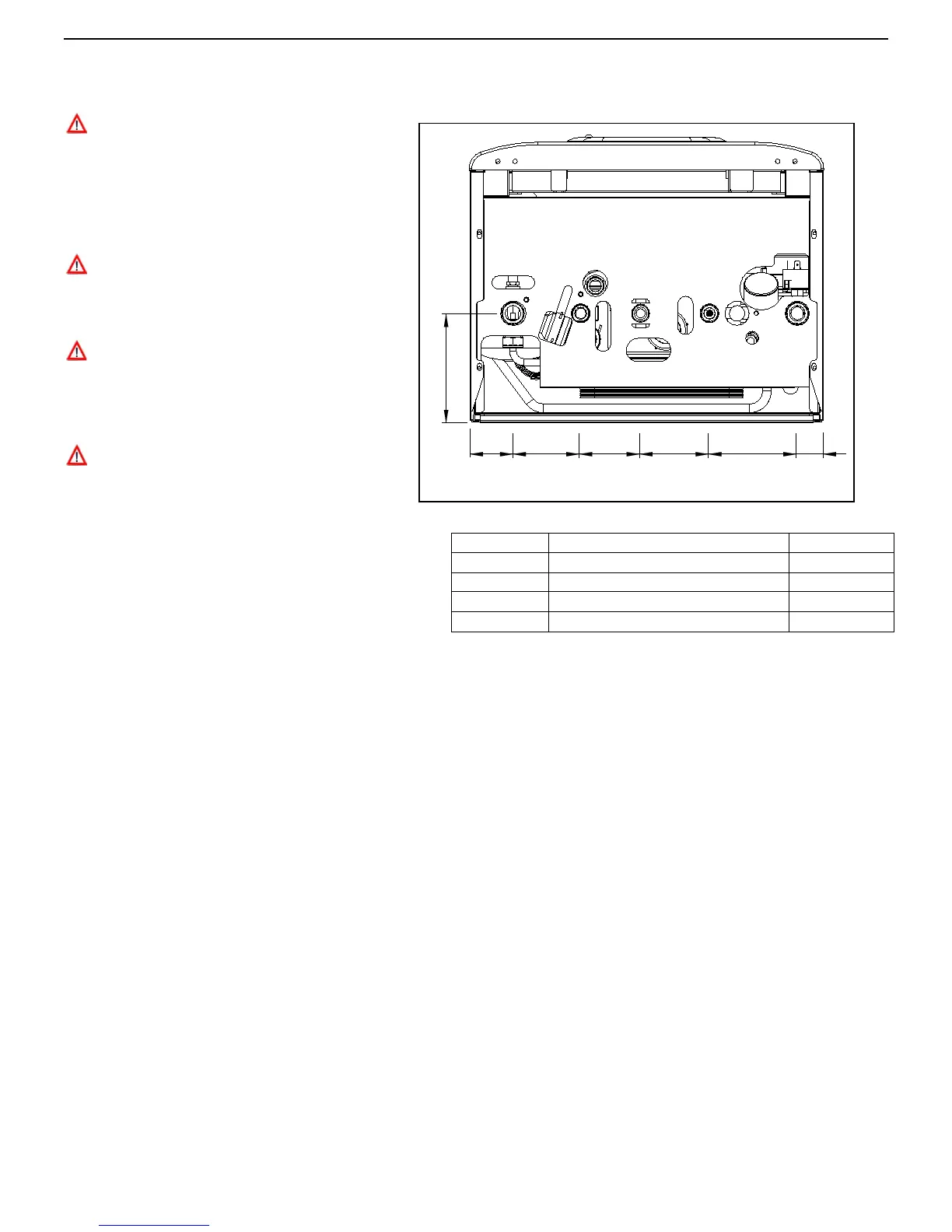
3.4 Water connections
In order to safeguard the heat
exchanger and circulation pump,
especially in case of water heater
replacement, it is recommended that
the system is hot-flushed to remove any
impurities (especially oil and grease)
from the pipes and radiators.
Make sure that the domestic water and
central heating pipes are not used to
ground the electrical system. The pipes
are totally unsuitable for this purpose.
Isolation Valves must be installed on
the heating and D.H.W circuits. This will
facilitate all maintenance and service
operations where the hot water needs
to be drained.
Water connection tail pieces / unions
are supplied with every unit and must be
used. These are the only fittings that
must be installed on to the unit. They
are designed to be tightened on to the
appropriate male thread along with the
fiber washer.
Failure to use these tail pieces will
cause the unit to leak and will VOID the
warranty.
To prevent vibration and noise coming from the system the system, do not use pipes of reduced diameter,
short radius elbows or severe reductions in the cross sections of the water passages.
In order to guarantee the reliability of the water heater and prevent permanent damage in areas with high water
inlet pressure too, a 30 psi (2 bar) pressure reducing valve should be fitted.
The water flowing out of the pressure/relief valve during its operation may be extremely hot. Before operating relief
valve, make sure drain line is installed to direct discharge to a safe location such as an open drain. Avoid scalding
and/or water damage.
A pressure relief valve is installed in this dual purpose water heater that is rated in accordance with and complying with
either The Standard for relief Valves and Automatic Shutoff Devices for Hot Water Supply Systems, ANSI Z21.22 CSA
4.4 Code.
The relief valve must be installed such that the discharge will be conducted to a suitable place for disposal when relief
occurs and that no reducing coupling or other restriction be installed in the discharge line. The discharge line must be
installed to allow complete drainage of both the valve and the line. If this unit is installed with a separate storage
vessel, the separate vessel must have its own temperature and pressure relief valve. No valve is to be placed between
the relief valve and the tank. This valve must also comply with The Standard for Relief Valves and Automatic Shutoff
Devices for Hot Water Supply Systems. ANSI Z21.22 or CSA 4.4. If a relief valve discharges periodically, this may be
due to thermal expansion in a closed water system. Contact the water supplier or local plumbing inspector on how to
correct this situation. Do not unplug relief valve.



 To Next Page