12-1
Chapter 12
Maintenance
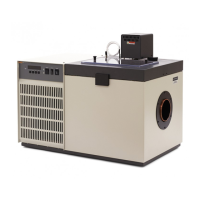
The calibration instrument has been designed with the utmost care. Ease of
operation and simplicity of maintenance have been a central theme in the
product development. Therefore, with proper care the instrument should require
very little maintenance. Avoid operating the instrument in dirty or dusty
environments.
• A battery is used to maintain operating parameters in the unit. All operating
parameters, including calibration parameters should be checked on a regular
basis to insure accuracy and proper operation of the instrument. See the
troubleshooting section for the procedure on checking the status of the
battery.
• If the outside of the bath becomes soiled, it may be wiped clean with a damp
cloth and mild detergent. Do not use harsh chemicals on the surface which
may damage the paint.
• Periodically check the bath fluid level to ensure that the level has not
dropped. A drop in the fluid level affects the stability of the bath. Changes in
fluid level are dependent upon several factors specific to the environment in
which the equipment is used. A schedule cannot be outlined to meet each
environmental setting. Therefore, the first year the bath should be checked
weekly with notes kept as to changes in bath fluid. After the first year, the
user can set up a maintenance schedule based on the data specific to the
application.
• Heat transfer medium lifetime is dependent upon the type of medium and the
environment. The fluid should be checked at least every month for the first
year and regularly thereafter. This fluid check provides a baseline for
knowledge of bath operation with clean, usable fluid. Once some fluids have
become compromised, the break down can occur rapidly. Particular attention
should be paid to the viscosity of the fluid. A significant change in the
viscosity can indicate that the fluid is contaminated, being used outside of its
temperature limits, contains ice particles, or is close to a chemical
breakdown. Once data has been gathered, a specific maintenance schedule
can be outline for the instrument. Refer to Section 8, General Operation, for
more information about the different types of fluids used in calibration baths.
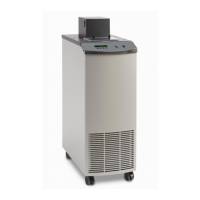
• Depending on the cleanliness of the environment, the internal parts (parts
behind the front cover only) of the cold bath should be cleaned and/or
checked at least every month for dust and dirt. Particular attention should be
paid to the condensing coil fins. The fins should be vacuumed or brushed free
of dust and dirt on a regular basis. Dust and dirt inhibit the operation of the
condensing coil and thus compromise the performance and life-time of the
cooling system.


 To Next Page