Page 9
2.0 Safety
2.1 Safety Working
Before using this chipper, make sure that you are trained and fluent in its operation.
Know the location of and how to use all the safety features. Know how to control the
feed and stop the chipper in an emergency. Be familiar with the hazards and safe
working practices to prevent injury and damage to property and chipper. Also be
aware of the legal restrictions for personnel and towing with vehicles.
• The minimum age for service personnel is 18
years. Personnel aged 16 can use the
chipper for training under supervision by a
suitably trained person of 18 years or over.
• Operators and personnel working with this
chipper must not be under the influence of
alcohol, drugs or medication that would impair
judgement, concentration or reaction times.
Excessive tiredness is also a risk.
• In use, woodchip and debris are ejected with
considerable force from the chute and can
travel up to 10m. Make sure the chute directs
woodchip to a safe location so that no one can
be harmed or property damaged. Do not allow
discharge to be directed onto roads or public
rights of way.
• Maintain a 10m exclusion zone around the
chipper and clearly mark if in a public area.
Keep this area free of material build up.
• Make sure the chipper is on even, level and
stable ground and cannot move or topple
when in use. Use wheel chocks if necessary.
• Keep children and animals well away from the
working area.
• The chipper operator must wear protective
equipment:
▪ Chainsaw safety helmet (EN 397) with
mesh visor (EN 1731)
▪ Correctly rated ear defenders (EN 352)
▪ Work gloves with elasticated wrist bands.
▪ Steel toe cap boots (EN345-1)
▪ Close fitting heavy duty non-snag clothing.
Hi-viz clothing (EN 471) if needed.
▪ Protect breathing with a face mask if
appropriate. Some plant material can give
off harmful dust and poisonous vapours.
This may cause respiratory problems or
serious poisoning. Check the material to
be processed before starting.
• DO NOT wear rings, bracelets, watches,
jewellery or anything that could be caught on
the material being fed and draw you into the
chipper.
• All personnel operating or feeding material into
the chipper must wear heavy duty non-snag
clothing to help prevent being caught on
material and drawn into the chipper. The feed
mechanism of this chipper uses high powered
hydraulic motors to drive sharp toothed rollers
that feed material into the cutting blades. DO
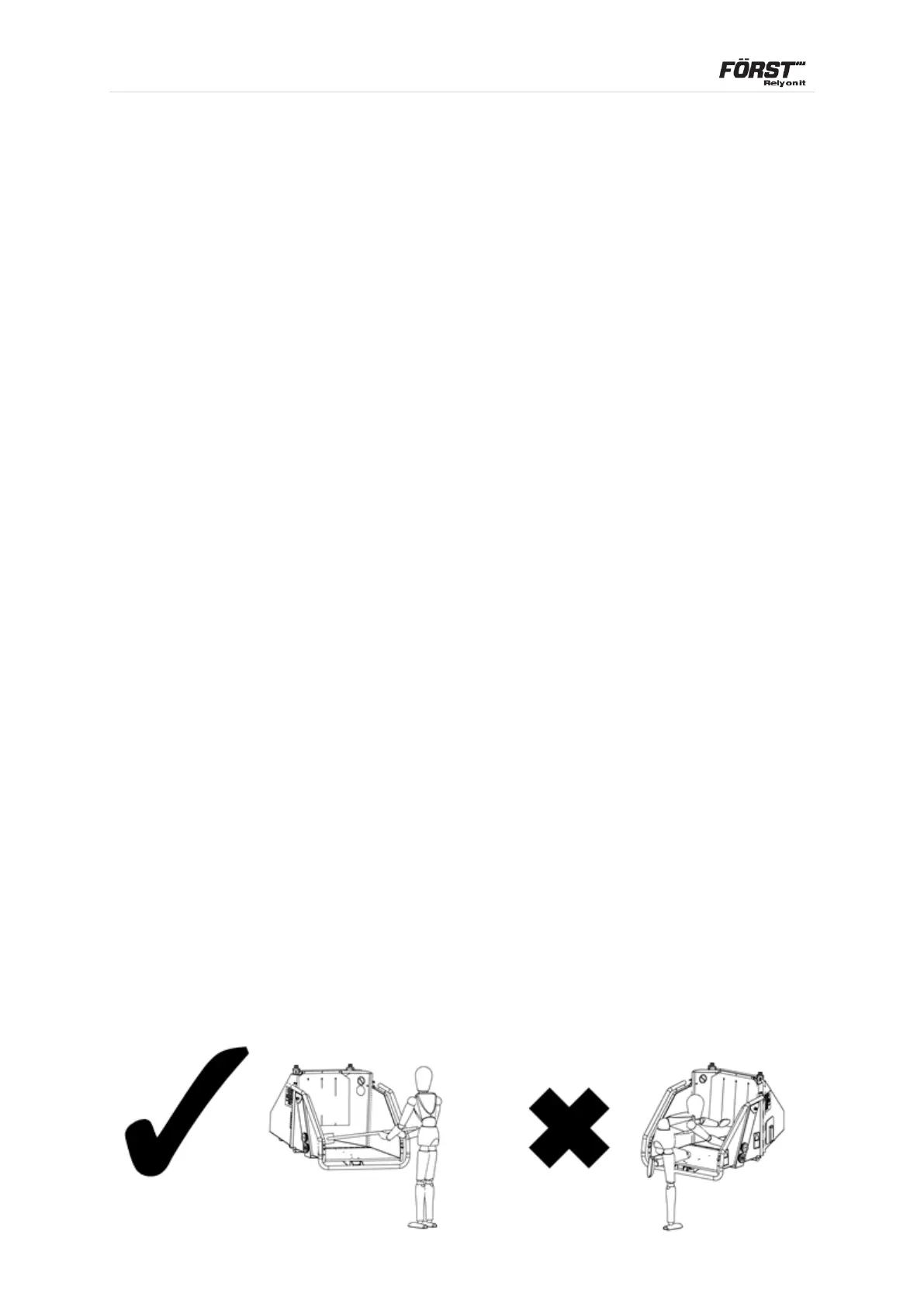
NOT take risks with it. NEVER ASSIST ANY
MATERIAL INTO THE FEED ROLLERS WITH
HANDS OR FEET. Use the wooden paddle or
further long material if necessary.
• Never climb onto the hopper area while the
chipper is in operation.
• CAUTION! – Keep hands and feet outside the
hopper. Do not attempt to force material into
the chipper by hand – use a piece of wood if
necessary.
• Material can be forcibly ejected from the hopper
towards the operator. Ensure full head and
face protection is worn.
• Very twisted material should be trimmed into
manageable pieces. Failure to do this can
result in material extending outside the hopper,
moving aggressively side-to-side creating a
hazard to the operator.
• Do not try to force material over 150mm in
diameter into the chipper.
• Carefully site the chipper so operators can work
furthest from any local danger. For example,
on a road side, place chipper so operators work
on the verge and not in the road exposed to
traffic



 To Next Page