Page 34
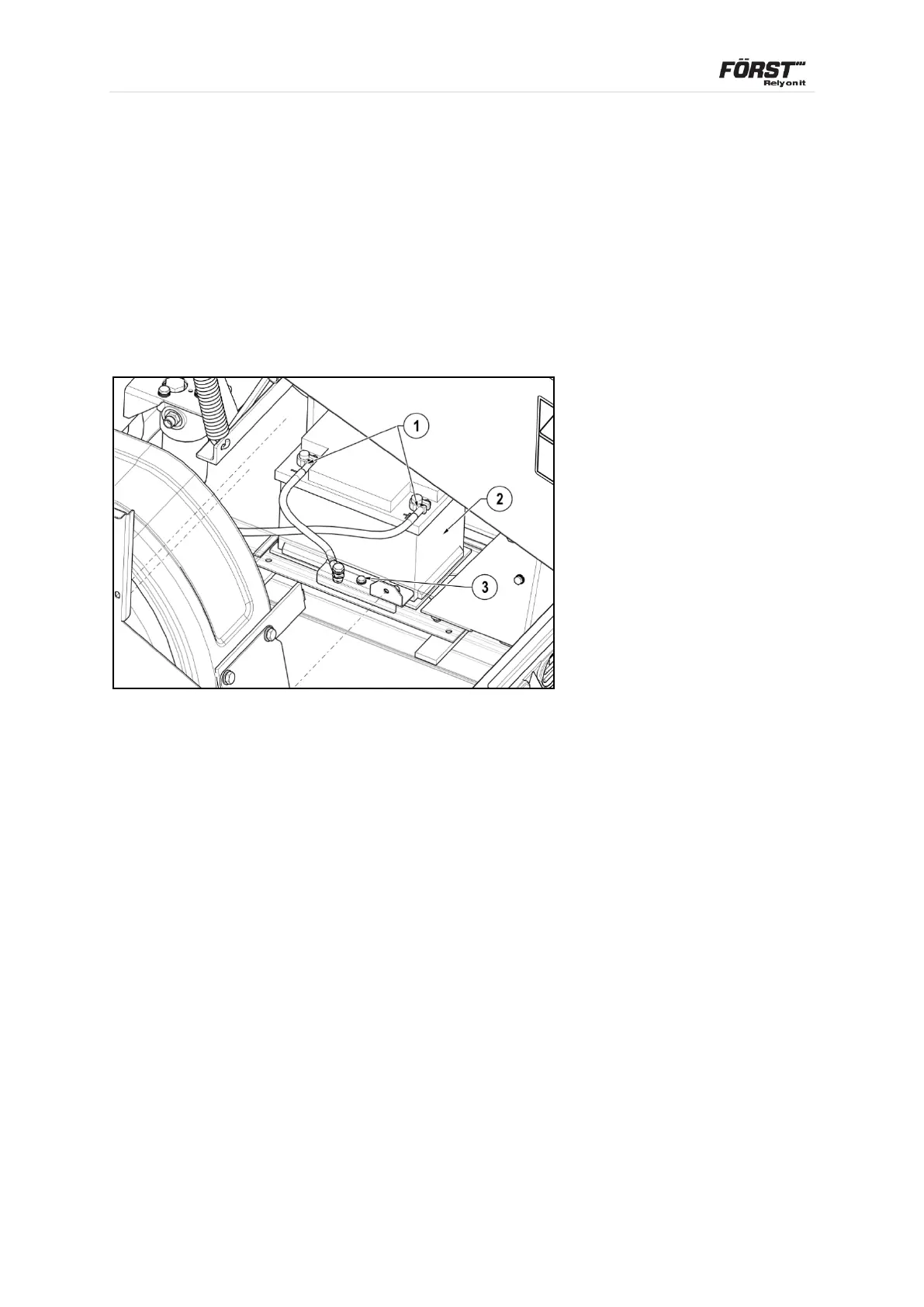
7. Remove battery. Clean with a moist anti-static cloth to avoid electrostatic
discharge and explosion risk. Charge and check electrolyte level if
appropriate.
8. Clean out battery tray. Apply a thin film of petroleum jelly to terminals to
prevent corrosion.
9. Replacement is the reversal of removal. Ensure to replace/fit any vent pipes.
Leave at least one vent open otherwise there is an explosion risk. This also
applies to old batteries removed for disposal/recycling. Swap new battery
positive terminal protective cover to the old battery positive terminal to help
prevent short circuits and sparks.
5.11.5 Charging
1. Remove battery from machine, disconnect negative terminal first.
2. Ensure good ventilation.
3. Use suitable direct current mains chargers only.
4. Connect battery positive terminal to charger output positive. Connect the
negative terminal accordingly.
5. After connection, switch on charger. When charging is complete, switch off
charger then disconnect battery.
6. Charging current recommendation is 10% of the battery Ah power rating.
7. Use a charger with a constant charging voltage of 14.4V.
8. If the acid temperature rises above 38°C, stop charging.
9. The battery is fully charged when the charging voltage or acid specific gravity
has stopped rising for two hours.
5.11.6 Jump starting
1. Use a standardised jumper cable to DIN 72553 only and follow the
instructions.
2. Only use batteries of the same voltage.
3. Switch off ignition on machine and support vehicle. The two must not touch
and all lights/equipment must be turned off.



 To Next Page