release the clutch pedal. When upshifting, wait long
enough for the engine speed to decrease to the road
speed. When downshifting, increase the engine
speed to match the road speed. Again, depress the
clutch pedal part way and then move the shift lever
to the next gear position. Fully release the clutch
pedal after completing the shift.
NOTICE
Riding the clutch while driving is damaging to
the clutch because partial clutch engagement
causes slippage and heat. Resting your foot on
the clutch pedal will also put a constant thrust
load on the release bearing, thinning the bearing
lubricant and increasing the wear on the bearing.
Holding the Vehicle On an Incline
Always use the vehicle service brakes to prevent the
vehicle from rolling backwards while stopped on a
hill. Slipping the clutch on a hill to maintain vehicle
position will quickly damage the clutch assembly.
Coasting
Coasting with the clutch pedal depressed and the
transmission in a low gear can cause high driven
disc speed. The clutch speed can be much higher
under these conditions than when the engine is driv-
ing the clutch. This condition creates a hazardous
situation due to the lack of vehicle control and due to
the high clutch disc speed. Engaging the clutch
under these conditions can cause component dam-
age because of the shock loads to the clutch and
drivetrain.
WARNING
Always shift into the gear that is correct for the
traveling speed of the vehicle and engage the
clutch. Coasting with the clutch disengaged can
prevent engagement of the correct transmission
gear which can cause loss of vehicle control,
possibly resulting in personal injury or property
damage.
High clutch disc speeds while coasting can also
cause the clutch facing to be thrown off the disc.
Flying debris from the clutch can cause injury to
persons in the cab.
Clutch Maintenance
Checking the Clutch Adjustment
Report erratic clutch operation as soon as possible to
give maintenance personnel a chance to inspect, lu-
bricate, and adjust the clutch components. Notice
any gradual decrease in the distance the clutch
pedal moves before resistance is felt.
NOTICE
Operating the vehicle with incorrect free pedal
could result in clutch damage.
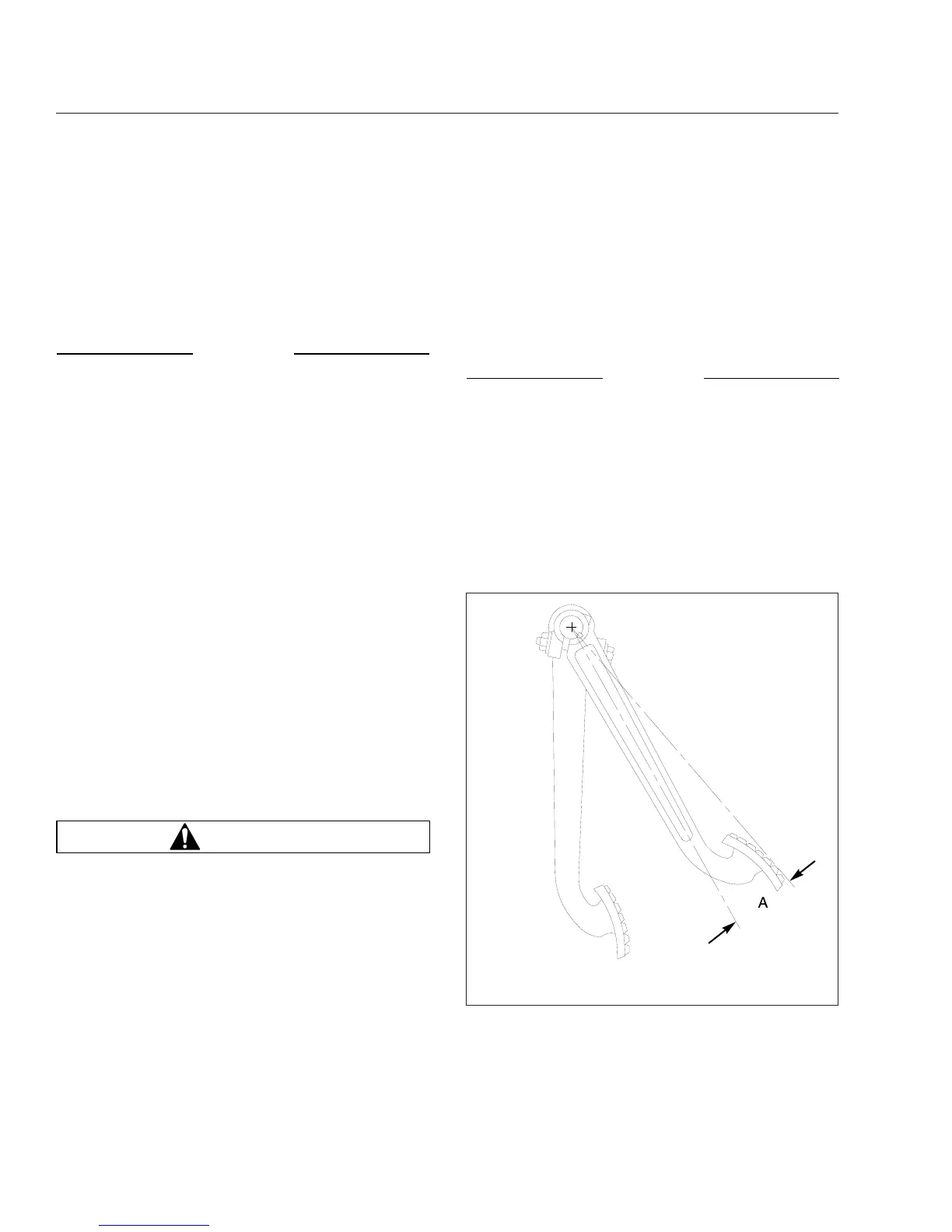
A correctly adjusted clutch must have about 3/4 inch
(19 mm) of travel at the top of its stroke before a
stronger resistance can be felt. See
Fig. 13.4.Ifthe
free pedal travel is less than this distance, have the
clutch adjusted.
Check the clutch free pedal travel daily and note it in
the driver’s report.
Adjusting the Clutch
Clutches have an internal adjustment and external
linkage adjustment. See Group 25 of the 108SD and
02/09/96 f250306
A. Free Pedal
Fig. 13.4, Clutch Free Pedal Travel
Manual Transmissions and Clutch
13.7




 To Next Page