2.1
Push the reset button on the air intake
restriction indicator located on the air
cleaner, if equipped.
2.2
Check the engine air intake duct from the
air cleaner to the engine intake. Make
sure the duct components are secure and
airtight.
2.3
Check the vacuator (spitter) valve(s) for
damage, and make sure the lips of the
valve are pliable and free of debris.
3.
Check the engine oil level.
NOTICE
Operating the engine with the oil level below the
minimum fill (or "add") mark or above the maxi-
mum fill (or "full") mark could result in engine
damage.
3.1
Check the oil level with the vehicle parked
on a level surface. See the engine manu-
facturer’s guidelines for engine shutdown
time requirements prior to checking the oil
level.
IMPORTANT: Vehicles domiciled in the U.S.
or Canada require the use of CJ-4 engine oil
with less than 1% sulfated ash. Failure to
use CJ-4 oil may void the warranty on emis-
sion aftertreatment components.
3.2
If the oil level is at or below the minimum
fill (or "add") mark on the dipstick, add
enough oil to maintain the level between
the minimum and maximum fill marks. See
the engine operation manual for recom-
mended lubricants.
For natural gas vehicles, use only Exxon
Busgard® Geo 15W-40 natural gas engine
oil.
4.
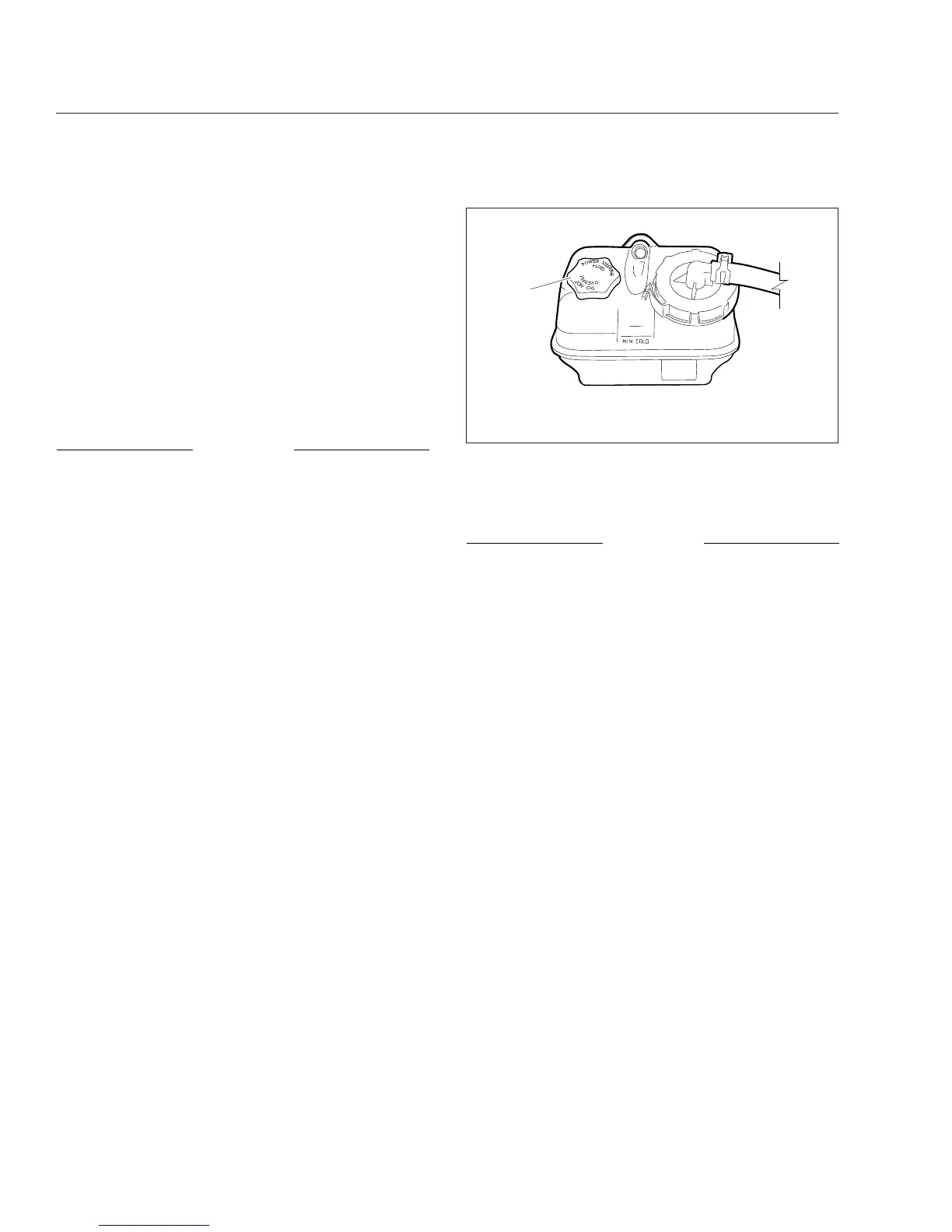
Check the power steering reservoir fluid level.
The power steering fluid level should be between
the MIN COLD mark and the middle mark just
above it. See
Fig. 21.6. If needed, fill the reser-
voir with automatic transmission fluid that meets
Dexron III or TES-389 specifications.
IMPORTANT: The surge tank must be cool to
check the coolant level.
5.
Check the engine coolant level in the radiator
surge tank.
NOTICE
Coolant must be filled to the COLD MAX line of
the surge tank. Low coolant could result in en-
gine overheating, which could cause engine dam-
age.
5.1
If the coolant is low, fill the surge tank to
the MAX line with a 50/50 mixture of water
and the type of antifreeze currently in-
stalled in your vehicle.
For natural gas vehicles, use only Fleet-
guard ES Compleat
™
EG Premix 50/50
engine coolant.
5.2
If the surge tank was empty, start the en-
gine after refilling and check the level
again when the engine is at operating
temperature.
6.
Inspect visible engine wiring for damage or
looseness. See Fig. 21.7.
7.
Inspect visible frame rails for missing bolts, shiny
areas, or rust streaks.
Cab Inspection
1.
Push the reset button on the dash-mounted air
intake restriction indicator, if equipped.
2.
With the ignition switch in the OFF position,
check the air-pressure warning system.
05/21/2007
1
f462079
1. Filler Cap
Fig. 21.6, Power Steering Fluid Reservoir
Pre- and Post-Trip Inspections and Maintenance
21.5




 To Next Page