Appendix B - Settings and Signals
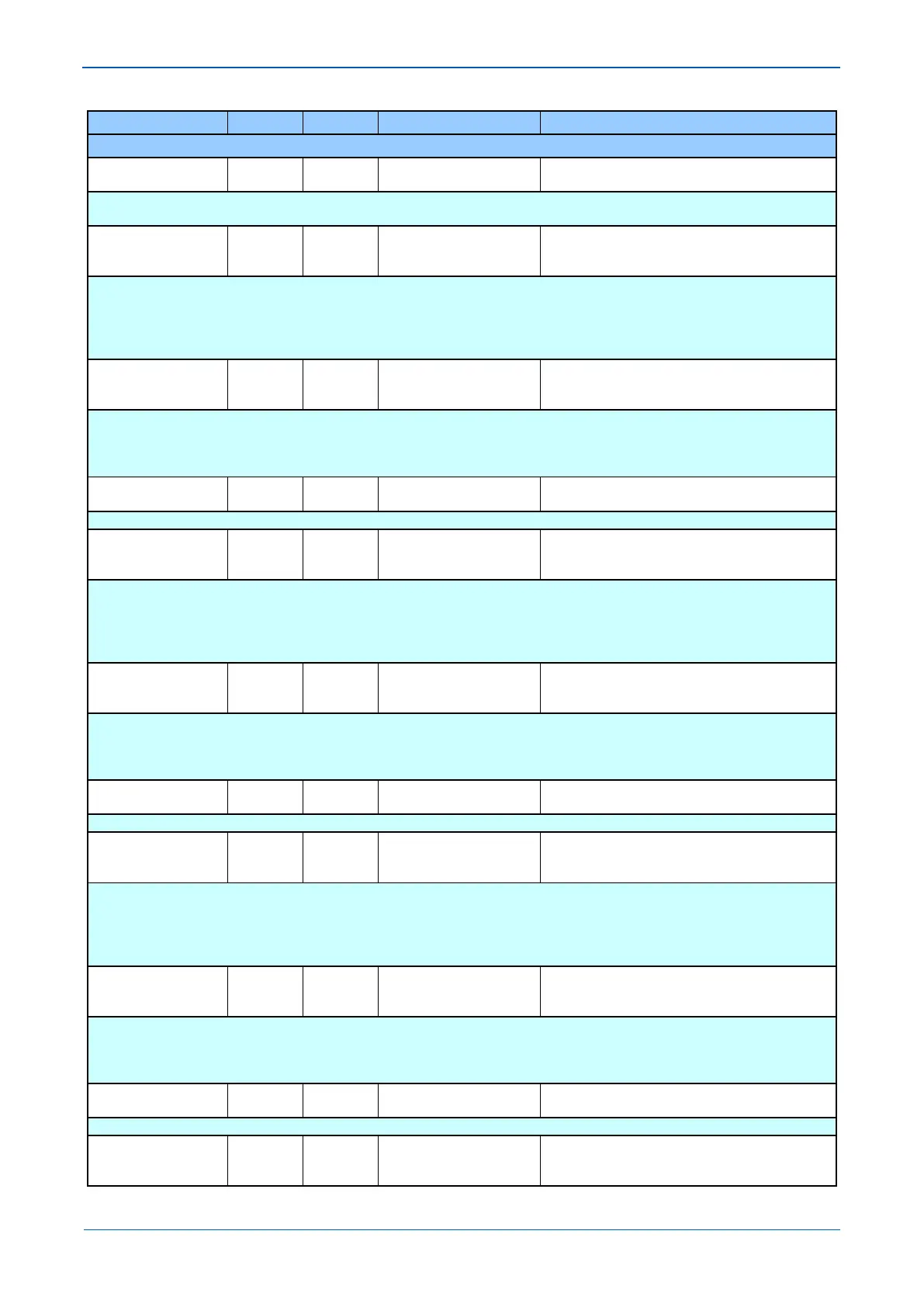
MENU TEXT COL ROW DEFAULT SETTING AVAILABLE OPTIONS
DESCRIPTION
Alarm Level 20 81 0.25
From 0.05 to 0.95 in steps of 0.01
[Courier Number (percentage)]
This setting is the % of errored/lossed messages allowed before the Time out flag is set for the affected channel. This will also initiate the
comm Fail timer.
IM1 Cmd Type 20 82 Permissive
Permissive
Setting that defines the operative mode of the received InterMiCOM_1 signal.
When ‘Direct’ tripping is chosen, for security reasons 2 consecutive valid messages have to be received before a change in the signal status
will be acknowledged. That will impose an additional 1-2 ms delay comparing to ‘Permissive’ mode.
Set ‘Direct’ in Direct Transfer Tripping (Intertripping) applications.
Set ‘Permissive’ to accommodate any Permissive or Blocking scheme.
IM1 FallBackMode 20 83 Default
Latched
Setting that defines the status of IM1 signal in case of heavy noise and message synchronization being lost.
If set to Latching the last valid IM1 status will be maintained until the new valid message is received.
If set to Default, the IM1 status, pre-defined by the user in IM1 Default Value cell will be set. A new valid message will replace IM1 Default
Value, once the channel recovers.
IM1 DefaultValue 20 84 0
0 or 1
[Unsigned Integer(16 bit)]
Setting that defines the IM1 fallback status.
IM2 Cmd Type 20 85 Permissive
Permissive
Setting that defines the operative mode of the received InterMiCOM_2 signal.
When ‘Direct’ tripping is chosen, for security reasons 2 consecutive valid messages have to be received before a change in the signal status
will be acknowledged. That will impose an additional 1-2 ms delay comparing to ‘Permissive’ mode.
Set ‘Direct’ in Direct Transfer Tripping (Intertripping) applications.
Set ‘Permissive’ to accommodate any Permissive or Blocking scheme.
IM2 FallBackMode 20 86 Default
Latched
Setting that defines the status of IM2 signal in case of heavy noise and message synchronization being lost.
If set to Latching the last valid IM2 status will be maintained until the new valid message is received.
If set to Default, the IM2 status, pre-defined by the user in IM2 Default Value cell will be set. A new valid message will replace IM2 Default
Value, once the channel recovers.
IM2 DefaultValue 20 87 0
0 or 1
[Unsigned Integer(16 bit)]
Setting that defines the IM2 fallback status.
IM3 Cmd Type 20 88 Permissive
Permissive
Setting that defines the operative mode of the received InterMiCOM_3 signal.
When ‘Direct’ tripping is chosen, for security reasons 2 consecutive valid messages have to be received before a change in the signal status
will be acknowledged. That will impose an additional 1-2 ms delay comparing to ‘Permissive’ mode.
Set ‘Direct’ in Direct Transfer Tripping (Intertripping) applications.
Set ‘Permissive’ to accommodate any Permissive or Blocking scheme.
IM3 FallBackMode 20 89 Default
Latched
Setting that defines the status of IM3 signal in case of heavy noise and message synchronization being lost.
If set to Latching the last valid IM3 status will be maintained until the new valid message is received.
If set to Default, the IM3 status, pre-defined by the user in IM3 Default Value cell will be set. A new valid message will replace IM3 Default
Value, once the channel recovers.
IM3 DefaultValue 20 8A 0
0 or 1
[Unsigned Integer(16 bit)]
Setting that defines the IM3 fallback status.
IM4 Cmd Type 20 8B Permissive
Permissive



 To Next Page