2.1 Overview
Today's digital cameras not only deliver images but offer much more func-
tionality. Processing the image, appending the results to the image data
stream, controlling external hardware, and doing the real-time part of the
application are common features of machine vision cameras.
The intention of Gen<i>Cam is to provide a generic programming interface for
all cameras. No matter what interface technology (GigE Vision, Camera Link,
1394 DCAM, USB) is used or what features are implemented the application
programming interface (API) remains the same.
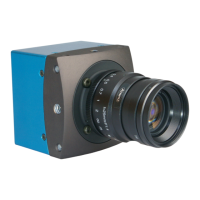
Mikrotron EoSens mini1 & mini2 cameras are GigE Vision compliant. The GigE
Vision standard uses Ethernet as the hardware interface to connect a camera
to its host. GigE Vision is based on GEN<i>CAM and thus ensures compatibility
to a wide range of programming interfaces and applications.
The configuration, status and control capabilities of the cameras are access-
ible via camera features. This manual provides an overview of the features for
mini1 and mini2 cameras.
There are a number of standard features similar to all GigE Vision compliant
cameras, e.g. the features used to configure communication via Ethernet. Not
all of these features are described in this manual. A detailed and complete
description provides the document GEN<i>CAM Standard Features Naming
Convention. It can be downloaded from the GEN<i>CAM homepage
http://www.genicam.org/.
This document provides the most important standard features and the defin-
itions of all camera related features. It is explained in detail how to use them
for programming.
INFO Use a GEV-Viewer to show all available features of the camera (e.g. GEVPlayer
from Pleora).
GEN<i>CAM specification
This manual is based on the GEN<i>CAM Standard Features Naming Con-
vention, Version 1.2.1, 2008-08-19 from the GEN<i>CAM Organisation at www.-
genicam.org
Introduction to GenICam
MikrotronGmbH / mini1 / CAMMC1370/71-RG / 2021 10 - 67


 To Next Page