Greenlee Textron / Subsidiary of Textron Inc.
16
4455 Boeing Dr., Rockford, IL 61109-2988 815/397-7070
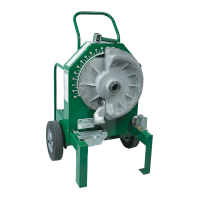
555 Electric Bender
← Y →
←
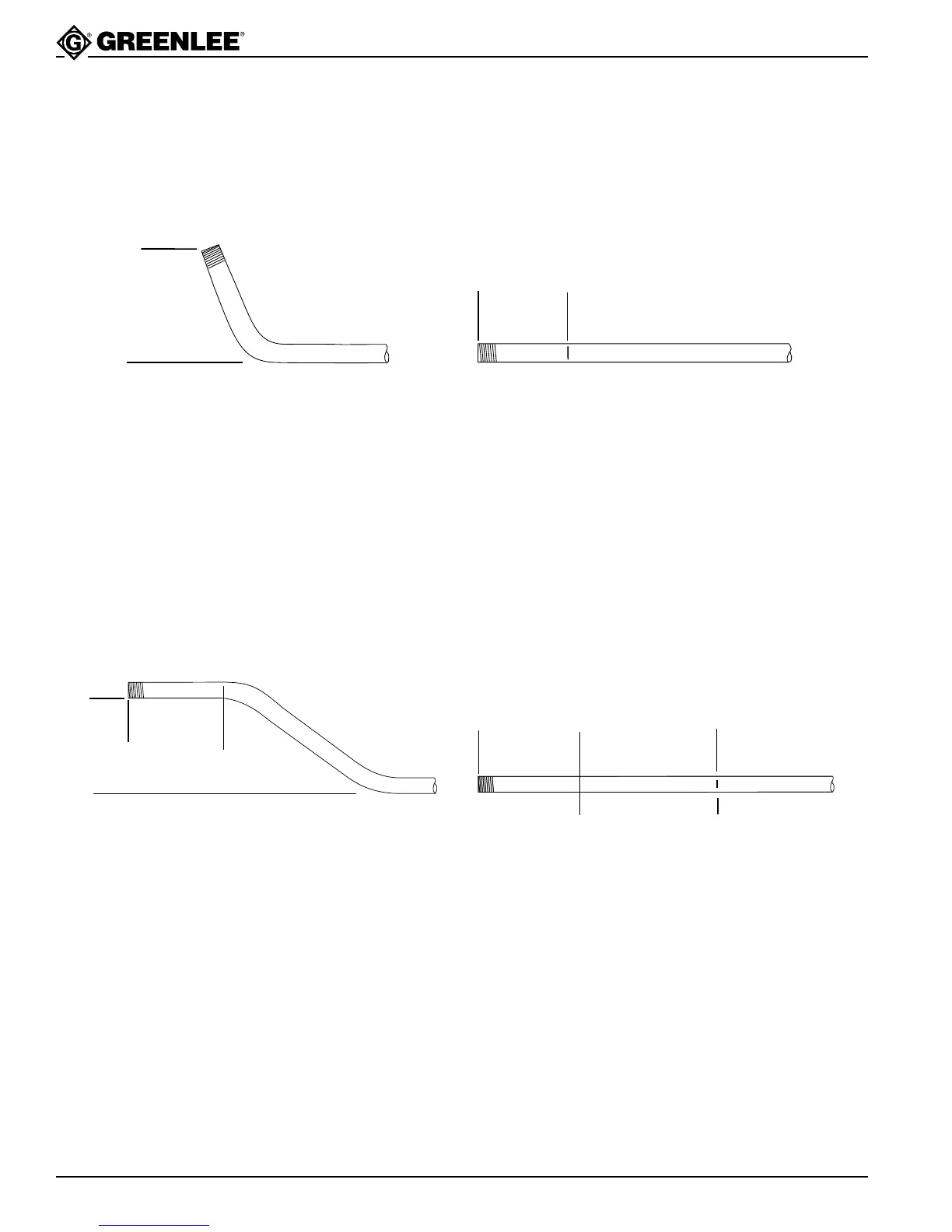
HEIGHT
ANGLE
MARK
←
←
←
←
←
L1
→
←
LENGTH – X
→
←
HEIGHT
→
←
LENGTH
→
START OF
FIRST
BEND
ANGLE
BENDING
MARK 1
BENDING
MARK 2
→
→
Special Bending Information
1. Subtract the X dimension for the size of conduit to be bent from the desired length.
2. Place your first mark this distance from the end of the conduit.
3. Go to the following chart for the size and type of conduit you are to bend.
4. Look down the ANGLE column until you come to the angles you want to bend.
5. Look at the numbers in the row preceded by L1 and pick the one that is directly under the height (H) you want.
6. Place a second mark this distance from your first mark.
7. Make your first bend after placing the front edge of the shoe hook on the first mark and your second bend
after placing the front edge of the shoe hook under the second mark.
The following describes a means for laying out the starting points for various types of bends. It will give very
accurate measurements for heights and bend angles commonly used.
Stubs:
Setting Up Your Bends
1. Go to the following Bending Information Chart for the size and type of conduit you are to bend.
2. Look down the ANGLE column until you come to the angle you want to bend.
3. Look at the numbers in the row preceded by Y and pick the one that is directly under the height (H) you want.
4. Place a mark this distance from the end of the conduit.
5. Make your bend after positioning the front edge of the shoe hook on your mark.
Offsets: (Controlling the start of the first bend)


 To Next Page