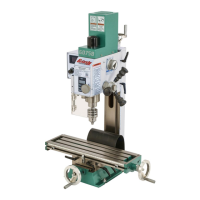
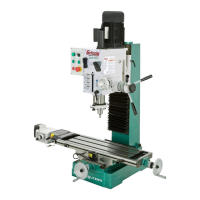
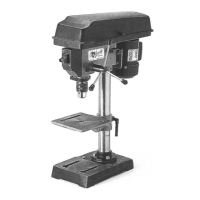
Model G7947/G7948 (Mfd. Since 01/21)
-19 -
Anchoring machinery to the floor prevents tipping
or shifting and reduces vibration that may occur
during operation, resulting in a machine that runs
slightly quieter and feels more solid.
If the machine will be installed in a commercial or
workplace setting, or if it is permanently connect-
ed (hardwired) to the power supply, local codes
may require that it be anchored to the floor.
If not required by any local codes, fastening the
machine to the floor is an optional step. If you
choose not to do this with your machine, we rec-
ommend placing it on machine mounts, as these
provide an easy method for leveling and they have
vibration-absorbing pads.
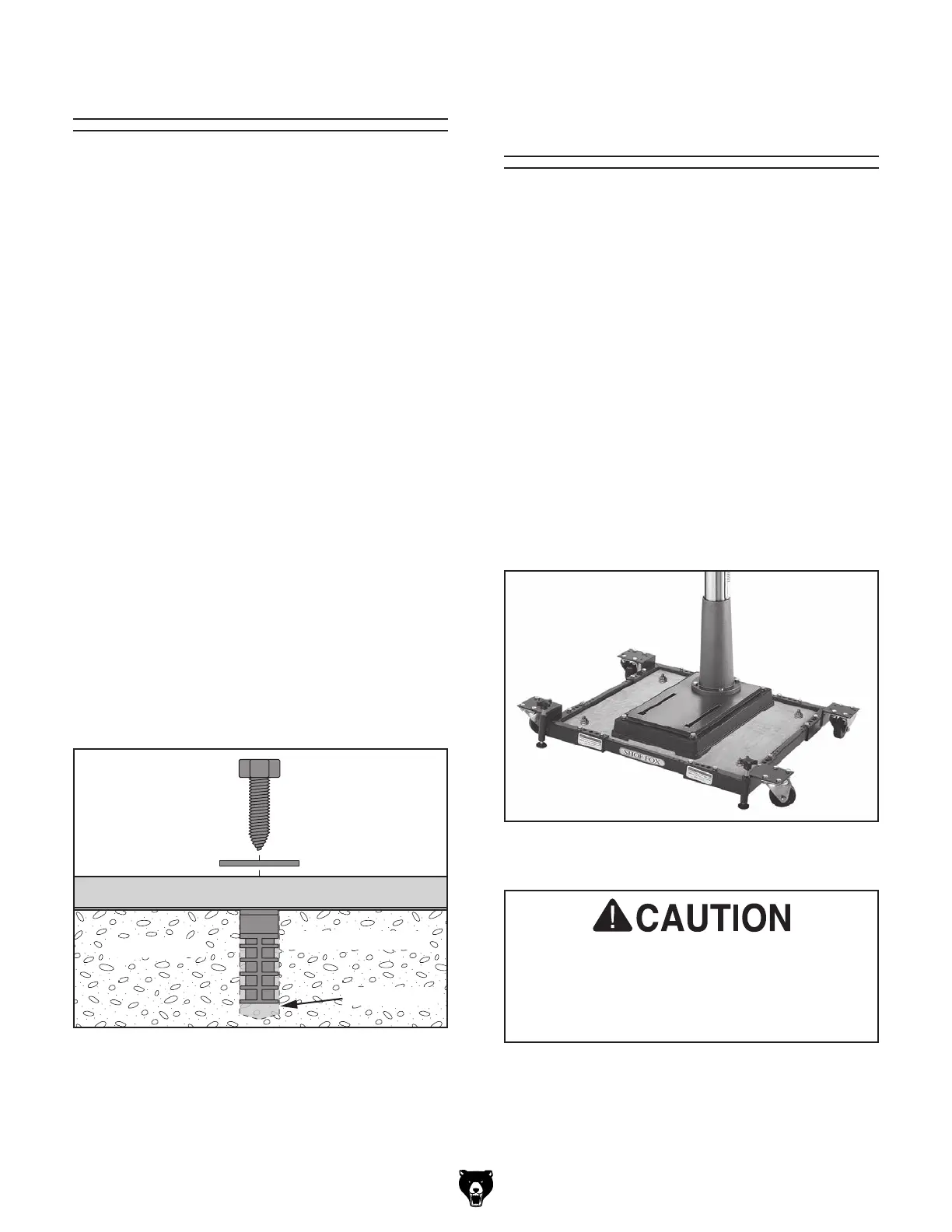
Lag shield anchors with lag screws (see below)
are a popular way to anchor machinery to a con-
crete floor, because the anchors sit flush with the
floor surface, making it easy to unbolt and move
the machine later, if needed. However, anytime
local codes apply, you MUST follow the anchoring
methodology specified by the code.
Machine Base
Concrete
Lag Screw
Lag Shield Anchor
Flat Washer
Drilled Hole
Figure 10. Popular method for anchoring
machinery to a concrete floor.
Anchoring to Concrete Floors
Number of Mounting Holes ............................ 4
Diameter of Mounting Hardware
.................
1
⁄2"
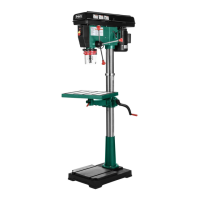
Because the drill press is top-heavy by nature, we
recommend mounting it to the floor, rather than a
mobile base.
If you must use a mobile base, ALWAYS mount
your drill press to a base plate inside of the mobile
base, as shown in Figure 11.
A good quality base plate increases the standard
footprint of the drill press to make it much more
stable. The base plate must be at least 1
1
⁄2" thick
and made of plywood (do not use OSB, MDF,
or particle board) to hold the weight of the drill
press. A common way for making the baseplate is
described in this sub-section.
Always use extreme care when moving the drill
press around with the mobile base!
Figure 11. Drill press mounted on mobile base,
using a base plate for support.
Drill presses are top-heavy and must be
securely attached to a large-footprint base
plate when used with a mobile base. Failure
to use a base plate greatly increases pos-
sibility of tipping and personal injury.
Anchoring to Floor Mounting to Mobile
Base


 To Next Page