SAFETY
-3-
machine in good, safe operating condition. Replace damaged insulation.
Never dip the electrode in water for cooling.
Never simultaneously touch electrically “hot” parts of electrode holders
connected to two welders because voltage between the two can be the total
of the open circuit voltage of both welders.
When working above the floor level, use a safety belt to protect yourself
from a fall should you get an electric shock!
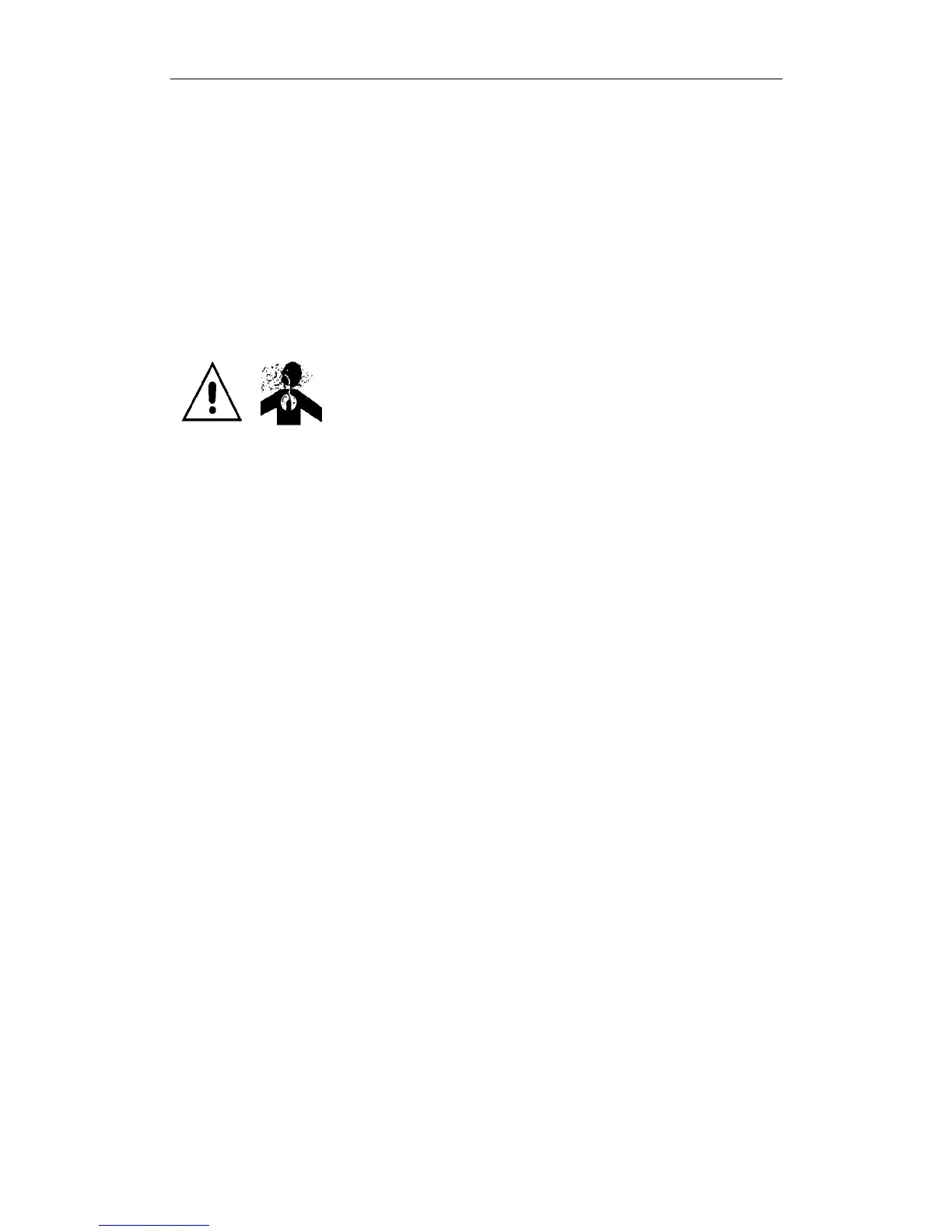
FUMES AND GASES CAN BE DANGEROUS.
Smoke and gas generated whilst welding or cutting can be harmful to
people’s health. Welding produces fumes and gases. Breathing these fumes
and gases can be hazardous to your health.
Do not breathe the smoke and gas generated whilst welding or cutting, keep
your head out of the fumes. Use enough ventilation and/or exhaust at the arc
to keep fumes and gases away from the breathing zone. When welding with
electrodes which require special ventilation such as stainless or hard facing
or on lead or cadmium plated steel and other metals or coatings which
produce highly toxic fumes, keep exposure as low as possible and below the
Threshold Limit Values using local exhaust or mechanical ventilation. In
confined spaces or in some circumstances, outdoors, a respirator may be
required. Additional precautions are also required when welding on
galvanized steel.
Do not weld in locations near chlorinated hydrocarbon vapors coming from
degreasing, cleaning or spraying operations. The heat and rays of the arc can
react with solvent vapors to form phosgene, a highly toxic gas, and other
irritating products.
Shielded gases used for arc welding can displace air and cause injury or
death. Always use enough ventilation, especially in confined areas, to insure
breathing air is safe.


 To Next Page