Avoid the following situations if possible:
Drive the chipper on hard, stony and uneven surfaces such as streambed rock, gravel, etc
Leave the rubber tracks lying in the direct sun light for more than three months’ time
Make sharp steering manoeuvres on asphalt and cement since this causes excess track pad wear.
Working on asphalt surfaces when their temperature exceeds 60°C since this causes both excess pad wear and damage to
the asphalt surface
Drive the chipper on hard or abrasive surfaces, such as concrete, sand or gravel. If driving on a hard surface is necessary,
do not attempt sharp steering manoeuvres and keep time driving over these surfaces to a minimum. Rubber tracks are
designed predominantly for use on soft terrain, not for hard and abrasive surfaces
Drive the tracks over sharp concrete edges etc
Expose the tracks to fuels or synthetic oils. If this does happen then they must immediately be cleaned
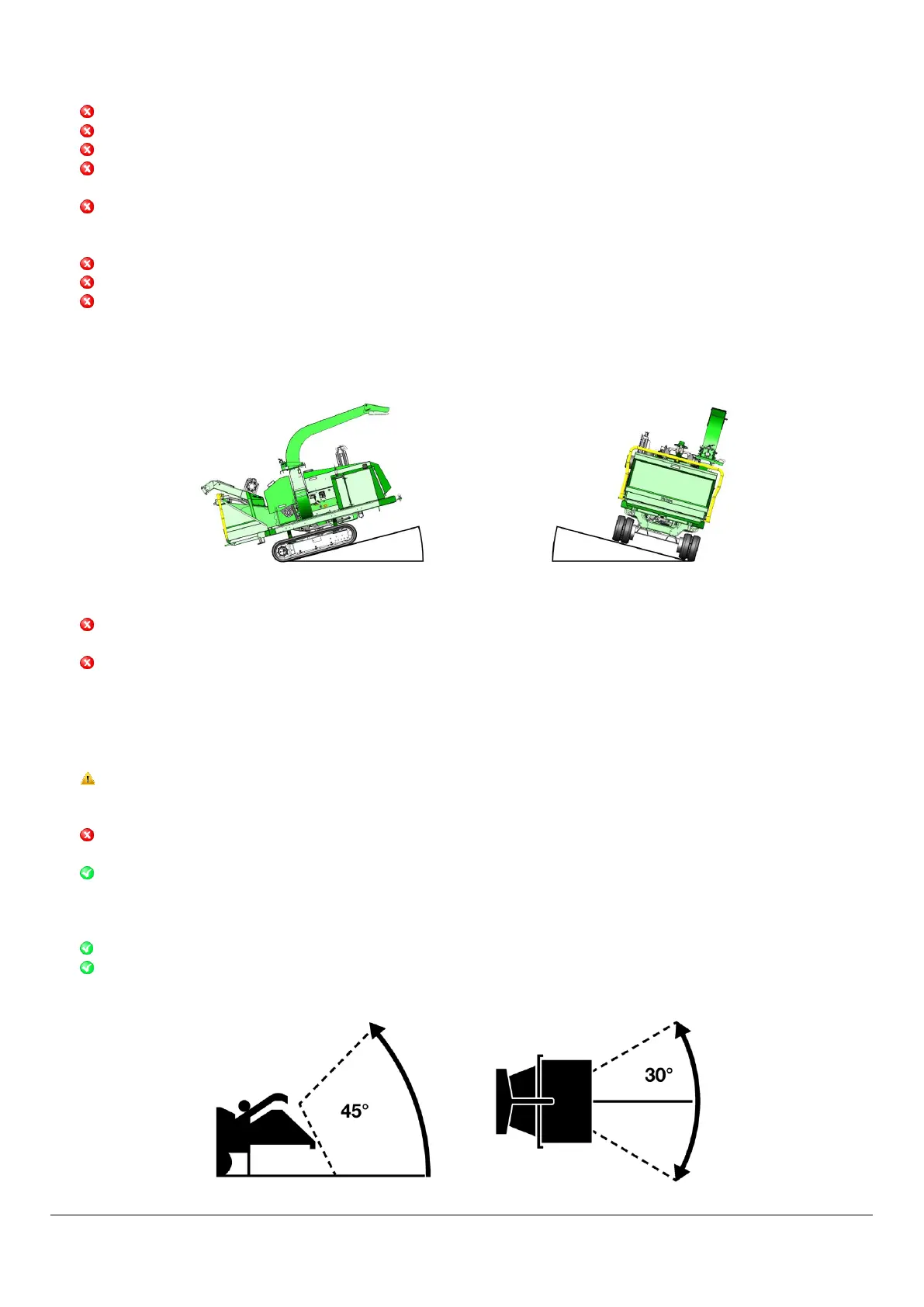
Drive the chipper on steep routes. It is recommended that the C60RX should not be driven on slopes steeper than 15
degrees. The engine is not designed to operate at angles greater than 20 degrees for extended periods of time. Operators
should take their time to become comfortable driving on steep terrain and learn what the machine is capable of. Care
should be taken on steep slopes that are soft or uneven as this could cause the machine to slide or tip into a steeper
position
Do NOT:
Drive the chipper within five metres of people, including the operator. It should be the responsibility of the driver to ensure
that onlookers do not come within five metres of the machine while it is being driven
Allow anyone within the immediate downhill area of the machine when it is being driven on steep terrain
There is a danger of destabilising/rolling the machine when driving up/down steep terrain
Winch operation safety
Winch operation safety:
Be careful when retracting the winch. Do NOT retract the winch past the rollers at the end of the winch boom
The winch does not automatically stop once it reaches the rollers. Retracting the winch too far may damage the
hook or rollers
Do NOT attempt to lift/pull objects that weigh more than 1400 kg.
Ensure you are familiar with the capabilities and weight of the machine before winching particularly heavy objects
Ensure the winch rope is fully retracted and attached to the keeper hook before feeding material into the chipper
This is to ensure the feed roller/cutting rotor does not pull in the winch rope. The rotor is rotating at high speed
and if it does pull the winch rope in, it will do so rapidly and has the potential to cause serious injury to operators
and/or result in damage to the machine
Ensure both stabiliser feet are lowered while operating the winch
Ensure the pull angle of the winch is within the safe operating envelope. This is outlined below:


 To Next Page