9
2. Safety
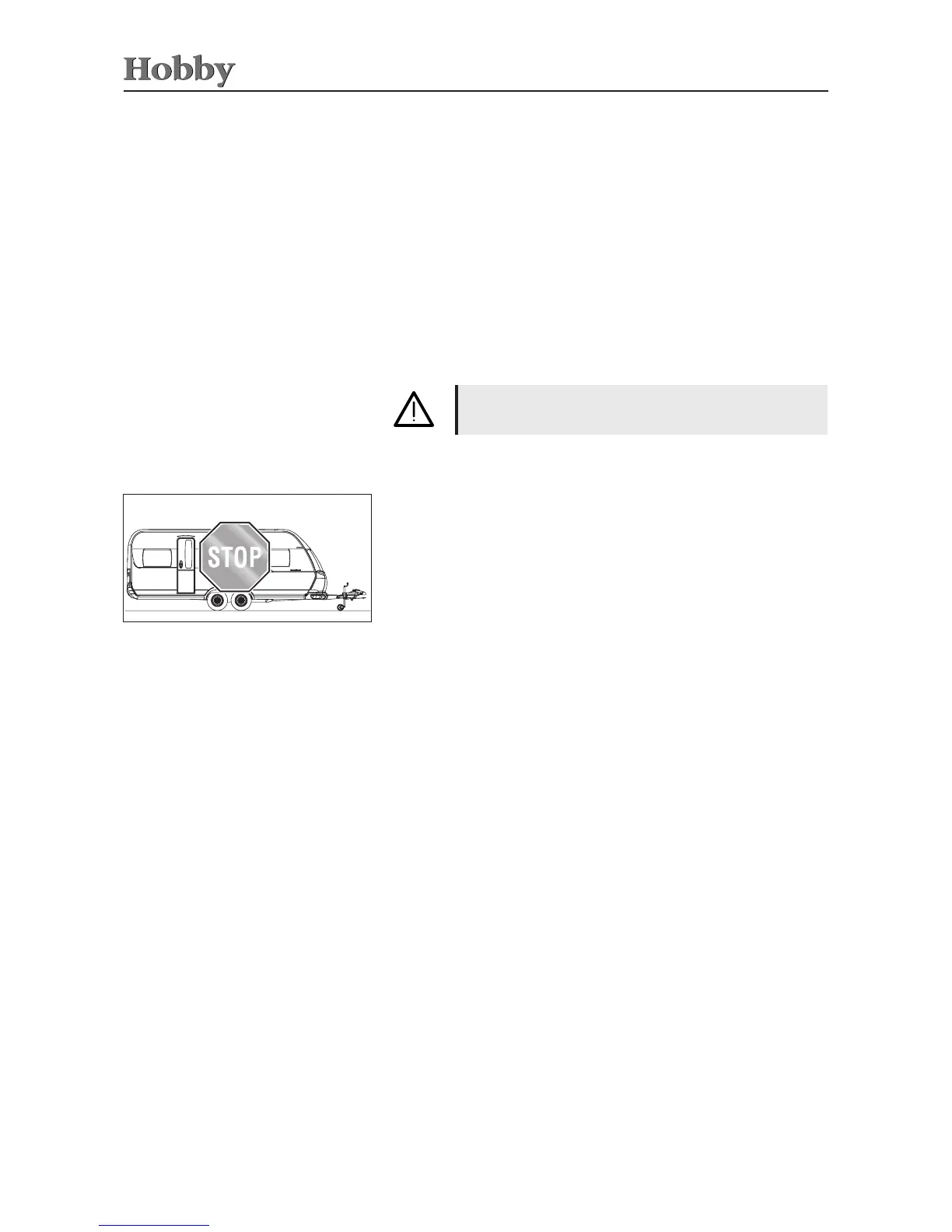
Prepare the vehicle before driving!
2.5.2 Before each drive
Road safety
• The electric connection between the base vehicle (your car)
and the trailer must function perfectly.
• Before driving, check that the signalling and lighting systems and
brakes function correctly.
• If the vehicle has been standing for a longer period of time
(approx. 10 months) have an authorised workshop check the
brake system and the accelerator system.
• Set the vehicle's wing mirror.
• In winter, the roof must be cleared of snow and ice before driving.
• Regularly check the tyre pressure before driving. False tyre
pressure can cause excessive wear, damage to the tyres or
even lead to a burst tyre. (see also Chapter 14.5)
As the driver of this vehicle, you are responsible for the state of the
car and trailer. Therefore, you must note the following points:
Exterior
Go around the carriage and prepare for the drive as follows:
Preparation of the vehicle:
• The caravan must be hitched properly (see guidelines for the
safety hitch WS3000 Chapter 3.4).
• Release the handbrake for the caravan and place the contact-
breaking cable around the ball neck of the permanently atta-
ched tow coupling. If the tow coupling is detachable,
the contact-breaking cable must be hooked into the eyelet
provided on towing bracket the for that purpose.
• Plug the 13-channel plug in the socket of the base vehicle.
• Turn the winding stanchions and the front landing wheel up
ward and secure them.
• Close gas bottles (heating is forbidden while driving).
• Empty the waste water tank.
• Shut the gas-bottle container and, if necessary, the luggage
compartment (Premium).
• Close and rmly lock all of the windows and roof bonnets.
• Close and lock the entrance door and the service aps.
• Shut o the light on the outer tent.
• If necessary, pull the electrical cord to the 230 V mains supply
out of the exterior socket.
• If necessary, pull the television antenna inward as far as possi-
ble or fold over the satellite dish.
• If necessary, secure all bicycles and lash them to prevent slip -
page, ensuring that they do not cover any lighting equipment.
• If necessary, secure the spare tyre holder.
• If necessary, roll up the awning and stow the crank securely in
the camper.
Only begin to drive when your camper fulls all of the
conditions for roadworthiness.



 To Next Page