
 Need help?
Do you have a question about the IAI RCP3 and is the answer not in the manual?
Lists the standard configuration parts of the product, excluding options.
Guidance on interpreting the model information displayed on the product's plate.
Explanation of how to interpret the model number for RCP3 and RCA2 actuators.
Instructions for safely handling the actuator while it is still in its packaging.
Guidelines for safely handling the actuator after it has been removed from its packaging.
Specifies environmental conditions required for proper actuator installation and operation.
Details environmental conditions for safe storage and preservation of the actuator.
Details on different motor unit types, including coupling and reversing types.
Instructions for securely attaching a payload to the actuator's front plate or table surface.
Guidance on how to properly attach the actuator's main body to a mounting surface.
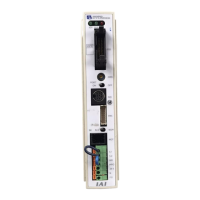
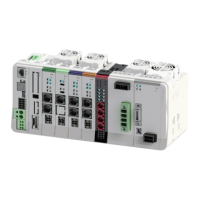
Instructions for connecting the RCP3 actuator to various dedicated controllers.
Instructions for connecting the RCA2 actuator to various dedicated controllers.
Lists actions to avoid when processing and handling actuator cables.
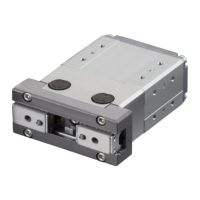
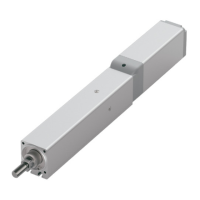
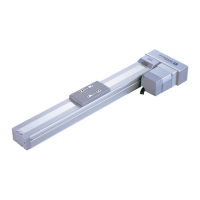
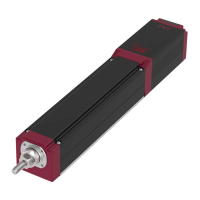
The IAI RCP3/RCA2 Actuator, Table Type, is a precision-engineered device designed for various automated applications, offering robust functionality, user-friendly features, and clear maintenance guidelines. This eighth edition of the First Step Guide provides essential information for its correct and safe operation.
The RCP3/RCA2 Actuator serves as a core component in automation systems, facilitating precise linear motion. It is available in various configurations, including different motor unit types (TA4C, TA5C, TA6C, TA7C for coupling, and TA4R, TA5R, TA6R, TA7R for reversing), total length short types (compact, wide, and flat), and encoder types (incremental). The actuator's design allows for integration with several IAI controllers such as ASEL, ACON-C/CG, ACON-CY, ACON-SE, ACON-PL/PO, AMEC, and ASEP, ensuring compatibility across a range of automation setups. Optional features like brake-equipped models and various cable exit directions (top, right, left, bottom, end) enhance its adaptability to specific application requirements. The actuator is designed to provide reliable and repeatable linear movement, making it suitable for tasks requiring accurate positioning and controlled force.
The actuator is designed for straightforward installation and operation, with clear guidelines provided to ensure optimal performance and longevity.
To ensure proper functioning, the actuator requires a specific installation environment. It should be placed away from direct sunlight and any radiant heat sources, such as heat treatment furnaces, to prevent overheating. The ambient temperature must be maintained between 0 to 40°C, with relative humidity at 85% or less, and crucially, no dew condensation should occur. The environment must be free from corrosive or flammable gases, excessive dust, oil mist, cutting liquid splashes, impacts, vibrations, strong electromagnetic waves, ultraviolet rays, or radiation. Adequate working space for maintenance and inspection is also essential.
The storage and preservation environment should adhere to the same standards as the installation environment. For long-term storage, particular attention must be paid to preventing condensation. The product package does not include moisture absorbency protection, so if condensation is anticipated, preventive measures should be taken from outside the package or immediately after opening. The actuator can withstand temperatures up to 60°C for up to one month of storage; for longer periods, the temperature should not exceed 50°C.
Great care must be exercised when handling the product. When transporting the packed actuator, it should not be bumped or dropped and must be kept horizontal when set down. Stepping on the package or placing heavy articles on it, which could deform it, is prohibited. When unpacking, the actuator should not be transported by holding or pulling its cable. Instead, it should be held by its base section. Any impact, dropping, or unnatural force on any part of the actuator must be avoided to prevent damage.
The actuator can be fixed using tapped holes on its rear side. For base male set screws, hexagon socket head cap screws are recommended, and high-tensile bolts complying with ISO-10.9 or more should be used. The thread engagement length should be 1.8 times the nominal diameter, ensuring the screw does not protrude inside the actuator. The attachment surface must be rigid enough to prevent oscillation, machined flat with a flatness within ±0.05mm/m, and serve as a reference for the actuator base side and lower slider running.
Payloads can be attached using tapped holes on the front plate or the table's upper surface. Similar to actuator attachment, hexagon socket head cap screws and high-tensile bolts (ISO-10.9 or more) are recommended. The table's upper surface features two reamed holes for applications requiring reproducibility in attachment/removal or fine adjustment for squareness. Care must be taken to select appropriate screw depths to avoid damaging tapped holes or compromising attachment strength.
For TA5C, 6C, 7C, 5R, 6R, or 7R models, a T-groove is provided on the side of the main body for attaching external equipment like sensors or for fixing wires. Square nuts are recommended for the T-groove, though hexagon nuts can also be used. Bolt length must be carefully chosen to ensure it does not touch the T-groove's bottom section.
The actuator must be connected to a dedicated IAI controller using the provided connection cable. Prohibited cable processing practices include forcibly pulling or bending the cable, extending or shortening it by cutting or combining, allowing it to flex at a single point, pulling it with strong force, allowing it to receive turning force at a single point, pinching, dropping heavy objects on it, or cutting it. When fixing the cable, a moderate slack should be provided to avoid tension. I/O, communication, and power lines should be routed independently in a duct. When using a cable track, follow the supplier's instructions for space factor, avoid twisting or tangling cables, ensure free movement, and prevent piling to avoid sheath abrasion or breakage. It is critical to turn off the controller's power before connecting or disconnecting cables to prevent malfunction, injury, or damage. Always confirm correct connector connection.
While the manual does not explicitly detail maintenance features, the design and instructions imply several aspects that contribute to ease of maintenance:
The detailed instructions for installation, including environmental requirements and attachment procedures, indirectly contribute to maintenance by ensuring the actuator is set up correctly from the start, minimizing potential issues that would require maintenance. Proper installation reduces wear and tear and prevents common failures.
The external dimensions and component diagrams provided in the manual suggest an accessible design, allowing for inspection and potential replacement of parts. The clear identification of motor unit types, coupling types, and reversing types helps in diagnosing issues and sourcing correct replacement parts if needed.
The comprehensive wiring instructions, including prohibited practices, help ensure that the cabling is robust and less prone to damage. Correct wiring reduces the likelihood of electrical faults, which would otherwise necessitate troubleshooting and repair. The emphasis on separating different types of lines (I/O, communication, power) in a duct also simplifies fault finding and maintenance of the wiring system.
The strong emphasis on careful handling during unpacking and operation is a key preventative maintenance measure. By avoiding physical damage, the lifespan of the actuator is extended, and the need for corrective maintenance is reduced.
The actuator's compatibility with a range of IAI controllers means that diagnostic tools and software associated with these controllers can be used to monitor the actuator's performance and identify potential issues early, facilitating proactive maintenance.
In summary, the IAI RCP3/RCA2 Actuator is a versatile and reliable component for automation, designed with a focus on precise function, user-friendly installation, and operational longevity through careful handling and adherence to environmental and wiring guidelines.
 General
| Type | Controller |
|---|---|
| Model | RCP3 |
| Manufacturer | IAI |
| Operating Temperature | 0 to 40°C |
| Storage Temperature | -10 to 60°C |
| Communication Interface | RS-232C |
| Humidity | 85% RH or less (non-condensing) |
| Power Supply | 24 VDC |



 To Next Page