AFE1_AFE2-1:1
57
I-scope
● Introduction
● Working with I-scope
● Technical specifications
Introduction
These topics are covered:
● Reasons for using I-scope
● Requirements for using I-scope
● The I-scope probe
● Current and voltage measurement using I-scope
REASONS FOR USING I-SCOPE
The main benefit of using I-scope is to provide you with power data of the running
application in real time so you can view the power profile and optimize your code for
better power efficiency. The C-SPY Timeline window displays power data in
correlation with the application source code to enable power analysis of the program
flow.
The analysis will reveal which functions and peripheral units consume more power,
which I/O activity causes current spikes, how much power the MCU consumes in
various sleep modes or in the main idle loop, etc. The captured data can be used to help
you make your design less power-consuming, as well as help you initialize the GPIOs
and peripheral units to achieve the best power efficiency without compromising the
target's performance.
REQUIREMENTS FOR USING I-SCOPE
To use the I-scope probe, you need an Arm Cortex-M core with SWO (Serial Wire
Output).
THE I-SCOPE PROBE
IAR I-scope for I-jet/I-jet Trace plugs in between the I-jet/I-jet Trace in-circuit
debugging probe and the target board. I-scope adds detailed current and voltage
measurement capability to I-jet/I-jet Trace. These measurements can be done at any

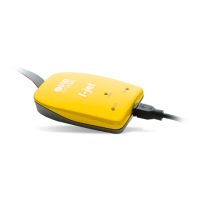

 To Next Page