AFE1_AFE2-1:1
I-jet
7
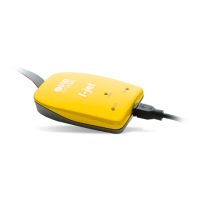
I-jet streams the program counter, variables, and power measurement data to the host
computer to provide a view into program execution in real time. Besides the typical
JTAG debugging, I-jet is capable of providing power to the target board and measuring
it with sufficient accuracy to provide a power profile during program execution in real
time. This feature is referred to as power debugging.
For debugging Cortex devices, I-jet also supports the SWO (Serial Wire Output) feature,
which can be used for tracing the program execution and tracking variables at predefined
points in your code.
The I-jet in-circuit debugging probe has full support for on-chip trace—ETB
(Embedded Trace Buffer), MTB (Micro Trace Buffer), and TMC (Trace Memory
Controller).
REQUIREMENTS
I-jet needs to be controlled by the IAR C-SPY® Debugger which comes with the IAR
Embedded Workbench® IDE.
SUPPORTED CORE FAMILIES
These cores are currently supported:
● Arm7
● Arm9
● Arm11
● Cortex-M
● Cortex-R
● Cortex-A
TARGET CONNECTIONS
These interfaces are supported:
● MIPI-20 (part number SHF-110-01-L-D): JTAG, cJTAG, SWD, SWO, ETM
● MIPI-10 (part number SHF-105-01-L-D): JTAG, cJTAG, SWD, SWO
● ARM-20 (part number HTST-110-01-L-DV): JTAG, cJTAG, SWD, SWO
I-jet comes with a MIPI-20 connector on the front panel, with MIPI-20 and MIPI-10
cables, and a legacy ARM-20 adapter.
All other available I-jet adapters are also compatible with I-jet Trace.


 To Next Page