EasyManua.ls Logo

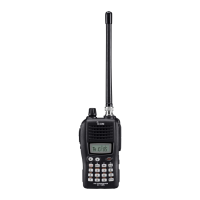
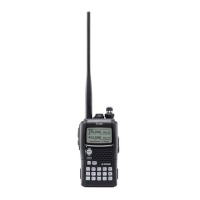
Icom IC-E92D - Service Manual

Icom IC-E92D
60 pages
Print Icon
To Next Page IconTo Next Page
Loading...
S-14416XZ-C1
Jan. 2008
VHF/UHF DIGITAL TRANSCEIVER

Other manuals for Icom IC-E92D

Questions and Answers

  • J
    James WhiteJul 29, 2025
    Why is there no sound coming from the Icom IC-E92D speaker?
    • S
      staylorJul 30, 2025
      If no sound is coming from the Icom Transceiver's speaker, first, make sure the volume isn't too low by rotating the [VOL] knob to a suitable level. Also, verify the connection of any external speaker or OPC-1797 is correctly connected.
  • K
    Kyle RamseyAug 3, 2025
    How to fix Icom IC-E92D when it has no power?
    • J
      Jessica CaldwellAug 3, 2025
      If your Icom Transceiver won't power on, the batteries may be exhausted, so replace them or charge the battery pack. Also, check for loose connections of the battery pack and clean the battery terminals. Finally, ensure the battery polarity is correct.
  • B
    Bradley TuckerAug 7, 2025
    What to do if Icom Transceiver is not transmitting?
    • O
      ofletcherAug 7, 2025
      If transmitting is impossible with your Icom Transceiver, ensure the batteries are not exhausted by replacing them or charging the battery pack. Also, verify that the frequency is within the 144/430 MHz amateur bands; if not, reset the frequency accordingly.
  • D
    Danielle MurrayAug 11, 2025
    Why is no contact possible with another station on Icom Transceiver?
    • B
      Billy DelacruzAug 11, 2025
      If you cannot contact another station using your Icom Transceiver, it might be because a different tone is selected with tone/DTCS squelch. Check the tone/DTCS using tone scan to resolve this.
  • C
    Crystal ThomasAug 15, 2025
    Why program scan function can not start on Icom Transceiver?
    • R
      rhondapowellAug 16, 2025
      If the program scan function won't start on your Icom Transceiver, it could be because Memory mode or call channel is selected. Push [VFO] to set VFO mode. Another possibility is that the same frequencies are programmed in both “?A” and “?B” of PROGRAM-CH; program different frequencies in “?A” and “?B” respectively.
  • J
    Jessica RiversAug 20, 2025
    Why memory scan function can not start on Icom Transceiver?
    • K
      Kimberly HaleAug 20, 2025
      If the memory scan function will not start on your Icom Transceiver, it may be because VFO mode or call channel is selected. Push [MR] to set memory mode. Also, ensure that more than 2 memory channels are programmed.
  • O
    omitchellAug 25, 2025
    What to do if Icom Transceiver battery can not charge with BC-177?
    • L
      lisa98Aug 25, 2025
      If you cannot charge the battery of your Icom Transceiver with BC-177 (LED blinks orange), turn the transceiver’s power OFF, or insert only the battery pack into the BC-177 to charge it. The battery pack can be charged alone (without the transceiver) or regular charge can be carried out.

Summary

INTRODUCTION

CAUTIONS AND SAFETY

ORDERING REPLACEMENT PARTS

REPAIR GUIDELINES

SECTION 1 SPECIFICATIONS

GENERAL SPECIFICATIONS

Covers frequency, mode, memory, temp range, power, current drain, and digital/voice coding.

RECEIVER SPECIFICATIONS

Details receiver sensitivity, selectivity, system, audio output, and squelch sensitivity.

TRANSMITTER SPECIFICATIONS

Outlines transmitter power, frequency deviation, spurious emissions, and mic impedance.

SECTION 2 INSIDE VIEWS

LOGIC UNIT COMPONENTS

Identifies key components on the logic unit board.

MAIN UNIT COMPONENTS

Identifies key components on the main unit board.

RF UNIT COMPONENTS

Identifies key components on the RF unit board.

SECTION 3 DISASSEMBLY INSTRUCTION

SECTION 4 CIRCUIT DESCRIPTION

4-1 RECEIVER CIRCUITS

Explains the signal path for incoming radio frequencies across various bands.

4-2 TRANSMITTER CIRCUITS

Describes the audio and RF signal paths for transmitting.

4-3 FREQUENCY SYNTHESIZER CIRCUITS

Details the VCO and PLL circuitry for frequency generation.

4-4 CPU PORT ALLOCATION

Maps CPU pins to specific functions and signals.

4-5 VOLTAGE DIAGRAMS

Illustrates power distribution across the unit.

SECTION 5 ADJUSTMENT PROCEDURES

5-1 PREPARATION

Lists required instruments and setup for adjustments.

5-2 TRANSMIT AMPLIFIER ADJUSTMENT

Covers calibration of transmit power and current.

5-3 FREQUENCY ADJUSTMENT

Details the procedure for calibrating the radio's frequency.

5-4 DEVIATION ADJUSTMENTS

Explains how to set FM, DV, and tone signal deviations.

5-5 RECEIVE ADJUSTMENTS

Covers calibration for receiver sensitivity and S-meter.

SECTION 6 PARTS LIST

SECTION 7 MECHANICAL PARTS

CHASSIS PARTS

Lists chassis parts and optional accessories.

UNIT MECHANICAL PARTS

Details mechanical parts for main, RF, VCO, and logic units.

SECTION 8 BOARD LAYOUTS

LOGIC UNIT BOARD LAYOUT

Visual guide to component placement on the logic board.

MAIN AND RF UNIT BOARD LAYOUTS

Visual guides for main and RF unit component placement.

VCO UNIT BOARD LAYOUT

Visual guide to component placement on the VCO board.

SECTION 9 BLOCK DIAGRAM

CHASSIS AND LOGIC UNIT BLOCK DIAGRAMS

Shows functional blocks within the chassis and logic units.

MAIN AND RF UNIT BLOCK DIAGRAMS

Illustrates signal flow in main and RF units.

VCO UNIT BLOCK DIAGRAM

Depicts functional blocks of the VCO unit.

SECTION 10 VOLTAGE DIAGRAM

LOGIC UNIT VOLTAGE DIAGRAM

Shows voltage levels and distribution for the logic unit.

Icom IC-E92D Specifications

General IconGeneral
TypeHandheld Transceiver
Battery LifeApprox. 10 hours
Waterproof RatingIPX7
ModulationFM
Battery7.4 V DC
FeaturesD-STAR, GPS

Related product manuals