5. Theory of Operation
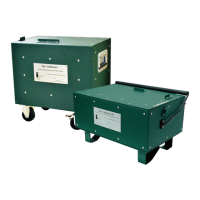
Verification Theory
ASTM and AASHTO requirements dictate calibration verification at an interval of
12 months. The ValiDator is a known and stable density reference that can be
used for verification of gauge calibration accuracy. The ValiDator device is
calibrated by InstroTek, assigning reference densities to each of the
measurement depths. Gauge measurements are taken on the ValiDator and
the results compared to the documented ValiDator density range, which
indicates pass or fail. The ranges are based on a ±1.5% limit about the actual
density of the ValiDator. The limits are based on the combined errors in gauges
due to precision, composition and surface roughness errors.
If a calibration is needed, the optional Verifier Software may be used to
calculate new calibration coefficients derived from the counts taken on the
ValiDator device. New calibration parameters are calculated using a fitting
routine according to the gauge manufacturer calibration method.
Gauge Calibration Theory
Nuclear density gauges utilize two systems that are used to calculate an in-
place density and moisture content of construction materials. The density
system generally uses Cesium 137 and detector tubes which output analog
signals that are converted to counts by a micro-processor inside the gauge.
Moisture systems use a neutron source of Americium-241: beryllium and a
detector tube that also generate signals that are converted to counts. The
calibration process establishes a relationship between these raw counts and
known densities and moisture content references. In the construction density
range, the higher the density, the lower the counts. For moisture, the counts
increase with increasing moisture content.
Density Calibration
The final stage of the gauge manufacturing process is the calibration. The
density calibration method used by most manufacturers utilizes an exponential
equation that models the relationship between the known densities and the
counts. CPN, Humboldt and Troxler use an equation such as:


 To Next Page