Need help?
Do you have a question about the Integra DTR-5.5 and is the answer not in the manual?
Read and follow all safety instructions and warnings for safe operation and maintenance of the apparatus.
Specific guidelines for U.S. models, FCC information, and Canadian model precautions.
Instructions on recording copyright, AC fuse handling, cleaning, and power management.
Electrical safety and conformity details for British and European models.
Lists all accessories provided with the AV receiver for setup and operation.
Highlights key amplifier, audio/video, tuner, and other features common to both models.
Details amplifier specs, audio/video capabilities, and THX Select certification for the DTR-6.5.
Outlines amplifier specs and audio/video capabilities specific to the DTR-5.5 model.
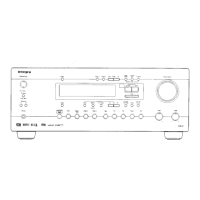
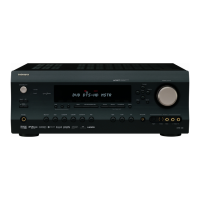
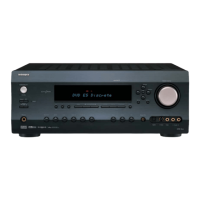
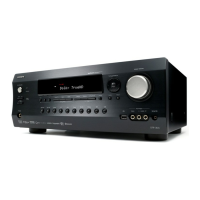
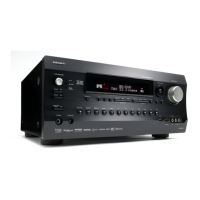
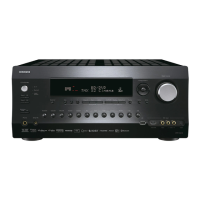
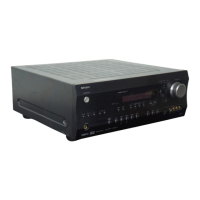
Identifies and explains the buttons, indicators, and jacks on the front panels of both models.
Provides detailed explanations for the functions of various front panel buttons.
Explains the various indicators and message areas on the receiver's display.
Identifies and explains the input/output jacks on the rear panel of the DTR-6.5 model.
Details the input/output jacks and connections on the rear panel of the DTR-5.5 model.
Instructions on how to insert batteries into the remote controller for proper function.
Guidance on pointing the remote at the AV receiver and general usage notes for effective control.
Explains how to select and use the remote controller's Receiver mode to operate the AV receiver.
Explains the functions of buttons like Standby, Input Selector, Remote Mode, and Listening Mode buttons.
Details how to use the remote controller to operate an Integra DVD player.
Explains how to use the remote controller to operate an Integra CD player.
Details how to use the remote controller to operate an Integra MiniDisc or CD recorder.
Explains how to use the remote controller to operate an Integra cassette recorder.
Guides placement of front left/right, center, and surround speakers for optimal sound imaging.
Positions subwoofers and surround back speakers for enhanced bass and rear effects.
General AV connection advice, optical jack usage, and color coding for RCA connections.
Describes common video and audio cable types and their corresponding jacks.
Table indicating speaker channels to use based on the number of speakers connected.
How to connect a powered subwoofer to the AV receiver using the SUBWOOFER PRE OUT.
Explains color-coding of speaker terminals and use of supplied speaker labels.
Notes on speaker impedance, polarity, cable length, and avoiding shorts.
Step-by-step guide on stripping wires, inserting them into terminals, and tightening.
Instructions for attaching the supplied indoor FM antenna for optimal reception.
Guidance on assembling and connecting the supplied AM loop antenna for indoor use.
Advice on installing outdoor FM antennas for improved reception.
Tips for installing outdoor AM antennas and grounding requirements for safety.
Recommendation on using a splitter if the same antenna is used for both TV and FM reception.
How to connect both audio and video from components for simultaneous selection.
Guide to selecting appropriate video and audio connection formats.
How to connect the AV receiver's monitor outputs to a TV.
Options for connecting TV audio to the AV receiver via digital or analog connections.
Methods for connecting DVD player video outputs to the AV receiver.
Explains digital and analog audio connection options for DVD players.
How to connect a DVD player's 5.1 analog audio output for multichannel playback.
How to connect a VCR for video and audio playback via S-Video or Composite connections.
Instructions for connecting a D-VHS VCR using Component video and digital audio connections.
How to connect a VCR for recording video and audio signals from other sources.
Steps to play back video from the recording VCR through the AV receiver.
How to connect sources like satellite receivers, cable boxes, and LD players via various video/audio formats.
Using Optical or Coaxial connections for digital audio from various video sources.
Using analog audio cables to connect various video sources when digital is not used or for recording.
How to connect camcorders or game consoles via Composite, S-Video, or Digital audio inputs.
Instructions for connecting CD players using digital or analog audio inputs.
How to connect cassette recorders and DAT/CD/MD recorders for audio input/output.
Using Optical or Coaxial connections for playback from DAT, CD, or MD recorders.
How to record digitally using the AV receiver's digital outputs to a recorder's digital input.
How to connect turntables with MM cartridges, or using external phono preamps/MC transformers.
Instructions for connecting turntables with built-in phono preamps to the DTR-5.5 model.
How to connect an external power amplifier to the AV receiver using PRE OUT jacks.
How to connect and control Integra components via RI for automatic power and remote control.
Using the AV receiver's AC outlets to power other components for synchronized on/off operation.
Instructions for connecting the supplied power cord to the AV receiver's AC INLET.
Steps to power on the AV receiver using the front panel button or remote control.
Information on connecting an external controller via the RS232 port for AV receiver control.
Introduction to the Automatic Speaker Setup function for optimizing audio based on room acoustics.
Step-by-step guide to running the auto speaker setup and checking results.
How to manually adjust speaker configuration, distance, and level settings if needed.
Overview of the Basic Setup menus including Initial, Speaker, and Decoder setups.
Details the structure of Advanced Setup menus covering Decoder, Audio Adjust, Listening Modes, and Preferences.
How to assign digital input jacks (Optical, Coaxial) to specific input selectors like DVD or CD.
How to assign component video inputs to input selectors and specify video output format.
How to set minimum speaker impedance for non-American models based on connected speakers.
How to specify the TV format (Auto, PAL, NTSC) used in your region for proper video display.
How to specify connected speakers and their sizes (Large/Small) for optimal sound processing.
Adjusting settings for Center, Surround, and Surround Back speakers, including size and channel configuration.
Selecting an appropriate crossover frequency for speakers based on their size and subwoofer usage.
How to boost bass output by routing bass sounds to the subwoofer.
Specifying the distance from each speaker to the listening position for accurate sound arrival timing.
Choosing between feet or meters for entering speaker distances and specifying distances for each speaker.
Calibrating the volume of each speaker using test tones to ensure consistent output.
Manually adjusting the equalizer settings (frequency levels) for individual speakers for customized sound.
How to change the display mode for RI-compatible MiniDisc or CD recorders connected to the TAPE jacks.
How to choose the AV component to listen to or watch using receiver or remote buttons.
Using the master volume control or remote buttons to adjust the receiver's overall volume level.
Setting the AV receiver to automatically turn off after a specified period.
Adjusting the brightness of the AV receiver's front panel display.
Temporarily muting audio output and connecting headphones for private listening.
Cycling through and displaying information about the current input source, signal format, and listening mode.
How to tune into AM and FM radio stations using Manual or Auto Tuning modes.
Storing favorite radio stations as presets and removing them from memory.
How to select stored preset stations and view radio information on the display.
Using specific buttons on the remote to select listening modes like Stereo, Surround, THX, etc.
Using the receiver's buttons and listening mode selectors to choose desired audio modes.
A table showing which listening modes are available for different input signal formats and sources.
Descriptions of Direct, Pure Audio, Stereo, Mono, and Theater-Dimensional listening modes.
Details on Dolby Pro Logic IIx, Dolby Digital, Dolby Digital EX, DTS, DTS 96/24, and DTS-ES modes.
Details on DTS-ES Matrix, Neo:6, THX Cinema, and THX Surround EX modes for advanced surround sound.
Descriptions of Onkyo's original DSP modes like Orchestra, Unplugged, Studio-Mix, TV Logic, Enhance, and Mono Movie.
Functions to correct harsh high frequencies (Re-EQ) or soften bright soundtracks (CinemaFILTER).
Reduces dynamic range for late-night listening, ideal for Dolby Digital sources without disturbing others.
How to connect and select 5.1 analog audio for multichannel playback from DVD players.
Temporarily adjusting the volume of each speaker during playback for optimal balance.
How to select and record audio from various input sources to a connected recorder.
Recording audio from one source while viewing another, using REC OUT to TAPE OUT.
Recording AV input sources to a component like a VCR connected to VIDEO 1 or VIDEO 2 OUT.
Overdubbing audio from one source onto video from another, allowing flexible recording.
Settings for mono output channel, surround mode, and THX mode for analog/PCM signals.
Adjusting LFE level, Dolby EX handling, SurrBack Mode, and THX Mode for Dolby Digital signals.
Settings for LFE Level, SurrBack Mode, and THX Mode when processing DTS input signals.
Configuring settings for 2-channel digital signals and multiplex sources, including input channel selection.
Adjusting Subwoofer Sensitivity and SurrBack/THX modes for analog multichannel input signals.
Navigating the Audio Adjust menu to access settings for Mono, PLIIx/Neo:6, Enhance, etc.
Adjusting output channel, Academy Filter, Center Width, and Center Image for mono sources.
Configuring Panorama, Dimension, and Center Width for PLIIx/Neo:6 listening modes.
Adjusting front speaker effects, reverb level, and reverb time for Onkyo's DSP listening modes.
Adjusting Listening Angle, Center speaker usage, Front Expand, Dialog Enhance, and Virtual Surr Level.
Setting a preferred default listening mode for each input source, which is recalled automatically.
Navigating the Preference menu to adjust IntelliVolume, Volume Setup, OSD Setup, Remote Setup, etc.
Adjusting input levels, volume display, maximum volume, power-on volume, and headphone levels.
Configuring onscreen display settings and remote control settings (Remote ID, IR IN Position).
Setting the digital input format (Auto, DTS, PCM) for each input selector to optimize signal recognition.
Configuring 12V trigger outputs for component power control and setting a delay for simultaneous power-on.
Modifying the remote controller's ID to prevent code overlap with other Integra components.
How to connect Zone 2 audio output to a receiver or integrated amp for separate room audio.
How to connect Zone 2 speakers directly to the receiver for a second audio zone.
Enabling the Zone 2 SPEAKERS terminals to produce sound when Zone 2 is used.
Configuring ZONE 2 OUT L/R jacks as fixed line outs or variable pre outs for output control.
How to power on Zone 2 and select an input source using the remote or receiver buttons.
Controlling Zone 2 volume and turning Zone 2 off via the remote or receiver.
Configuring the AV receiver to turn on connected components automatically when Zone 2 is used.
Fine-tuning the bass and treble levels for audio output in Zone 2.
How to use a multiroom kit to control the AV receiver remotely from Zone 2.
Using an IR receiver in a cabinet to relay remote signals to the AV receiver.
Using an IR emitter to retransmit remote signals to components not in direct line of sight.
How to enter specific codes to make the remote controller operate other brands' components like DVD players.
Restoring the remote controller to its default settings, which clears learned commands.
Returning specific Remote Mode buttons to their default programmed codes.
A list of control codes for various DVD player manufacturers to enable remote control.
A comprehensive list of control codes for satellite receiver manufacturers to ensure compatibility.
A directory of control codes for various VCR manufacturers for use with the universal remote.
A list of control codes for cable receiver manufacturers, enabling control via the AV receiver's remote.
A comprehensive list of control codes for numerous TV manufacturers to facilitate control.
Continuation of the list of remote control codes for various TV brands.
How to operate a TV using the remote, including power, channels, input selection, and volume.
Instructions for operating a cable receiver using the remote's Cable Mode for power, channels, and selection.
How to operate a VCR using the remote for power, channels, playback, and recording functions.
How to operate a satellite receiver using the remote for power, channels, menu navigation, and selection.
How to teach the AV receiver's remote new commands from other remote controllers by pointing them at each other.
How to program sequences of actions onto Macro buttons for one-press execution.
How to execute a programmed macro by pressing the corresponding Macro button.
Solutions for issues like the receiver not turning on, turning off immediately, or having no sound.
Solutions for subwoofer issues, sound format problems, and no sound with specific signal types.
Solutions for no picture, missing onscreen menus, and interference issues.
Solutions for noisy reception, remote controller not working, and controlling other components.
Solutions for recording failures, Zone 2 not working, or no sound in Zone 2.
Solutions for headphone sound changes, speaker volume/distance issues, display problems, and receiver lockup.
How to change multiplex source language and reset the AV receiver to factory defaults.
Detailed specs for power output, THD, input sensitivity, video I/O, and frequency response.
Specs for FM/AM tuner sensitivity, THD, stereo separation, power supply, dimensions, and weight.
Detailed specifications for amplifier power, video I/O, tuner sensitivity, and THD for the DTR-5.5.
General specs including power supply, dimensions, weight, and audio output types for the DTR-5.5.

 To Next Page
 General