ENGLISH
32
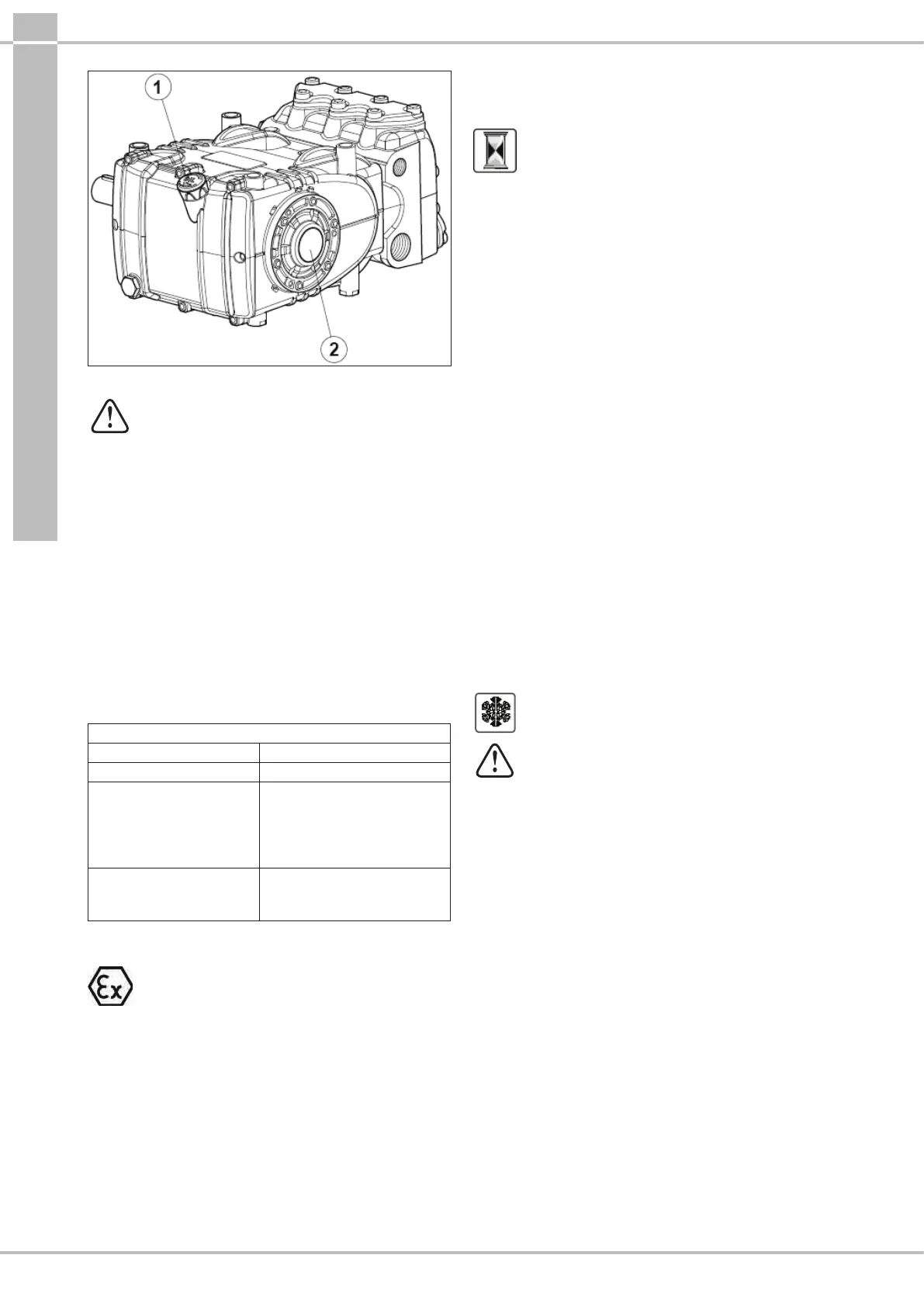
Fig.15
In case of prolonged storage or long-term
inactivity, check proper functioning of the
suction and outlet valves.
10.2 Start-up
1. At rst start-up, verify that the rotation direction and the
supply pressure are correct.
2. Start-up the pump without any load.
3. Check that the supply pressure is correct.
4. Check that the rotation rpm during operation does not
exceed the nominal rpm of the pump.
5. Let the pump run for a period of no less than 3 minutes,
before putting it under pressure.
6. Before each pump stop, reset pressure by means of the
control valve or with any relieving devices and reduce to a
minimum rpm (activation with combustion motors).
11 PREVENTIVE MAINTENANCE
For pump reliability and eciency, comply with maintenance
intervals as shown in the table.
PREVENTIVE MAINTENANCE
Every 500 hours Every 1000 hours
Check oil level Change oil
Check / Replace:
Valves
Valve seats
Valve springs
Valve guides
Check / Replace:
H.P. seals
L.P. seals
* To replace, follow the instructions given in the Repair
Manual.
ATTENTION: On pumps without a reduction
unit, replace the bearings and the
corresponding seal rings every 8000
hours of operation.
On pumps with a reduction unit,
replace all the bearings and the
corresponding seal rings every
10000 hours of operation.
Perform periodical checks on cleaning and
maintenance on the pump. See “ATEX EXPLOSION
PROTECTION” manual.
12 PUMP STORAGE
12.1 Long-term inactivity
If the pump is started for the rst time after a long
period from the date of shipment, before operation
check the oil level, inspect the valves as specied
in chapter 10, then follow described start-up
procedures.
12.2 Method for lling pump with anti-corrosion
emulsion or anti-freeze solution
Method for lling pump with anti-corrosion emulsion or anti-
freeze solution using an external diaphragm pump based on
the layout shown in par.9.7 in Fig.7 and Fig.7/a:
• In place of the service tank, use a suitable container
containing the solution to be pumped.
• Close the lter drainage, if open.
• Make sure that the hoses to be used are clean inside and
spread grease on their connections.
• Connect the high pressure exhaust pipe to the pump.
• Connect the suction pipe to the diaphragm pump.
• Connect the suction pipe between the pump head and
the diaphragm pump.
• Fill the service container with solution/emulsion.
• Insert the free ends of the suction pipes and the high
pressure exhaust pipe inside the container.
• Switch on the diaphragm pump.
• Pump the emulsion until it exits from the high pressure
exhaust pipe.
• Continue pumping for at least another minute.
• Stop the pump and remove the previously connected
pipes.
• Clean, grease and plug the connections on the pump
head.
The characteristics of the emulsion can be strengthened if
necessary by adding, for example, Shell Donax.
13 PRECAUTIONS AGAINST FROST
Follow the instructions in Chapter 12 in areas and
times of the year at risk of frost (see par.12.2).
In the presence of ice, do not run the pump
for any reason until the circuit has been fully
defrosted, in order to avoid serious damage to
the pump.


 To Next Page