136
interiOr
up on the bottom seat support. If the bottom seat support is secured closed with screws,
do not remove the seat support or use this area for storage. The dinette seats that are
secured with screws contain factory installed equipment and should only be accessed by a
qualied service technician.
Your motor home may be equipped with one of the following dinette styles that can be
converted into a bed.
Booth Dinette
Remove all the cushions from the booth dinette. Lift up the tabletop and remove the
detachable table legs. Place the tabletop on the ledges provided between the booth dinette
benches. Lay the seat back cushions against the back of the dinette bench. Lay the dinette
seat bottom cushions in between the seat back cushions. The area where the cushions meet
should be slightly raised. Push the raised cushion ends down gently as the cushions are
designed to t snugly. Reverse this process when converting back to the booth dinette.
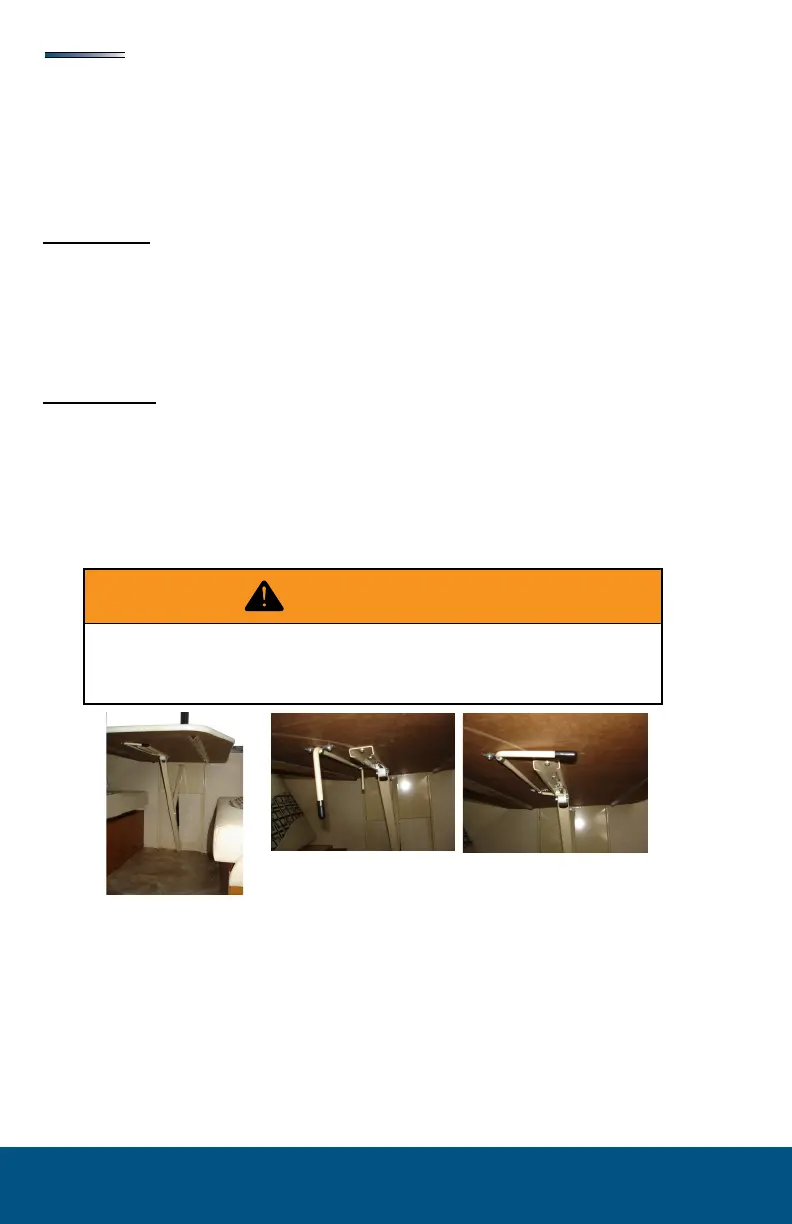
Dream Dinette
Remove all the cushions from the dinette. Locate the locking mechanism rod under the
table top. This locking mechanism is designed to keep the table from collapsing into the
bed conguration. Turn this rod so it moves out of the channel and points down toward
the oor. Push the dinette table down toward the oor to form the platform for the bed.
Arrange the cushions to form a mattress for sleeping. To convert back to a dinette, remove
the cushions, pull the table back up as high as it will go, and turn the rod underneath back
to the locked position.
Make certain the rod underneath the table is in the locked position before
using then the table in the dinette position. Failure to secure the table in the
locked position may result in injury or property damage.
Dream Dinette unlocked
Dream Dinette locked
cAbinetry & tAbles
To keep hardwood doors, cabinet fronts and hardwood tables looking like new regularly
dust with a soft cloth dampened with a cleaning polish or mild detergent solution. Avoid
using ammonia based products or silicone oils as they may cause damage if used over a long
period of time.
The nish is durable and resistant to most household spills. However, spills should be wiped
up promptly to avoid potential problems. Excessive prolonged exposure to direct sunlight,
high temperatures and high humidity can cause damage to both the nish and the wood
itself. These should be avoided.




 To Next Page