89
fuel & prOpane SyStem
cookinG With propAne GAs
Unlike homes, the amount of oxygen supply is limited due to the size of the recreation
vehicle. Proper ventilation when using the cooking appliance(s) will help you avoid the
danger of asphyxiation.
It is especially important that cooking appliances not be used for comfort heating, as
the danger of asphyxiation is greater when the appliance is used for long periods of
time. FAILURE TO COMPLY MAY RESULT IN DEATH OR SERIOUS INJURY.
The following warning labels are located in the cooking area to remind the user to provide
an adequate supply of fresh air for combustion.
Do not turn gas range burner controls to ON and allow gas to escape before
lighting.
Do not use portable fuel burning equipment (i.e., wood and charcoal grills or
stoves) inside the recreation vehicle.
use propane gas to operate. Each has a different BTU rating, and you will need to consider
them to determine how long your propane supply will last. Most RV gas appliances are
operated intermittently. Propane consumption depends on individual use of appliances
and the length of time operated. Unless there is heavy use of hot water, the water heater
consumption of propane is minimal. During cool temperature or high wind conditions,
furnace consumption can be extremely high.
To calculate your propane supply, take the BTU ratings for your propane appliances and
divide that into the BTU availability. Each gallon of propane gas (3.785 liters) produces
about 91,500 BTU’s (96,528 kilojoules) of heat energy.
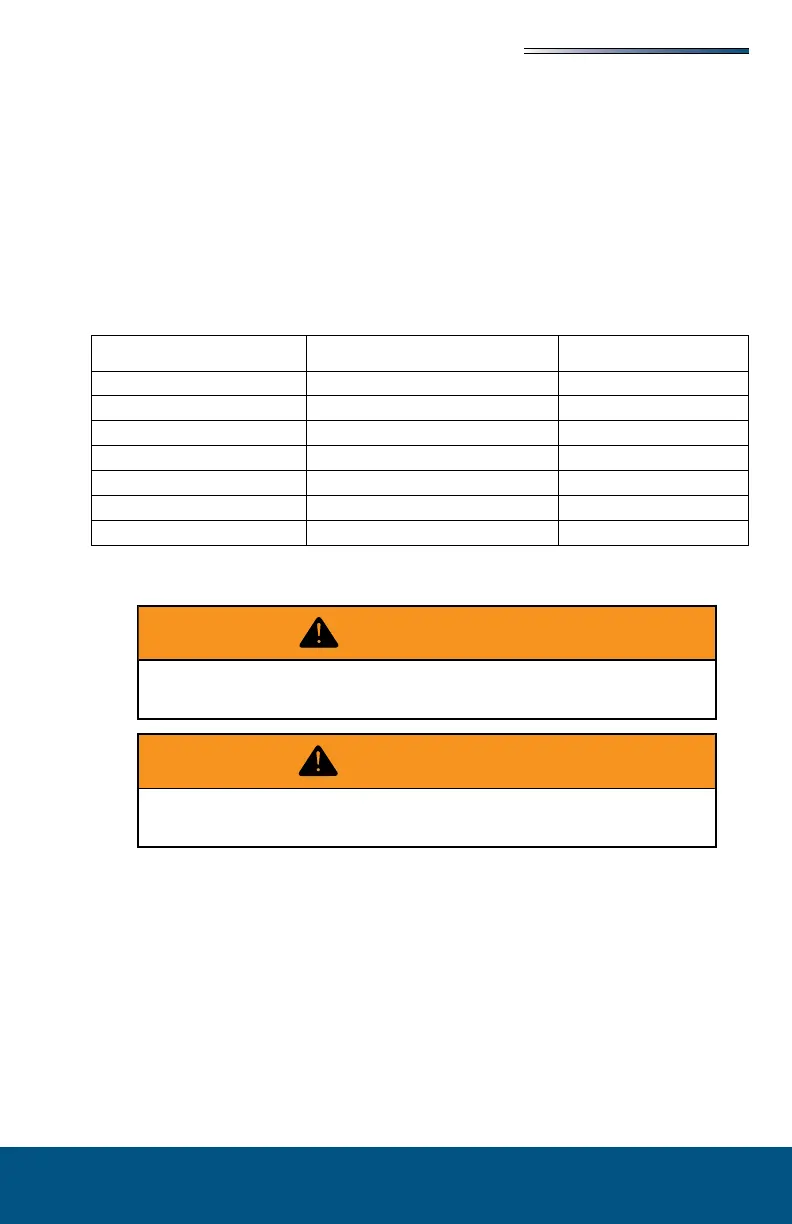
Propane consumption chart
The following chart provides average propane consumption information.
Appliance
Average BTU Consumption
per Hour
Kilojoules/Hour
Water Heater 8,800 9,280
Refrigerator 1,200 – 1,500 1,270 – 1,580
Furnace 35,000 – 40,000 36,930 – 42,200
Range/oven 7,100 7,490
Range, rear burner 6,500 6,860
Range, front burner 9,000 9,490
Outside Grill 10,000 10,550




 To Next Page