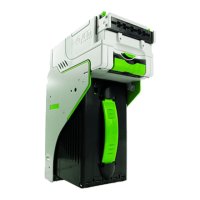
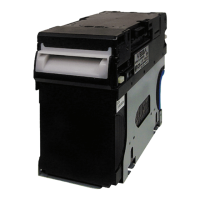
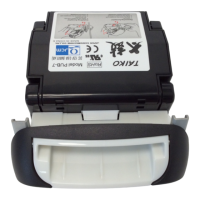
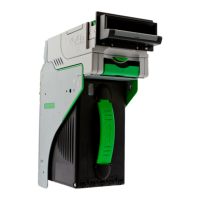
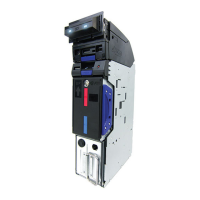
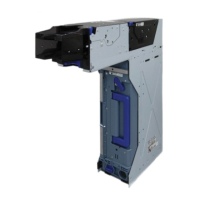
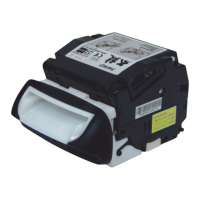
The JCM DBV-500 Banknote Validator is a device designed for accepting and validating banknotes, with versions available for both upstack (DBV-500 SU) and downstack (DBV-500 SD) configurations. It is a robust unit with various components facilitating its operation, including a bezel, full-color indicator, transport unit, cash box, cash box latches, unit guide open/close latches, and a USB connector for maintenance. Connectivity is managed through a power/interface connector and two DIP switch blocks (DIP Switch Block #1 and DIP Switch Block #2) for configuration. Additional option items include a cash box handle, frame lock, plastic latch, and metal lock.
Function Description:
The primary function of the DBV-500 is to validate and stack banknotes. It can be configured to accept or inhibit specific banknote denominations using DIP Switch Block #1. The device also supports various communication interfaces, including Photo-Coupler (9600 bps), TTL (38400 bps), RS-232C (38400 bps), and USB 2.0. The full-color indicator bezel provides visual feedback on the device's status, including error codes and operational modes. The DBV-500 is designed for reliable operation in various environments, with features to detect and manage banknote jams, abnormal timings, and other operational issues.
Important Technical Specifications:
- Device Versions: DBV-500 SU (Upstack Unit), DBV-500 SD (Downstack Unit).
- Communication Interfaces:
- Photo-Coupler (9600 bps)
- TTL (38400 bps)
- RS-232C (38400 bps)
- USB 2.0 (requires external harness for connection)
- DIP Switch Block #1 Settings (Default):
- Switches 1-6: VEND INHIBIT/ACCEPT for denominations 1-6.
- Switch 7: OFF (no specific function listed for default).
- Switch 8: TEST MODE/OFF (OPERATING MODE).
- DIP Switch Block #2 Settings (Default for ID-003 and ID-0E4 protocols):
- Switch 1: Configures Photo Coupler, TTL, RS-232C, and USB settings for ID-003/ID-0E4.
- Switch 2: Configures TTL, RS-232C, and Baud Rate settings for ID-003/ID-0E4.
- Switch 3: ON = Send Enable or Disable Status before Stacker Full (for ID-003/ID-0E4).
- Switches 4-6: OFF (no specific function listed for default).
- Switch 7: OFF = Standard Current Mode [Peak Current: 3.0A], ON = Maximum Current Limitation Mode [Peak Current: 2.0A].
- Switch 8: OFF = ID-003 Mode, ON = ID-0E4 Mode.
- Bezel LED Color Settings (Idling State): Configurable to Green, Cyan, Blue, Magenta, White, Yellow, Red, Gradient (Fading), or LED OFF, by setting specific DIP Switch Block #2 switches. Flashing function can be enabled for the selected LED color.
- Calibration: Requires KS-091 Reference Paper for validation sensor calibration and white level test.
Usage Features:
- Banknote Acceptance: Configurable via DIP switches to accept or inhibit specific banknote denominations.
- LED Bezel Indicator: Provides visual status feedback. The default color can be set, and it can display solid or flashing colors. In Normal Operating Mode, it flashes white for startup errors. In Performance Test Mode, it flashes white at intervals. For operational errors, it flashes Red or Magenta. For banknote reject errors, it flashes Yellow or Green.
- Communication Protocols: Supports multiple communication types for integration into various systems.
- Service Mode (JCM Tool Suite): Allows access to functions like Download, Statistics, Event Log View, Sensor Adjustment, and Performance Test.
- Test Mode (DIP Switch Block #1 Switch #8 = ON): Enables various performance tests including Transport Motor Normal/Reverse Rotation, Stacking, Sensor Test, DIP Switch 1 Test, DIP Switch 2 Test, LED Test, and Centering Test.
- Forced Download Mode: Can be activated by setting DIP Switch Block #1 Switches #6, #7, and #8 ON, useful when software is corrupted or not installed.
Maintenance Features:
- Sensor and Roller Cleaning: The device requires regular cleaning of its sensors (Entrance, Centering Start, Side, COB, Exit) and rollers. This is performed by gently wiping with a clean, slightly damp lint-free microfiber cloth. Important: Alcohol, solvents, citrus-based products, or scouring agents should not be used as they can damage the sensors and rollers.
- Calibration:
- Validation Sensor Calibration: Required after removing/replacing the CPU Circuit Board, sensors, or sensor boards, after cleaning the unit, or if the banknote acceptance rate decreases. This procedure involves using the JCM Tool Suite and KS-091 Reference Paper.
- White Level Test: Also performed using the JCM Tool Suite and KS-091 Reference Paper, likely to ensure proper sensor performance.
- Software Download: The JCM Tool Suite Standard Edition allows for updating the device's software version. This involves connecting the device via a USB Type-A to Mini-B cable, selecting the download file, and initiating the transfer.
- Error Codes: The Bezel LED flashes specific colors and patterns to indicate startup errors, operational errors, and banknote reject errors. Users can count the flashes between pauses and consult tables to diagnose the error and find solutions.
- Startup Errors (White flashes): Indicate issues like Boot Check failure, Boot I/F problems, CPU Internal RAM errors, External SD RAM errors, EEPROM errors, Downloading File issues, or I2C Access problems (sensors abnormal).
- Operational Errors (Red or Magenta flashes): Indicate issues like Stacker Motor Lock, Pusher Position problems, Banknote Jam (Cash Box), Transport Motor Speed errors, Transport Motor Lock, Centering Mechanism issues, Reserved errors (contact JCM), Fraud Detection, Cash Box Full, Cash Box Removed, or Banknote Jam (Transport).
- Banknote Reject Errors (Yellow or Green flashes): Indicate issues like Magnification Error, Denomination error, Pattern Error, Photo Level issues, Banknote Length problems, Pattern Error 1/2, Invalid Banknote, Skewed insertion, Remaining Banknote in transport, Transport Time-out, Banknote Detection issues, Inhibit Setting, or Return Command from Host.
- JCM Tool Suite Standard Edition: A software application used for diagnostics, performance testing, sensor adjustment, and software updates. It connects to the DBV-500 via a USB Type-A to Mini-B cable.

 Need help?
 General

 To Next Page