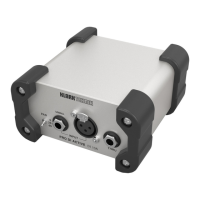
Using the Square ONE Dynamics
16 Square ONE Dynamics
Using the Square ONE Dynamics
The Square ONE Dynamics is a dynamics processor that utilises premium quality, high precision components
to achieve a high degree of accuracy and control. The Square ONE Dynamics has been designed primarily for
creative use as front of house (FOH) or monitor. However, it is just as effective when used in the studio while
broadcasting or recording. The Square ONE Dynamics processors offer, in a compact unit, control over the
dynamic range for creative and also corrective purposes.
The natural sounds of everyday life, which can be caused by anything from, say, the falling of a leaf to the
roar of a jet engine, vary extremely widely in sound level. This variance is known as the ‘dynamic range’ and
is the difference - expressed decibels (dB) - between the loudest and quietest sounds in a piece of audio,
such as music or speech, or that can be reproduced by a piece of audio equipment without distortion.
The human ear has an automatic gain control that enables it to accommodate all of the sounds ranging from
the threshold of hearing to near the threshold of pain, a dynamic range of approximately 120dB. However, a
dynamic range of this magnitude, even if it were possible in audio equipment, is not required in practice for
comfortable listening. A sound pressure level (SPL) of 96dB would, in a domestic environment, almost
certainly annoy the neighbours. While, at the other end of the dynamic scale, a typical ambient noise level of
at least 40dB SPL makes it impossible to use very quiet levels in recorded or broadcast sound media. So, it
is almost always necessary to compress the dynamic range of natural sounds to fit them into a window
(usually about 30dB to 40dB) suitable both for the equipment and for comfortable listening.
Another factor that must be considered is background noise. All of the sounds that we want to listen to,
whether natural or electronically processed, are accompanied by a certain amount of unwanted background
noise, such as the rustle of musicians turning the pages of the score in the studio. Even if, in the final
programme, the noise level is below the ambient noise of the listening area, it may still be heard and is
therefore undesirable.
The compressor and gate, both of which are described more fully later, are valuable tools for the control of
the dynamic range. By using the compressor artistically, the sounds of instruments and voices can be altered
and a mix of instruments can be compressed to give a tighter dynamic effect by reducing the dynamic range
of any instrument or programme source. Whereas, the gate can remove unwanted background clutter and
also has artistic uses.


 To Next Page