Instructions for Use
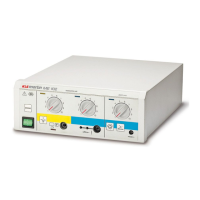
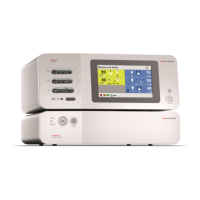
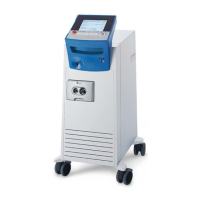
Electrosurgical Unit Minicutter
Revision 08 25
Risk of burns from improper handling of the neutral electrode!
The risk of burns under the neutral electrode is particularly high when monopolar cutting or contact
coagulation currents with particularly high power and longer duration are being used
In order to minimize the risk of burns or other problems in the area
of the neutral electrode, during
application of the neutral electrode please mind the following:
The neutral electrode must butt against the patient's body as close to the operation field as possible,
reliably, and with its whole surface. For operation fields on the trunk, the upper arms and thighs are
good placement positions.
Safe contact of the neutral electrode must be ensured for the total duration of the high frequency
application.
Application of the neutral electrode to a limb must not impair perfusion. Particularly for longer
operation times it must be made sure that
the patient does not lie on the cable connection clip of the neutral electrode (risk of pressure necrosis).
Electrodes and cables must be applied carefully. The supply cables to the high-frequency electrodes
must be laid out without loops and so that they cannot touch the patient or other cables. Use only
cables that are intended for use with the device according to the manufacturer's instructions.
The current paths in the body should be as short as possible and run in the longitudinal or diagonal
direction of the body. They must not run across the body and particularly not on the chest. Any metal
parts in or on the body should be removed if possible, insulated, or paid special attention to.
After repositioning of the patient, the electrodes and cables must be controlled for proper
attachment.
• For removal of the neutral electrode, do not pull at the cable or the connector strap.
5.4 Working with the Active Electrode
contact of the active electrode with metallic parts!
Upon contact of the active electrode with metallic parts, shunts for the HF current or concentrated
leakage current paths can form. These can cause burns.
Contact of the active electrode with metallic
parts (implants, endoprostheses, etc.) during HF activation


 To Next Page