Need help?
Do you have a question about the Lakeshore 325 and is the answer not in the manual?
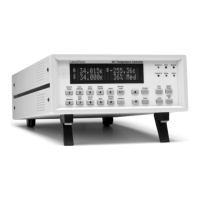
Overview of the Model 325 dual-channel temperature controller, its capabilities, and applications.
Details on the two sensor inputs, ADC, current sources, temperature range, and sensor types supported.
Explanation of the two independent PID control loops, heater outputs, and tuning features.
Information on the parallel (IEEE-488) and serial (RS-232C) computer interfaces.
Description of the OLED display, its four configurable areas, and display options.
Guidance on choosing the appropriate temperature sensor based on range, sensitivity, and conditions.
Detailed technical specifications for input, thermometry, and sensor configurations.
General safety precautions for instrument operation, service, and repair.
Explanation of various safety symbols used in the manual and on the instrument.
Factors to consider when choosing a sensor: temperature range, sensitivity, and environmental conditions.
Definition and importance of sensor sensitivity for resolution, accuracy, and stability.
Explanation of traditional calibration methods and Lake Shore's calibration services.
Description of the SoftCal algorithm for improving sensor accuracy using known temperature points.
Important elements of proper sensor installation, including mounting materials and location.
Explanation of the PID control algorithm used by the Model 325 for closed-loop operation.
Basic rules of thumb for tuning PID control loops, including setting heater range and proportional.
How the AutoTune feature automates PID tuning by measuring system characteristics.
Procedures for inspecting shipping containers and unpacking the instrument and accessories.
Description of the connections and components on the rear panel of the Model 325.
Instructions for connecting the Model 325 to line power, including voltage selection and fuse check.
Details on connecting diode and resistor sensors to the Model 325 inputs.
Information specific to connecting thermocouple sensors, especially at low temperatures.
Instructions for wiring the heater outputs for both control loops.
A step-by-step procedure to verify basic instrument operation before use.
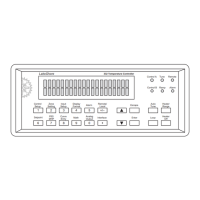
Overview of the front panel controls, indicators, and keypad definitions.
Detailed descriptions of each key on the front panel and their functions.
Explanation of the front panel OLED display layout and how readings are presented.
Step-by-step instructions for powering on the instrument and the startup sequence.
How to configure the display locations, select units, and sources for readings.
Procedure for selecting the appropriate sensor type and configuration for each input.
How to select appropriate temperature response curves for sensors from standard or user libraries.
Overview of temperature control principles, control loops, and modes.
Configuration of control parameters like input, setpoint units, control mode, and power-up behavior.
Detailed steps for manually setting Proportional (P), Integral (I), and Derivative (D) parameters.
How to use the AutoTune feature to automatically calculate PID settings for stable control.
Procedure for entering and setting the desired temperature setpoint for the controller.
Selecting heater ranges for Loop 1 and turning heaters on/off for both loops.
Setting the heater resistance value (25 or 50 ) for optimal output and control.
Setting serial interface baud rate and IEEE-488 address and terminators.
Information on standard and user curve locations and how curves are stored.
Parameters used to identify and configure sensor curves for effective use.
How to enter temperature response data as breakpoints for creating custom sensor curves.
Operations for editing, erasing, and copying curves directly from the front panel.
Using SoftCal algorithms for inexpensive sensor calibrations with standard curves and known data points.
Details on SoftCal calibration for silicon diode sensors, including data points and accuracy.
Step-by-step process for creating a SoftCal calibration curve using the instrument.
Overview of the IEEE-488 interface, its capabilities, and connection standards.
Setting interface parameters like address and terminators from the front panel.
Description of the RS-232C serial interface, its features, and requirements for communication.
Details on the physical connection of the Model 325 serial interface, including pinouts and cable types.
Procedure to set the serial interface baud rate from the front panel.
A listing of IEEE-488 and serial interface commands with their functions and page references.
List of available Model 325 standard controllers and their input configurations.
Available options for the Model 325, such as CalCurve™ services.
List of accessories available for the Model 325, including cables, connectors, and mounting kits.
Contact information and procedures for reaching Lake Shore for sales or service.
Procedure for returning the instrument for recalibration, repair, or replacement, including RA number.
Procedure for changing the instrument's line voltage setting and verifying the fuse.
Step-by-step instructions for replacing line fuses in the instrument.
Information on ESD and precautions for handling sensitive electronic components.
Detailed definitions and pinouts for the rear panel connectors.
List of error messages displayed by the Model 325 and their descriptions.
General procedures for calibrating sensor inputs and the Loop 2 heater output.
List of PC, interface, DMM, reference, and calibration cables needed for calibration.
Calibration process for diode/resistor sensor inputs, including 10 µA and 1 mA current sources.
Calibration process for thermocouple sensor inputs, including range calibration.
Calibration procedure for the Loop 2 heater output, including voltage output calibration.
General definition of temperature and related scales like Celsius, Fahrenheit, and Kelvin.
Formulas for converting between Fahrenheit, Celsius, and Kelvin temperature scales.
Definition of temperature and scales like Celsius, Fahrenheit, and Kelvin.
Graphical comparison of Celsius, Fahrenheit, and Kelvin temperature scales.
Formulas for converting between Fahrenheit, Celsius, and Kelvin temperature scales.
Lists the standard curve tables included with the Model 325 controller.
Table of breakpoints, temperature (K), and voltage for the DT-470 Silicon Diode curve.
Table of breakpoints, voltage, and temperature (K) for the DT-670 Diode curve.
Tables for DT-500-D and DT-500-E1 Silicon Diode curves, including breakpoints, temp, and volts.
Data for PT-100 and PT-1000 Platinum RTD curves, showing temperature (K) and resistance (Ohms).
Curve data for RX-102A Rox™ sensor, including log(Ohms) and temperature (K).
Thermocouple curve data for Type K, showing mV and temperature (K).
Thermocouple curve data for Type E, showing mV and temperature (K).
Thermocouple curve data for Type T, showing mV and temperature (K).
Thermocouple curve data for Chromel-AuFe 0.03%, showing mV and temperature (K).
Thermocouple curve data for Chromel-AuFe 0.07%, showing mV and temperature (K).
 General
| Brand | Lakeshore |
|---|---|
| Model | 325 |
| Category | Temperature Controller |
| Language | English |

 To Next Page