EasyManua.ls Logo

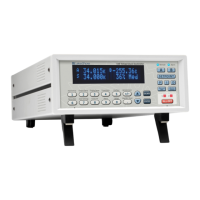
Lakeshore 340 - User Manual

Lakeshore 340
178 pages
Print Icon
To Next Page IconTo Next Page
Loading...
Rev. 2.1 P/N 119-011 29 March 2004
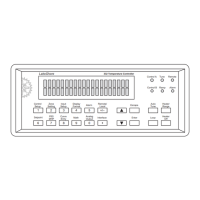
Input
Setup
7
SoftCal
8
Display
Format
9
Escape
Scan
Setup
4
Curve
Entry
5
Interface
6
Alarm
Setup
1
Math
Setup
2
Analog
Outputs
3
Alarm
Reset
0
Math
Reset
.
Options
+/-
Enter
Auto
Tune
Zone
Settings
Ramp Program
P I D
Heater
Range
Control
Channel
Heater
Off Setpoint
Manual
Output Loop 2
Control
Setup
Loop 1
Cancel
Screen More
Previous
Setting Local
Next
Setting DataCard
Save
Screen Help
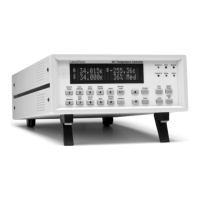
340 Temperature Controller
Lake Shore Cryotronics, Inc.
575 McCorkle Blvd.
Westerville, Ohio 43082-8888 USA
Internet Addresses:
sales@lakeshore.com
service@lakeshore.com
Visit Our Website:
www.lakeshore.com
Fax: (614) 891-1392
Telephone: (614) 891-2243
Methods and apparatus disclosed and described herein have been developed solely on company funds of Lake Shore Cryotronics, Inc.
No government or other contractual support or relationship whatsoever has existed which in any way affects or mitigates proprietary
rights of Lake Shore Cryotronics, Inc. in these developments. Methods and apparatus disclosed herein may be subject to U.S. Patents
existing or applied for. Lake Shore Cryotronics, Inc. reserves the right to add, improve, modify, or withdraw functions, design
modifications, or products at any time without notice. Lake Shore shall not be liable for errors contained herein or for incidental or
consequential damages in connection with furnishing, performance, or use of this material.
User’s Manual
Model 340
Temperature Controller

Table of Contents

Other manuals for Lakeshore 340

Question and Answer IconNeed help?

Do you have a question about the Lakeshore 340 and is the answer not in the manual?

Summary

CHAPTER 1 INTRODUCTION

1.3 MODEL 340 FEATURES

Overviews individual features of the instrument in the temperature control environment.

CHAPTER 2 COOLING SYSTEM DESIGN

2.1 TEMPERATURE SENSOR SELECTION

Guides user on selecting the proper temperature sensor considering range and sensitivity.

2.3 SENSOR INSTALLATION

Highlights proper sensor installation elements like mounting, location, and thermal conductivity.

2.4 HEATER SELECTION AND INSTALLATION

Covers heater selection, resistance, power, and installation procedures.

2.6 PID CONTROL

Explains PID control algorithm terms (Proportional, Integral, Derivative) and their functions.

2.7 MANUAL TUNING

Provides basic rules for tuning PID control parameters like P, I, and D.

2.8 AUTOTUNING

Describes the AutoTune feature for automatically choosing control settings.

CHAPTER 3 INSTALLATION

3.4 STANDARD SENSOR INPUTS

Details how to connect sensors to the standard Model 340 inputs.

3.5 HEATER OUTPUT SETUP

Covers wiring, protection, and noise considerations for heater outputs.

CHAPTER 4 FRONT PANEL OPERATION

4.4 KEYPAD NAVIGATION

Guides on navigating menus and setting parameters using the keypad.

CHAPTER 5 SENSOR INPUT AND TEMPERATURE MEASUREMENT OPERATION

5.1 SENSOR INPUT SETUP

Covers sensor type, voltage excitation, and special sensor configurations.

5.2 SELECTING A TEMPERATURE RESPONSE CURVE

Guides on selecting a temperature response curve to convert sensor readings to temperature.

CHAPTER 6 TEMPERATURE CONTROL OPERATION

6.2 CONTROL LOOP ENABLE

Explains how to enable or disable control outputs for Loop 1 and Loop 2.

6.4 CONTROL CHANNEL

Guides on selecting the sensor input to use as feedback for each control loop.

6.5 CONTROL MODES

Describes manual PID, AutoTune, Zone, and Open Loop control modes.

6.6 MANUAL SETTING OF PID CONTROL PARAMETERS

Defines and guides on setting PID control parameters (P, I, D, Manual Output).

6.7 SELECTING AN AUTOTUNE CONTROL MODE

Guides on setting up the cooling system and selecting an AutoTune control mode.

6.8 ZONE CONTROL DATA ENTRY

Guides on establishing custom temperature zones with pre-programmed PID settings.

6.9 USING OPEN LOOP CONTROL

Explains using open loop control for experiments requiring constant output regardless of temperature.

6.10 SETTING A SETPOINT AND SETPOINT UNITS

Guides on setting the control setpoint and selecting units (Kelvin, Celsius, or sensor).

6.12 CONTROL OUTPUT

Discusses using heater output and analog output as control outputs.

CHAPTER 7 ANALOG OUTPUT, DIGITAL I;O, ALARM, AND RELAY OPERATION

7.3 INPUT ALARMS

Guides on enabling and configuring input alarms, including sources and relay actions.

CHAPTER 8 INSTRUMENT PROGRAMMING

8.1 CURVE ENTRY FROM THE FRONT PANEL

Guides on entering temperature response curves via the front panel.

8.2 SOFTCAL

Describes SoftCal for improving sensor accuracy and creating calibration curves.

8.3 INTERNAL PROGRAMMING

Explains creating and running internal programs for automated sequences.

CHAPTER 9 REMOTE OPERATION

9.1 IEEE-488 INTERFACE

Describes the IEEE-488 interface and its capabilities for instrument communication.

9.3 IEEE-488;SERIAL INTERFACE COMMANDS

Lists and explains commands for controlling the instrument remotely via IEEE-488 or Serial.

Lakeshore 340 Specifications

General IconGeneral
Control Channels2
Sensor Inputs2
Control TypePID
Control Outputs2
Heater Power50 W per channel
Display Resolution0.001 K
Input TypeThermocouples, RTDs
InterfaceIEEE-488, RS-232
Power Requirements100-120/220-240 VAC, 50/60 Hz
Control Stability±0.01 K

Related product manuals