Need help?
Do you have a question about the Lakeshore 335 and is the answer not in the manual?
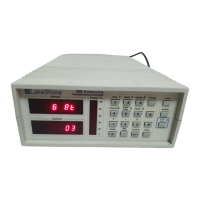
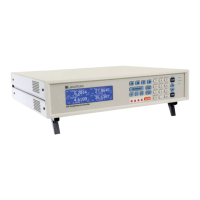
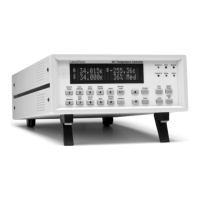
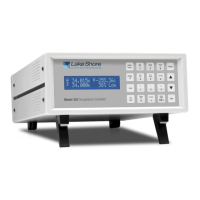
Overview of the Model 335's features, including sensor inputs, PID control, interfaces, and advanced functions.
Details on the two standard sensor inputs, compatibility with diode/RTD sensors, and optional thermocouple input.
Explanation of the Model 335's temperature control capabilities, including PID loops, autotuning, and setpoint ramping.
Information on the standard USB and IEEE-488 interfaces for computer control and data acquisition.
Details on the Model 335's customizable front panel display modes for monitoring readings and control information.
Information on the field-installable option for adding thermocouple measurement capabilities to the Model 335.
Guidance on choosing appropriate temperature sensors, considering range, sensitivity, and magnetic field effects.
Detailed technical specifications for various sensor inputs, including range, excitation, and accuracy.
Configuration options for sensor inputs, including number of inputs, isolation, resolution, and user curves.
Overview of thermometry capabilities, including sensor types, calibration, and math functions.
Technical specifications for control outputs, including modes, tuning, and parameters.
Specifications related to the front panel display, units, resolution, and features.
Specifications for the IEEE-488 and USB interfaces, including capabilities and reading rates.
General specifications including ambient temperature, power requirements, size, and weight.
General safety precautions, environmental conditions, and safety symbols to be observed during operation.
Introduction to designing a temperature control system and obtaining optimal measurement and control.
Guidance on selecting temperature sensors, considering range, sensitivity, and environmental factors.
Information on sensor calibration services, including precision calibration, SoftCal™, and standard curves.
Key elements of proper sensor installation, including mounting materials, location, and thermal considerations.
Guidance on selecting and installing resistive heaters, considering resistance, power, and thermal anchoring.
Factors affecting good temperature control, including thermal conductivity, lag, mass, and non-linearity.
Explanation of the Proportional-Integral-Derivative (PID) control algorithm used by the Model 335.
Basic rules and procedures for manually tuning PID control loops for optimal performance.
Description of the Autotune feature for automating PID control parameter calculation.
Explanation of the Zone feature for establishing custom temperature zones with specific control parameters.
Information on using thermoelectric devices for temperature control and bipolar control mode.
General installation instructions for the Model 335, emphasizing safety and performance.
Procedures for inspecting shipping containers and unpacking the instrument and its accessories.
Description of the Model 335 rear panel connections, including inputs, outputs, and interfaces.
Instructions for connecting the Model 335 to AC line power, including voltage selection and fuse details.
Details on connecting diode and resistor sensors, including connector pinouts and measurement techniques.
Instructions for installing and connecting thermocouple sensors using the Model 3060 option.
Guidance on wiring and configuring heater outputs, including descriptions, connectors, and noise reduction.
Introduction to the general operating features and advanced operation of the Model 335.
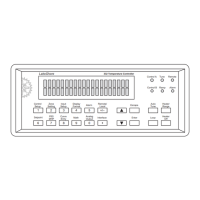
Detailed description of the front panel controls, indicators, and keypad layout.
Information on configuring the front panel display modes for optimal viewing of readings and parameters.
Configuration of sensor inputs, including type, range, excitation, calibration, and units.
Configuration of outputs and control loops, including heater outputs, modes, and control parameters.
Configuration and operation of the computer interfaces (USB and IEEE-488).
Procedure for locking and unlocking the front panel keypad to prevent accidental changes.
Introduction to advanced operating features of the Model 335 temperature controller.
Description of the Autotune feature for automating PID control parameter tuning for cryogenic systems.
Procedure for establishing up to ten custom temperature zones with pre-programmed control parameters.
Information on using bipolar control mode for devices like thermoelectric coolers with Output 2.
Configuration and operation of Warm Up Supply mode for rapid temperature increases.
Configuration of Monitor Out mode for outputting voltage proportional to sensor input.
Configuration and operation of alarms and relays for monitoring and controlling system states.
Details on standard and user curve locations, and parameters for curve identification.
Operations for entering, editing, erasing, and copying temperature curves via the front panel.
Information on using SoftCal™ algorithms for inexpensive sensor calibrations.
Configuration of emulation modes to allow the Model 335 to replace Model 331 or 332 controllers.
Introduction to the computer interface, covering IEEE-488 and USB connections.
Details on the IEEE-488 interface, its capabilities, and connection standards.
Information on the USB interface, including installation of drivers and hardware support.
Listing and description of interface commands for controlling the Model 335 remotely.
Overview of available models, options, and accessories for the Model 335.
List of Model 335 model numbers and their corresponding power configurations.
Details on available options for the Model 335, such as the thermocouple input option.
List of accessories available for the Model 335, including cables, connectors, and conditioners.
Instructions for installing the Model 335 into a rack mount cabinet using the RM-½ rack mount kit.
Information on the field-installable thermocouple input option for adding thermocouple functionality.
Description of the Model 3003 conditioner for reducing heater output noise.
Basic service information and customer service limitations for the Model 335.
Troubleshooting steps for issues with USB interface installations and intermittent lockups.
Troubleshooting steps for issues with IEEE-488 interface installations and intermittent lockups.
Description of the fuse drawer, which holds line fuses and the line voltage selection module.
Procedure for changing the instrument's line voltage selector, with safety warnings.
Procedure for replacing line fuses, emphasizing safety and correct fuse type/rating.
Using the Factory Reset menu to restore default parameter values and clear user curves.
List of common error messages displayed by the Model 335 during operation.
Information on obtaining instrument calibration through Lake Shore Service.
Definition of rear panel connectors, including sensor input, heater output, and interface ports.
Information on Electrostatic Discharge (ESD) and handling sensitive components.
Procedure for field-installing the Model 3060 thermocouple input option.
Instructions for downloading and installing instrument firmware updates from the Lake Shore website.
Contact information and procedures for technical assistance, product service, and returns.
Definition of temperature and the Celsius, Fahrenheit, and Kelvin scales.
Graphical comparison of the three temperature scales.
Formulas for converting between Fahrenheit, Celsius, and Kelvin temperature scales.
Introduction to handling liquid helium and nitrogen with safety considerations.
Comparison of the properties of liquid helium and liquid nitrogen.
Instructions for operating cryogenic storage Dewars safely.
Essential safety aspects for handling liquid helium and nitrogen, including ventilation and protection.
Summary of first aid procedures for overexposure to cryogenic liquids or cold gases.
List of standard curve tables included with the Model 335 temperature controller.
 General
| Control Channels | 2 |
|---|---|
| Sensor Inputs | 2 |
| Resolution | 0.001 K |
| Output Channels | 2 |
| Control Algorithm | PID |
| Input Type | Thermocouple, Diode |
| Communication Interfaces | RS-232 |
| Heater Output Power | 25 W or 50 W per channel |
| Power Requirements | 100-240 VAC, 50/60 Hz |

 To Next Page