EasyManua.ls Logo

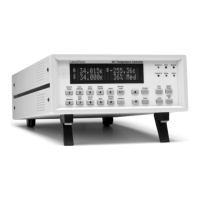
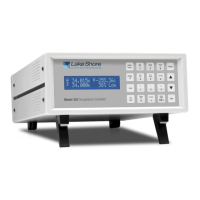
Lakeshore 336 - User Manual

Lakeshore 336
192 pages
Print Icon
To Next Page IconTo Next Page
Loading...
| www.lakeshore.com
Methods and apparatus disclosed and described herein have been developed solely on company funds of
Lake Shore Cryotronics, Inc. No government or other contractual support or relationship whatsoever has existed
which in any way affects or mitigates proprietary rights of Lake Shore Cryotronics, Inc. in these developments.
Methods and apparatus disclosed herein may be subject to U.S. Patents existing or applied for.
Lake Shore Cryotronics, Inc. reserves the right to add, improve, modify, or withdraw functions, design modifications,
or products at any time without notice. Lake Shore shall not be liable for errors contained herein or for incidental or
consequential damages in connection with furnishing, performance, or use of this material.
Rev. 1.9 P/N 119-048 7 December 2015
User’s Manual
Model 336
Temperature Controller
Lake Shore Cryotronics, Inc.
575 McCorkle Blvd.
Westerville, Ohio 43082-8888 USA
sales@lakeshore.com
service@lakeshore.com
www.lakeshore.com
Fax: (614) 891-1392
Telephone: (614) 891-2243

Table of Contents

Question and Answer IconNeed help?

Do you have a question about the Lakeshore 336 and is the answer not in the manual?

Summary

Chapter 1: Introduction

1.3 Model 336 Specifications

Detailed technical specifications for the Model 336 controller, including input, output, and interface specs.

1.4 Safety Summary and Symbols

Essential safety precautions and warning symbols for instrument operation and handling.

Chapter 2: Cooling System Design and Temperature Control

2.4 Sensor Installation

Best practices and considerations for proper sensor installation in cryogenic systems.

Chapter 3: Installation

3.5 Diode;Resistor Sensor Inputs

Detailed instructions on connecting diode and resistor sensors to the instrument.

Chapter 4: Operation

4.4 Input Setup

Configuration steps for various sensor types, including diodes, RTDs, and thermocouples.

4.5 Output and Control Setup

Setting up control loops, parameters (P, I, D), and output modes for temperature regulation.

Chapter 5: Advanced Operation

5.2 Autotune

Automating the PID tuning process to achieve stable temperature control.

Chapter 6: Computer Interface Operation

6.3 USB Interface

Steps for installing USB drivers and establishing communication via USB for data transfer.

6.4 Ethernet Interface

Configuring and using the Ethernet interface for network connectivity and remote operation.

Chapter 8: Service

8.2 USB Troubleshooting

Common issues and solutions for USB interface connectivity problems during installation.

8.3 IEEE Interface Troubleshooting

Troubleshooting steps for resolving problems with the IEEE-488 interface.

8.8 Error Messages

Explanation of displayed error messages and their corresponding causes and solutions.

8.11 Electrostatic Discharge

Precautions and procedures for handling electrostatic discharge sensitive components.

Lakeshore 336 Specifications

General IconGeneral
Control Channels2
Sensor Inputs4
Display Resolution0.001 K
Communication InterfacesEthernet, USB
Control AlgorithmPID
Heater Power100 W and 50 W
Power Requirements50/60 Hz
DisplayVFD
Control Stability±0.01 K (typical)

Related product manuals