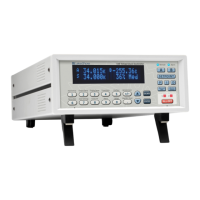
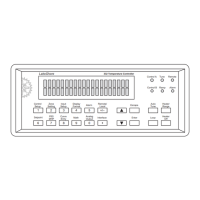
Lake Shore Model 325 Temperature Controller User’s Manual
4-8 Operation
4.4.3.1 Thermal EMF Compensation
To keep power low and avoid sensor self heating, the sensor excitation is kept low. There are two major problems that
occur when measuring the resulting small DC voltages. The first is external noise entering the measurement through the
sensor leads, which is discussed with sensor setup. The second problem is the presence of thermal EMF voltages,
sometimes called thermocouple voltages, in the lead wiring. Thermal EMF voltages appear whenever there is a
temperature gradient across a piece of voltage lead. Thermal EMF voltages must exist because the sensor is almost never
the same temperature as the instrument. They can be minimized by careful wiring, making sure the voltage leads are
symmetrical in the type of metal used and how they are joined, and by keeping unnecessary heat sources away from the
leads. Even in a well-designed system thermal EMF voltages can be an appreciable part of a low voltage sensor
measurement.
The Model 325 can help with a thermal correction algorithm. The instrument will automatically reverse the polarity of
the current source every other reading. The average of the positive and negative sensor readings will cancel the thermal
EMF voltage that is present in the same polarity, regardless of current direction.
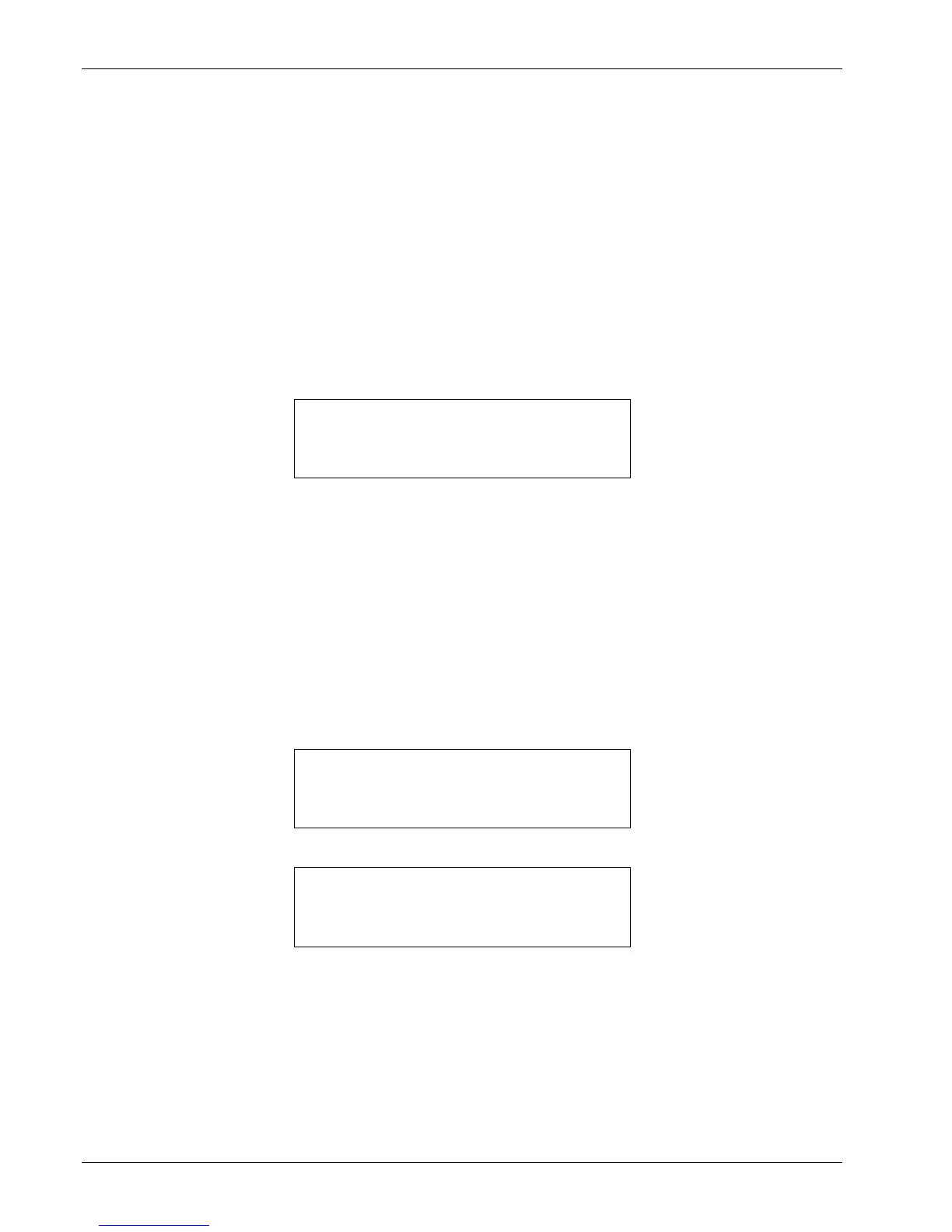
To turn reversal on or off press the Input Setup key and press the Enter key until the following display appears.
Resistor sensors have the additional choice of turning current reversal On or Off, with the default being On. If turned On,
the Model 325 will automatically reverse the polarity. Press the Enter key.
Proceed to Section 4.5.2 to select a temperature curve or press the Escape key to return to the normal display.
4.4.4 Thermocouple Sensor Input Setup (Model 325-TX only)
The following thermocouple screens are only displayed when the Model 325 hardware is configured at the factory with
one or two thermocouple sensor inputs; being Model 325-T1 or T2.
The user has the choice of two different input voltage ranges: ±25 mV and ±50 mV. The ±25 mV range is recommended
for cryogenic applications or higher temperatures less than 500 K. Since thermocouple voltage can exceed 25 mV on
some thermocouple types, the ±50 mV range is recommended for temperatures above 500 K.
The voltage range for Inputs A and B is set independently. To setup a thermocouple sensor input, press the Input Setup
key. The first screen appears as follows.
Use the s or t key to toggle between Input A and B. Press the Enter key.
Use the s or t key to cycle through the sensor types shown in Table 4-1, with “Thermo/25mV” and “Thermo/50mV”
being the relevant choices. Press the Enter key. Proceed to Section 4.4.4.1 to select a room-temperature compensation or
press the Escape key to return to the normal display.


 To Next Page