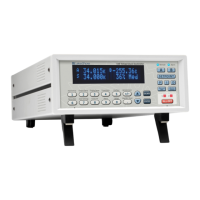
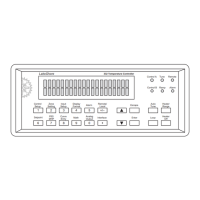
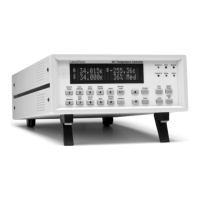
Lake Shore Model 325 Temperature Controller User’s Manual
Service 8-15
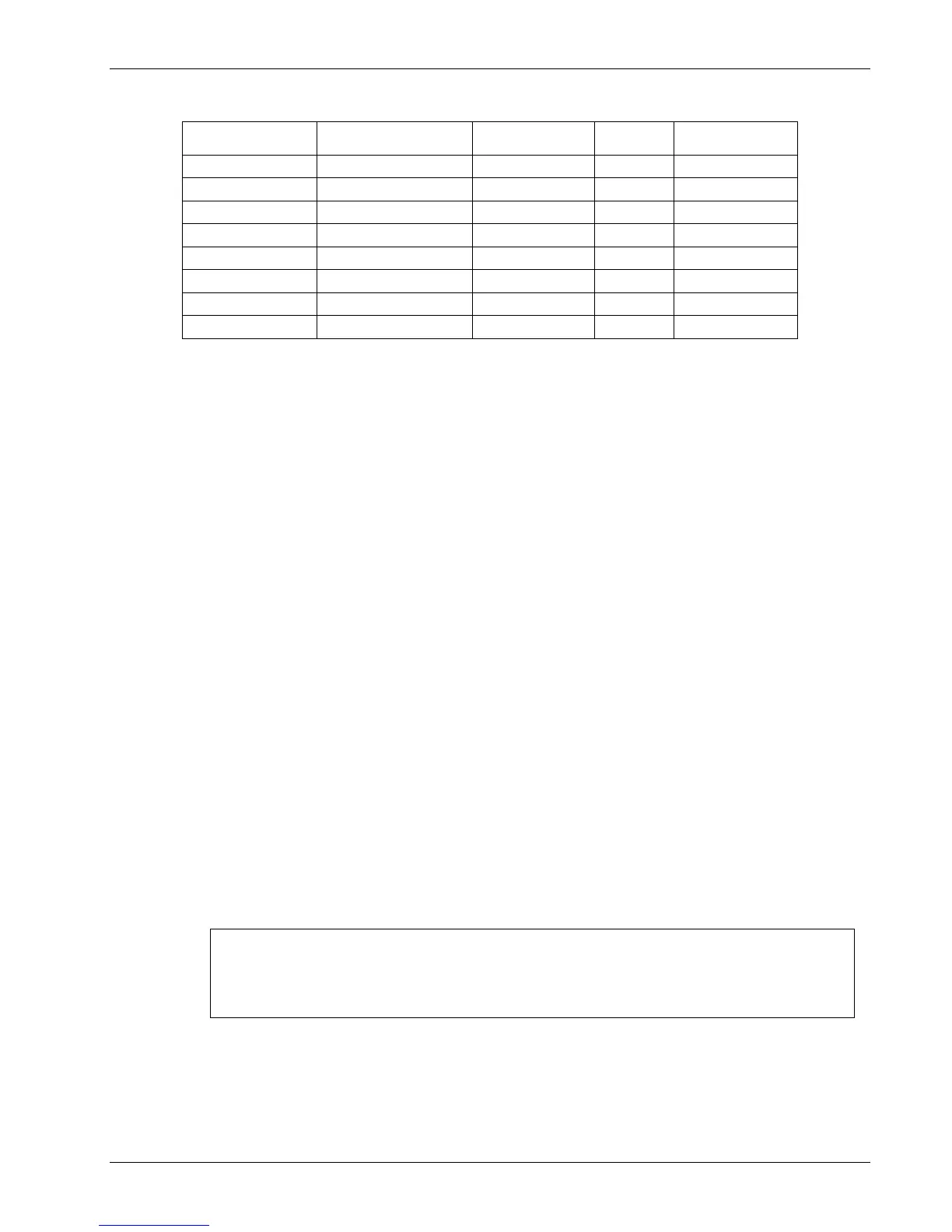
Table 8-2. Calibration Table for Resistive Ranges
Calibration Resistor
Nominal Value
8.12.3 Diode Sensor Input Calibration – 1 mA Excitation Current
The instrument uses the calibration constants determined in the Diode Input Ranges Calibration (Section 8.12.2.3), for
the diode ranges that use 1 mA excitation. Therefore, no additional calibration is necessary.
NOTE: Standard diode curves and typical sensor performance (Table 1-2) are calculated using 10 µA
excitation. Sensor temperature response characteristics will be altered if 1 mA excitation is selected.
8.12.4 Thermocouple Sensor Input Calibration
Overview
Each thermocouple sensor input requires calibration. The sensor inputs contain multiple gain stages to accommodate the
various thermocouple sensors the Model 325 supports. The input circuitry is not adjusted during calibration. Instead,
precision voltages are supplied to each input and mathematical calibration constants are calculated and programmed into
the Model 325. Constants are stored to compensate for both input offset and gain errors. Thermocouple inputs do not use
the current source.
Calibration Process
8.9.4.1 Sensor Input Calibration Setup
Allow the Model 325 to warm up for at least 1 hour with shorts placed across all thermocouple sensor inputs. If
calibrating a dual thermocouple Model 325, leave a short across the input not currently being calibrated. If the other
input is diode/resistor, place a 100 k resistor on the input.
CAUTION: All thermocouple connections must be tight and direct with no unnecessary jumpers or connections.
8.12.4.2 Thermocouple Input Ranges Calibration
Purpose
To determine the input offset and gain errors when the input is configured for the thermocouple ranges and provide
offset and gain calibration constants back to the Model 325.
Process
1. Configure the input for the thermocouple range to be calibrated. Turn Room Cal off.
2. Reset the calibration constants to their default values using the CALZ and CALG commands.
EXAMPLE:
Input: A
Range: Thermo/25mV
Zero Offset Command: CALZ A,6,0
Gain Command: CALG A,6,1
3. Short the V+ and V– terminals together, do not tie the terminals to ground.
4. Via the interface obtain the input reading using the CALREAD? command and record this number.


 To Next Page