Fire damper - FDMRPage 26 Version 2023-06-15
TPM 140/19
■ The fire damper can be installed into:
■ Solid wall construction made e.g. of normal
concrete/masonry or porous concrete with minimum
thickness 100 mm.
■ Gypsum wall construction with fire classification EI120
or EI 90, with minimum thickness 100 mm.
■ Solid ceiling construction made e.g. of normal
concrete or pourous concrete with fire classification
EI90 or EI 120, with minimum thickness according to
EN 1366-2.
■ Outside the wall/ceiling contruction. The duct and
damper must be protected by fire insulation.
Examples of constructions for fire damper installation
Built in edge
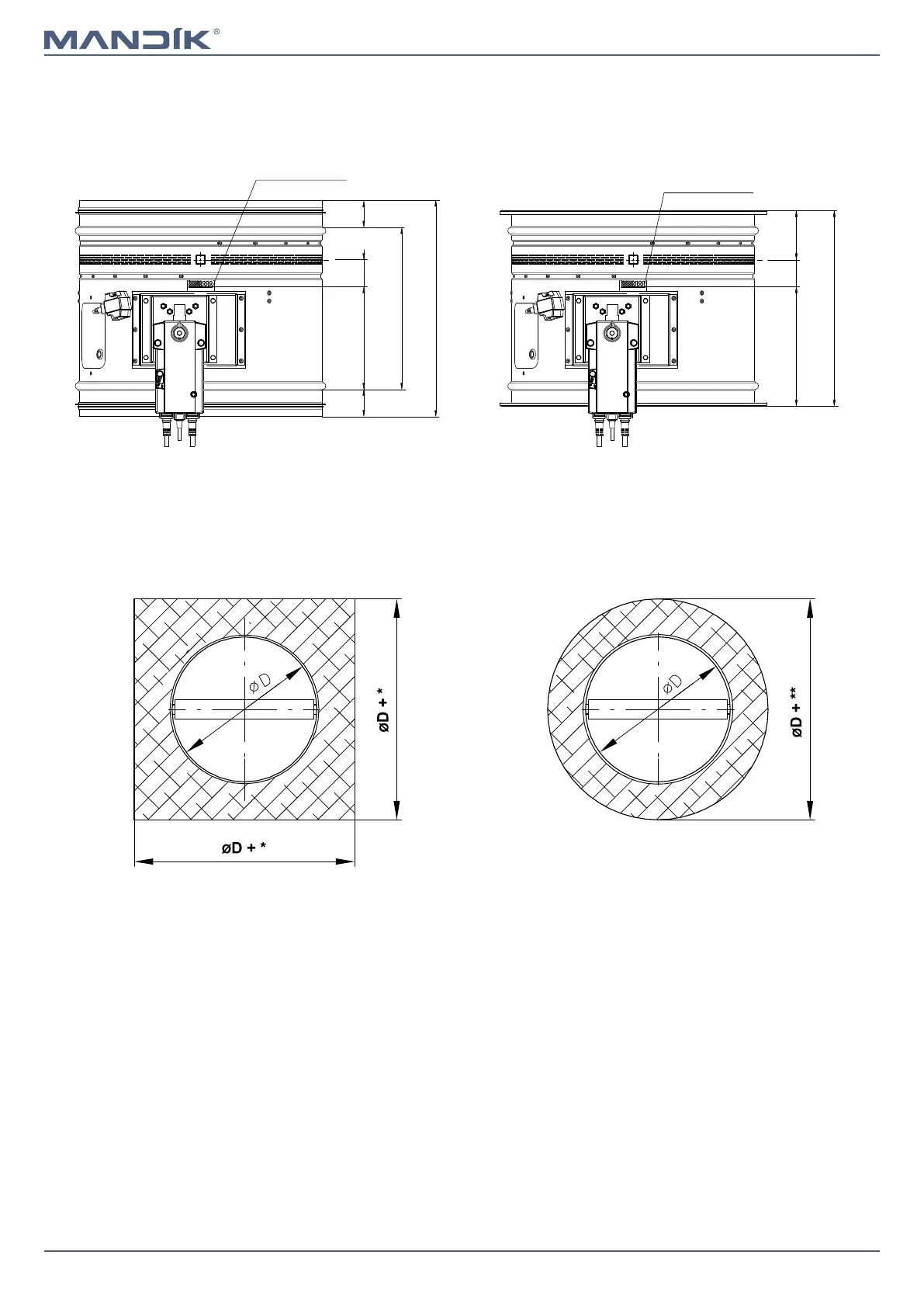
"BUILT IN EDGE label" indicates the recommended edge of installation of a fire damper in the fire separating construction (wall/ceiling).
The damper must be installed so that the entire damper blade (in the closed position) is located in the fire separating construction
(wall/ceiling) and at the same time the actuating mechanism and inspection openings are freely accessible.
Built in edge
Spiro design
Built in edge
Flange design
Dimensions of an installation opening Dimensions of an installation opening
* Mortar or gypsum
■ min. ØD+80
■ max. ØD+300
** Mortar or gypsum
■ min. ØD+80
■ max. ØD+300
* Weichschott
■ min. ØD+80
■ max. ØD+800
* Fire protection foam
■ min. ØD+80
■ max. ØD+260
* Stuffing box with fire protection boards
■ min. ØD+80
■ max. ØD+220


 To Next Page