3.5 SHIFTING SPEED RANGE, CHANGING
• When traveling, select a travel speed to match the travel surface and ground condition.
• When traveling on a slope, be sure to set the travel speed range to the low speed range. Also, when traveling on
a slope, travel straight forward.
• When going down a slope, always travel in the low speed range. Run the engine at low speed and operate the
travel lever a maximum of half way from the N position. Traveling at excessive speed is dangerous and will
cause overrunning.
• When traveling up a slope, always travel in the low speed range. Run the engine at the rated speed and keep the
travel lever close to the N position. Always travel directly up the slope.
• When traveling forward downhill, if the angle of the slope goes above a certain range, the SLOPE CAUTION
lamp on the instrument panel lights up and the slope alarm buzzer at the rear of the operator's compartment
sounds to warn the operator.
It is dangerous to start the machine off with the dump body loaded if the slope alarm buzzer sounds.
Reduce the engine to low speed, set the travel lever close to the N position, and start the machine off carefully.
• If a dangerous state occurs by any possibility, and when it becomes necessary to stop the machine urgently,
press the parking brake switch to set it to the ON (STOP) position or turn the engine starting switch to the OFF
position to stop the engine.
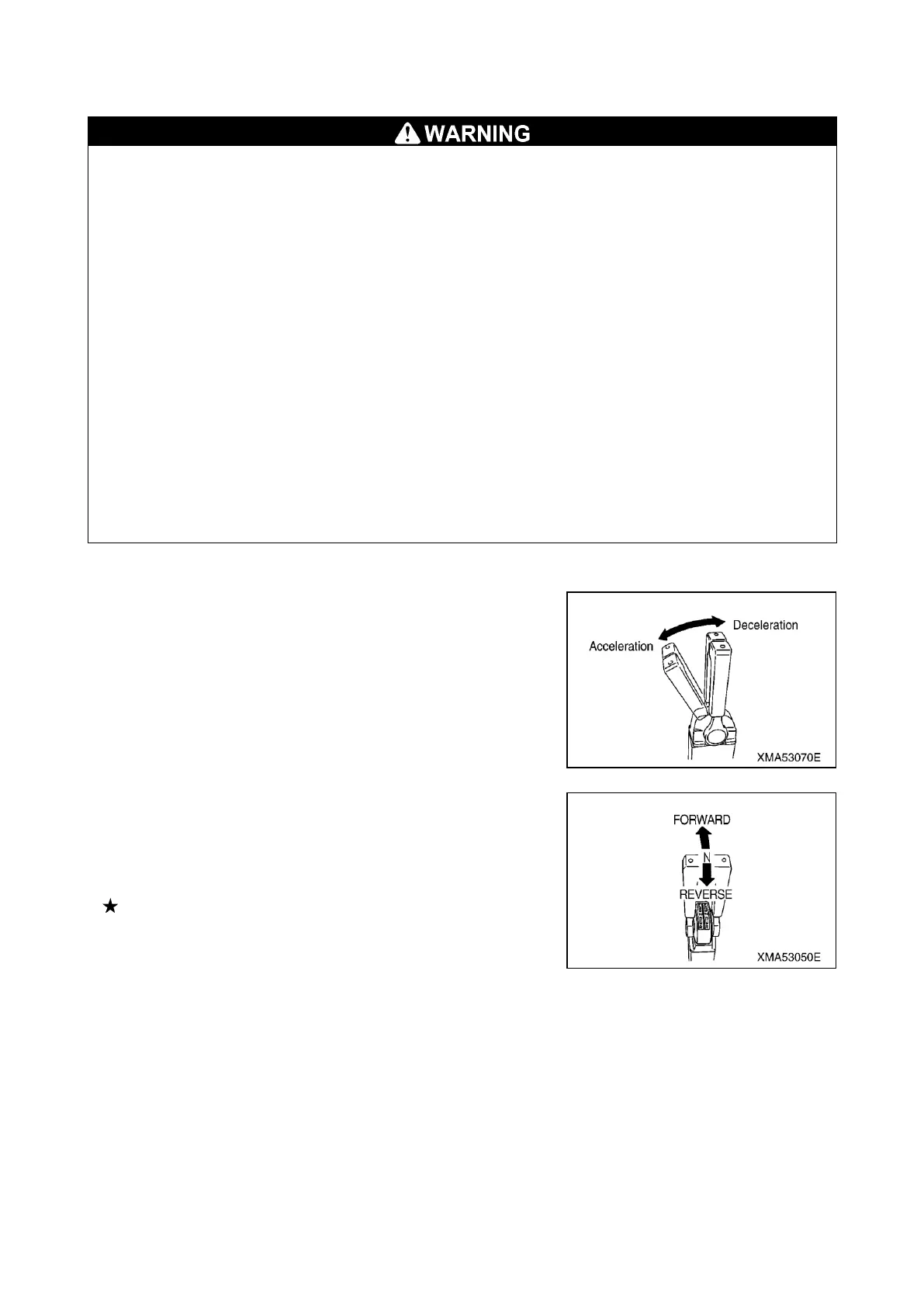
• When switching between FORWARD and REVERSE, always stop the machine before shifting direction.
If the direction of travel is shifted suddenly between FORWARD and REVERSE, it will cause failures such as
reverse rotation of the engine.
• When switching the travel speed range, always stop the machine first before operating the switch.


 To Next Page