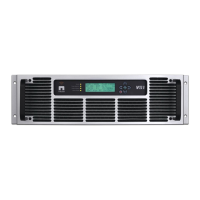
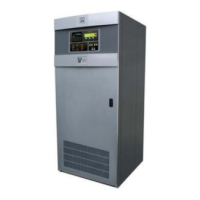
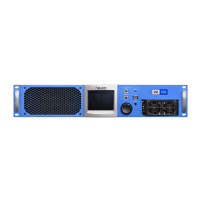
VX3 TO VX6 INSTALLATION MANUAL RF OUTPUT REQUIREMENTS
VERSION 1.0 2023-08-16 PAGE 1.6.1
SECTION 1.6: RF OUTPUT REQUIREMENTS
This section describes requirements associated with the antenna and RF cabling to be used with the
VX3 to VX6 transmitter. Antenna considerations include the following:
Antenna Feed Cable
Antenna System
For detailed information about protecting the antenna system from lightning strikes, see Nautel’s
Recommendations for Transmitter Site Preparation Manual.
NOTE:
This section provides the information required to determine your antenna feed cable and plan for
its connection to the transmitter. Physical connections are made in
Completing External Connections on
page 1.10.1
.
Antenna Feed Cable
The antenna feed line interconnecting the transmitter and the antenna system should be a suitably
rated coaxial cable. The RF output is configured, by default, to accept a male 1-5/8 inch EIA connection.
An optional 1-5/8 to 7/8 inch adapter is available (contact Nautel Sales), which provides a male 7/8 inch
EIA connection.
NOTE:
The 1-5/8 inch field flange can be removed to accept an unflanged 1-5/8 inch connection
.
Antenna System
Ideally, the antenna system should present 50 ± j0 ohms impedance at the carrier frequency and have
sufficient bandwidth to allow transmission of the modulated carrier. The transmitter will function at
rated power while operating into a maximum VSWR of 1.5:1, after which the transmitter begins to fold
back the RF output (up to a VSWR of 3.0:1). The transmitter’s SWR Foldback threshold has a factory
default setting of 1.5, but is has a user adjustable range of 1.1 to 1.5. Circuitry within the transmitter
will prevent damage to the transmitter from high VSWR loads.
If the measured SWR exceeds 1.5:1 but not 3.0:1, the transmitter will reduce the RF power.
Refer to the Operations and Maintenance manual for SWR threshold details.


 To Next Page