95
Part 15 - Maintenance Report
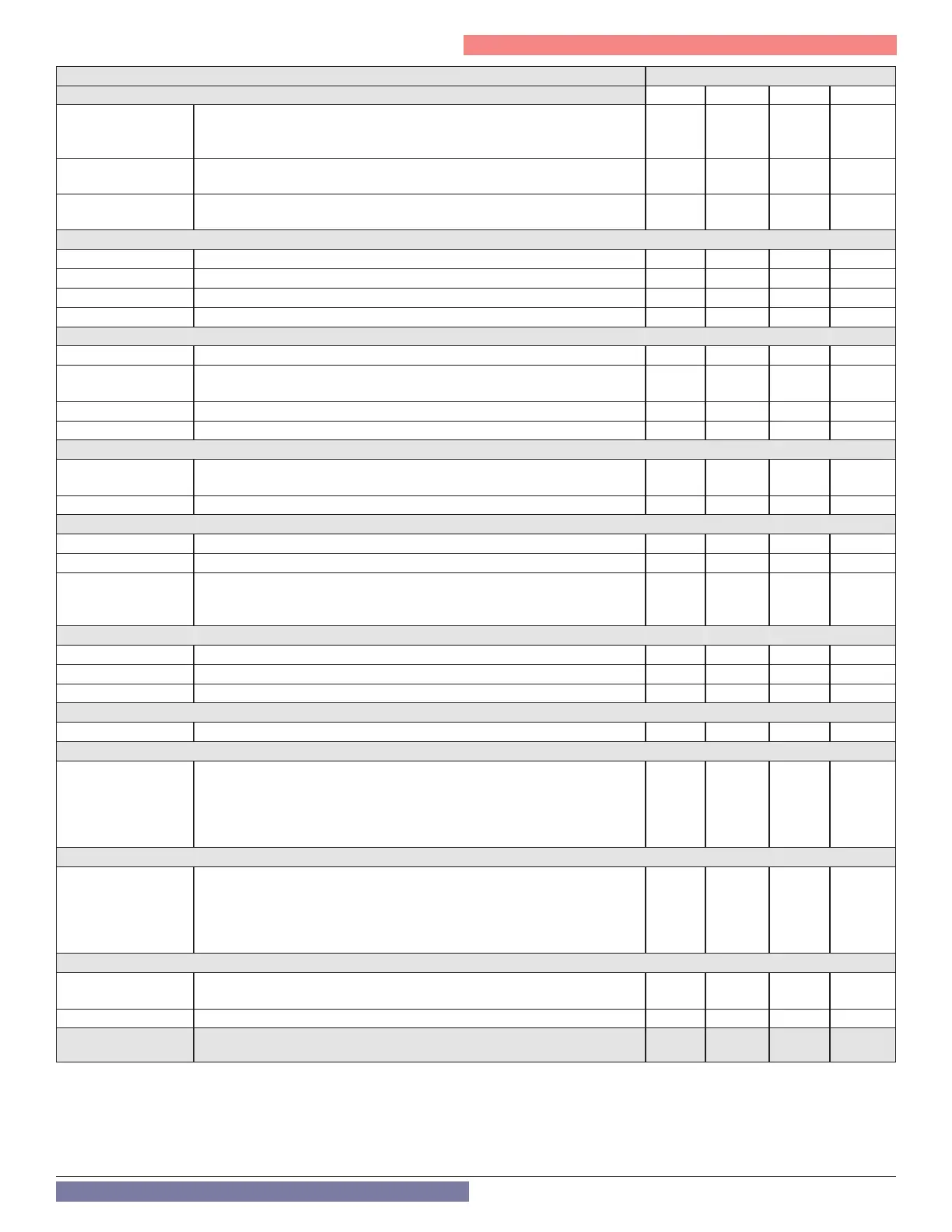
INSPECTION ACTIVITIES DATE LAST COMPLETED
PIPING
1
st
YEAR 2
nd
YEAR 3
rd
YEAR 4
th
YEAR*
Near boiler piping Check boiler and system piping for any sign of leakage. Leaking pipes could
cause property damage. Make sure all piping is properly supported. See
User’s Information manual for instructions.
Vent Check condition of all vent pipes and joints. Ensure all vent piping is properly
supported. Check for obstructions at exhaust and intake termination points.
Gas Check Gas piping, test for leaks and signs of aging. Make sure all pipes are
properly supported.
SYSTEM
Visual Do a full visual inspection of all system components.
Functional Test all functions of the system (central heat, water heating, Safeties)
Temperatures Verify safe settings on boiler or Anti-Scald Valve
Temperatures Verify programmed temperature settings
ELECTRICAL
Connections Check wire connections. Make sure they are tight.
Smoke and CO
detector
Verify devices are installed and working properly. Change batteries if
necessary.
Circuit Breakers Ensure the circuit breaker is clearly labeled. Exercise circuit breaker.
Switch and Plug Verify ON/OFF switch and convenience plug are both functional
CHAMBER/BURNER
Combustion Chamber Check burner tube and combustion chamber coils. Clean according to
maintenance section of manual. Vacuum combustion chamber.
Spark Electrode Clean. Set gap at 1/8”.
CONDENSATE
Condensate Trap Clean debris from the condensate trap. Fill with clean water.
Neutralizer Check condensate neutralizer. Replace if necessary.
Condensate hose Disconnect condensate hose. Clean out dirt and re-install. (NOTE: Verify the
ow of condensate, making sure that the hose is properly connected during
nal inspection.)
GAS
Pressure Measure incoming gas pressure (3.5 to 10.5” W.C. NG, 8 to 13” W.C. LP)
Pressure Drop Measure drop in pressure on light o (no more than 1” W.C.)
Check for leaks Check gas piping for leaks. Verify that all are properly supported.
COMBUSTION
CO/CO2 Levels Check CO and CO2 levels in Exhaust. Record at high and low re.
SAFETIES
ECO (Energy Cut Out)
Check continuity on ue temperature sensor. Replace the ue gas temperature
sensor if corroded.
Check continuity on Water ECO. Check position and sensor resistance.
Ensure air pressure switch is properly connected (electrical connections and silicone
pipe).
DHW LOOP - Combi Models
It is recommended to ush the DHW heat exchanger annually if water
hardness exceeds 12 grains per gallon (considered extremely hard water). If
water hardness falls below 12 grains per gallon it is recommended to ush
the heat exchanger every two to three years.
It is also recommended to clean the CH and DHW inlet lters annually.
FINAL INSPECTION
Check list Verify that you have completed entire check list. WARNING: FAILURE TO DO
SO COULD RESULT IN SERIOUS INJURY OR DEATH.
Homeowner Review what you have done with the homeowner.
TECH SIGN OFF
Table 34 - *Continue annual maintenance beyond the 4
th
year as required.



 To Next Page