40
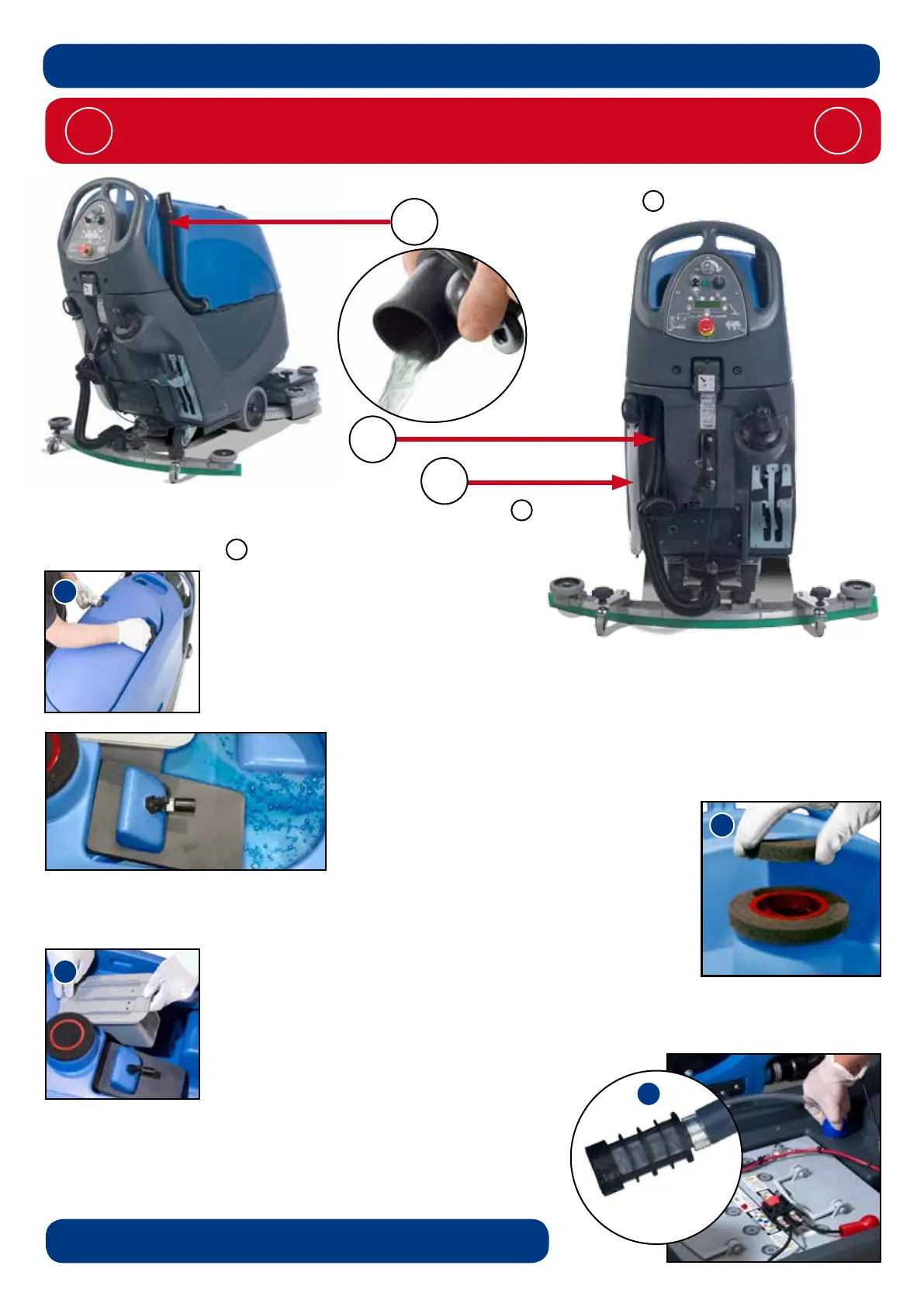
Next remove oor-tool vacuum hose and ush out with clean-water.
Next empty clean-water tank, using emptying hose and again
ush out with clean-water.
After use, empty waste-water tank using emptying hose and
ush-out with clean-water.
A
A
B
C
B
Whilst pressing in the top tank hood toggles,
remove the hood (Fig.38)
The hood also has a sealing rubber which should be examined at every clean-down.
Rinse using clean-water, avoiding the vac lter (Fig.38a).
Remove debris basket lter and rinse using clean-water, and ret.
IMPORTANT: If the debris basket is allowed to become clogged, vacuum performance can
deteriorate. (Fig.38b)
The clean-water tank lter is located to the rear of the battery compartment,
and should be checked at regular intervals.
Unscrew the cap check the lter condition (Fig.38c), rinse and ret.
Ensure tank has been emptied and care is taken when working in the
vicinity of batteries.
Note:
Any spills should be wiped-up before the top tank is lowered.
Located in your waste-water (top) tank is a full tank switch, this stops your
machine from working once the waste-water reaches its maximum limit.
Sometimes the switch gets clogged and blocked, clean to ensure correct
operation.
Regular Maintenance
ALWAYS ENSURE THAT THE MACHINE IS SWITCHED OFF PRIOR TO ANY
MAINTENANCE USING THE MASTER CONTROL ON/OFF KEY.
REMOVE THE KEY PRIOR TO ANY MAINTENANCE OPERATION.
!
!
IMPORTANT
Remove vac lter and clean if required (keep dry) (Fig.38a).
Never use the machine without the recommended lter as it may cause damage to the machine.
C



 To Next Page