3 Installation
The area for which the detector will be installed shall be in accordance with the
certification of the detector and with the standards of the appropriate authority in the
country concerned.
If the service temperature of the installation may exceed 70 °C, ensure the following:
● Cable glands are certified for the given temperature range.
● Cables are suited for use at temperatures above 78 °C.
The usage of unqualified glands, cables or conduits are considered hazardous.
3.1 Installation checklist
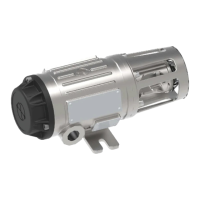
Below is the recommended procedure for installing the detector PG11:
1. Check that the detector is mounted in a horizontal orientation with tight bolts as
described in section “3.3 Mounting the detector”.
2. Verify correct wiring of the terminals as described in “3.3 Electrical connections and
Earthing”.
3. Check that cable gland is suitable type and certification
4. Verify cable shielding has been correctly terminated.
5. Verify correct Earthing to external Earthing point on the Detector housing as described
in “3.4 Electrical connections and Earthing”.
3.2 Preparations and Positioning considerations
PG11 is a point gas detector, and should be placed as close to a potential leaking point as
possible. However, each installation is different from another, and detailed considerations
must be done locally in order to get the best coverage for detection. Below are some general
matters to consider:
● The detector should be placed where maintenance, such as cleaning of optics can
easily be performed.
● The relative weight of the target gas compared to air must be taken into account when
deciding the optimum installation height. Methane is lighter than air and in this case
the gas detector may have to be placed above a potential leak source. In case of the
other hydrocarbons such as Propane being heavier than air, could accumulate lower
levels and might be better detected by placing Detectors at lower levels - in many
instances close to the floor.
● The concentration of a gas cloud will quickly reduce with the distance from the leak
source. The detector should therefore be placed as close as possible to potential
leakage sources.
● In spaces where there are two main components of gas then it is recommended to use
two gas instruments in accordance with HAZOP studies or a Detector that is sensitive
to both gases. The Optical Methane Detector will for most heavy hydrocarbons react
very strongly and might be suitable.
Document 022-80036-OM Revision R03 Page 11 of 48


 To Next Page