1.4 Detection principle of PG11 and PGE11
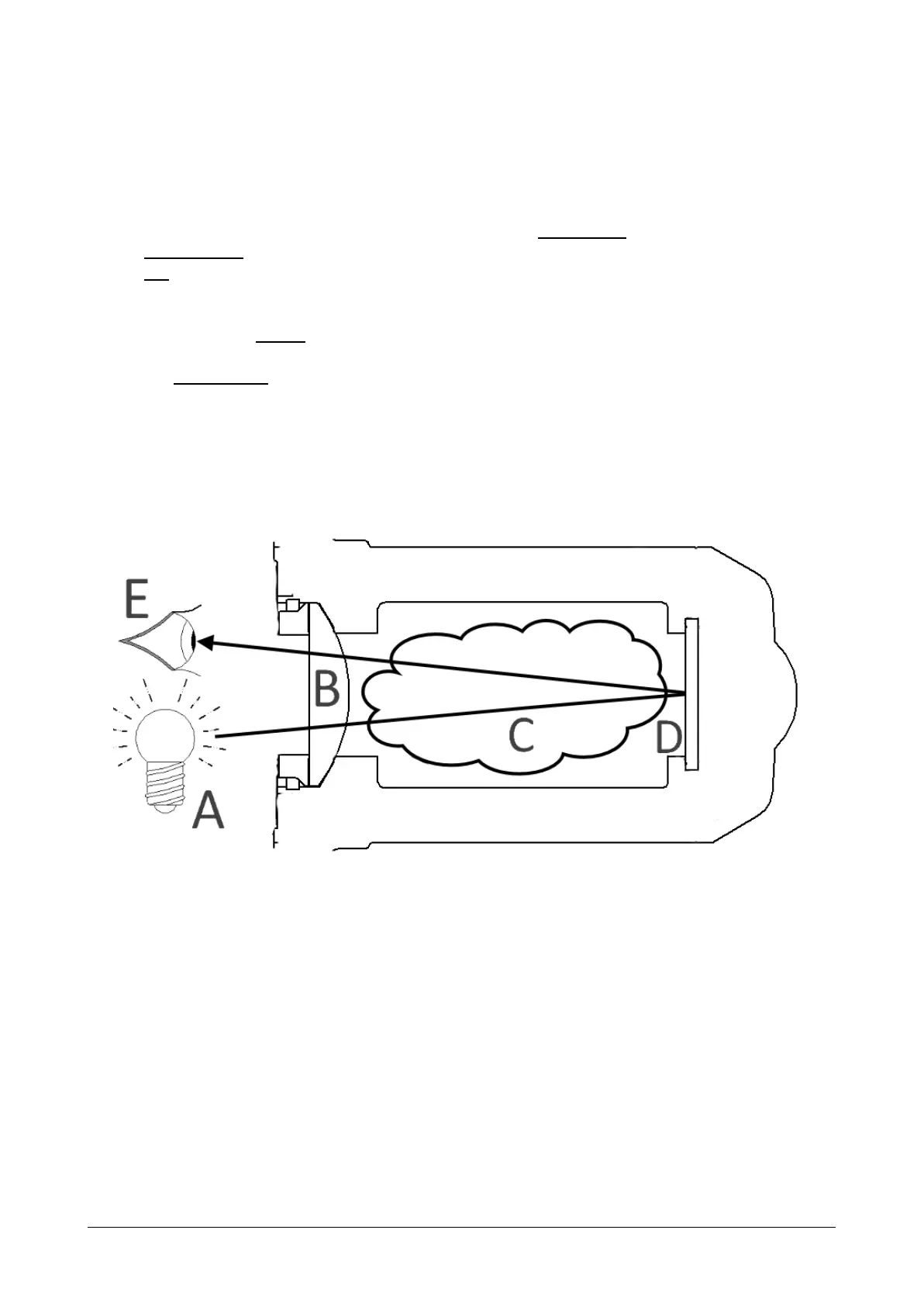
PG11 is using an Optical Detection principle. The basic working principle is illustrated in the
drawing below and consists of the following basic parts:
A. Infrared light (2 - 6 µm region) is generated at the light source and directed at the
B. sapphire lens focusing the light so it is passing through the
C. gas to be measured. The gas will absorb some wavelengths depending on the type of
gas. The higher concentration of the gas the more light is absorbed. After passing
through the gas the remaining light is
D. reflected by a mirror and back through the gas again reaching the lens directing the
light at
E. the light sensors. The light sensors will measure what wavelengths that have been
absorbed and how much light has been absorbed. Based on this information the Gas
Detector can decide if the target gas is above the alarm level.
In addition to the basic principles described above there are more functions in the detector
that are compensating for changes for example by temperature and component aging over
time.
Document 022-80036-OM Revision R03 Page 9 of 48


 To Next Page