• Local water utility company
• Agricultural agent
• Independent laboratory
Additives
Additives help to protect the metal surfaces of the
cooling system. A lack of coolant additives or
insufficient amounts of additives enable the following
conditions to occur:
• Corrosion
• Formation of mineral deposits
• Rust
• Scale
• Foaming of the coolant
Many additives are depleted during engine operation.
These additives must be replaced periodically.
Additives must be added at the correct concentration.
Over concentration of additives can cause the
inhibitors to drop out-of-solution. The deposits can
enable the following problems to occur:
• Formation of gel compounds
• Reduction of heat transfer
• Leakage of the water pump seal
• Plugging of radiators, coolers, and small passages
Glycol
Glycol in the coolant helps to provide protection
against the following conditions:
• Boiling
• Freezing
• Cavitation of the water pump
For optimum performance, Perkins recommends a
1:1 mixture of a water/glycol solution.
Note: Use a mixture that will provide protection
against the lowest ambient temperature.
Note: 100 percent pure glycol will freeze at a
temperature of −13 °C (8.6 °F).
Most conventional antifreezes use ethylene glycol.
Propylene glycol may also be used. In a 1:1 mixture
with water, ethylene and propylene glycol provide
similar protection against freezing and boiling. Refer
to Table 12 and refer to table 13 .
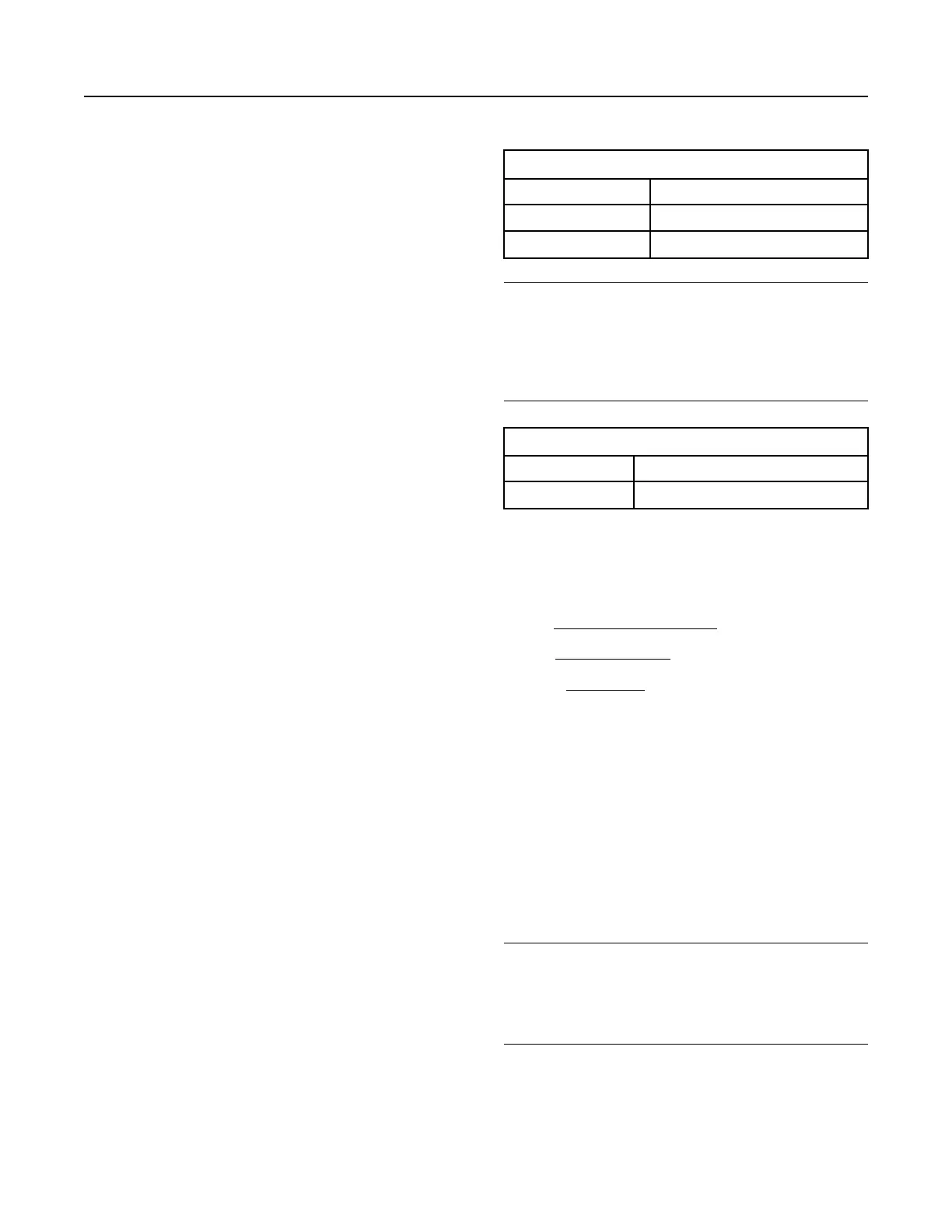
Table 12
Ethylene Glycol
Concentration Freeze Protection
50 Percent
−36 °C (−33 °F)
60 Percent
−51 °C (−60 °F)
NOTICE
Do not use propylene glycol in concentrations that ex-
ceed 50 percent glycol because of the reduced heat
transfer capability of propylene glycol. Use ethylene
glycol in conditions that require additional protection
against boiling or freezing.
Table 13
Propylene Glycol
Concentration Freeze Protection
50 Percent
−29 °C (−20 °F)
To check the concentration of glycol in the coolant,
measure the specific gravity of the coolant.
Coolant Recommendations
• ELC Extended Life Coolant
• SCA Supplement Coolant Additive
• ASTM American Society for Testing and
Materials
The following two coolants are used in Perkins
diesel engines:
Preferred – Perkins ELC
Acceptable – A commercial heavy-duty antifreeze
that meets “ASTM D6210” specifications
Adequate – A commercial heavy-duty antifreeze that
meets “ASTM D4985” specifications. Must be
replaced after 1 year.
NOTICE
Do not use a commercial coolant/antifreeze that only
meets the ASTM D3306 specification. This type of
coolant/antifreeze is made for light automotive
applications.
Perkins recommends a 1:1 mixture of water and
glycol. This mixture of water and glycol will provide
optimum heavy-duty performance as an antifreeze.
This ratio may be increased to 1:2 water to glycol if
extra freezing protection is required.
SEBU7833 37
Refill Capacities
Fluid Recommendations






 To Next Page