8 SEBU8337
Safety Section
Fire Prevention and Explosion Prevention
i02813488
Fire Prevention and Exp losio n
Prevention
g00704000
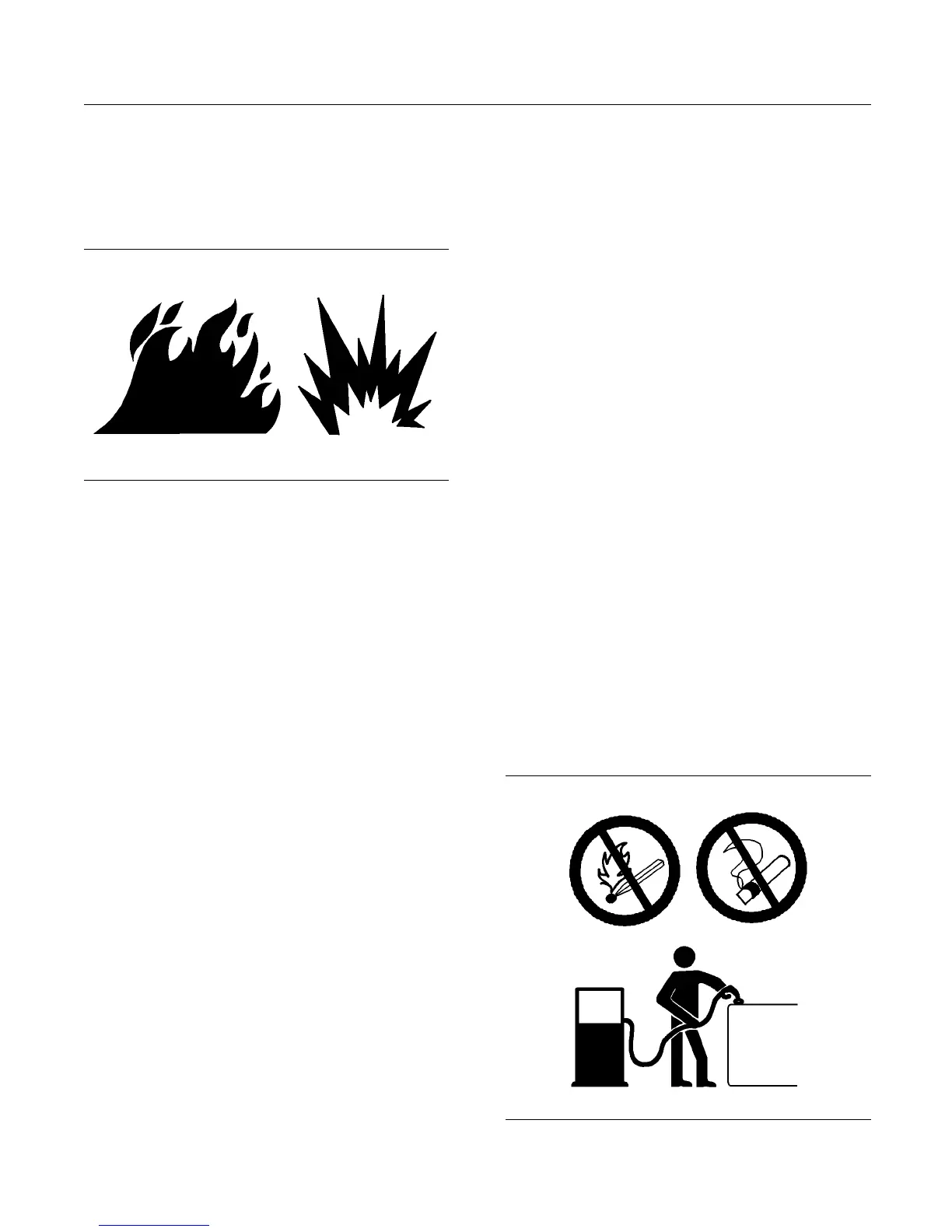
Illustrati
on 6
All fuels, most lubricants, and some coolant mixtures
are flammabl
e.
Flammable fluids that are leaking or spilled onto hot
surfaces or
onto electrical components can cause
a fire. Fire may cause personal injury and property
damage.
A flash fire may result if the covers for the engine
crankcase are removed within fifteen minutes after
an emergen
cy shutdown.
Determine whether the engine will be operated in an
environme
nt that allows combustible gases to be
drawn into the air inlet system. These gases could
cause the engine to overspeed. Personal injury,
property
damage, or engine damage could result.
If the application involves the presence of combustible
gases, co
nsult your Perkins dealer and/or your
Perkins distributor for additional information about
suitable protection devices.
Remove all flammable combustible materials or
conductive materials such as fuel, oil, and debris from
the engi
ne. Do not allow any flammable combustible
materials or conductive materials to accumulate on
the engine.
Store fuels and lubricants in correctly marked
containers away from unauthorized persons. Store
oily rag
sandanyflammable materials in protective
containers. Do not smoke in areas that are used for
storing flammable materials.
Do not expose the engine to any flame.
Exhaust shield
s (if equipped) protect hot exhaust
components from oil or fuel spray in case of a line,
a tube, or a seal failure. Exhaust shields must be
installed cor
rectly.
Do not weld on lines or tanks that contain flammable
fluids. Do not
flame cut lines or tanks that contain
flammable fluid. Clean any such lines or tanks
thoroughly with a nonflammable solvent prior to
welding or fla
me cutting.
Wiring must be kept in good condition. All electrical
wires must be
correctly routed and securely attached.
Check all electrical wires daily. Repair any wires
that are loose or frayed before you operate the
engine. Cle
an all electrical connections and tighten
all electrical connections.
Eliminate a
ll wiring that is unattached or unnecessary.
Do not use any wires or cables that are smaller than
the recommended gauge. Do not bypass any fuses
and/or cir
cuit breakers.
Arcing or sparking could cause a fire. Secure
connectio
ns, recommended wiring, and correctly
maintained battery cables will help to prevent arcing
or sparking.
Inspect all lines and hoses for wear or for
deterioration. The hoses must be correctly routed.
The lines
and hoses must have adequate support
and secure clamps. Tighten all connections to the
recommended torque. Leaks can cause fires.
Oil filters and fuel filters must be correctly installed.
The filter housings must be tightened to the correct
torque.
g00704059
Illustration 7



 To Next Page