6 SEBU8337
Safety Section
General Hazard Information
Do not operate or work on this equipment unless
you have read and understand the instructions
and warnings in the Operation and Maintenance
Manuals. Failure to follow the instructions or
heed the warnings could result in serious injury
or death.
i02328435
General Hazard Information
g00104545
Illustration 3
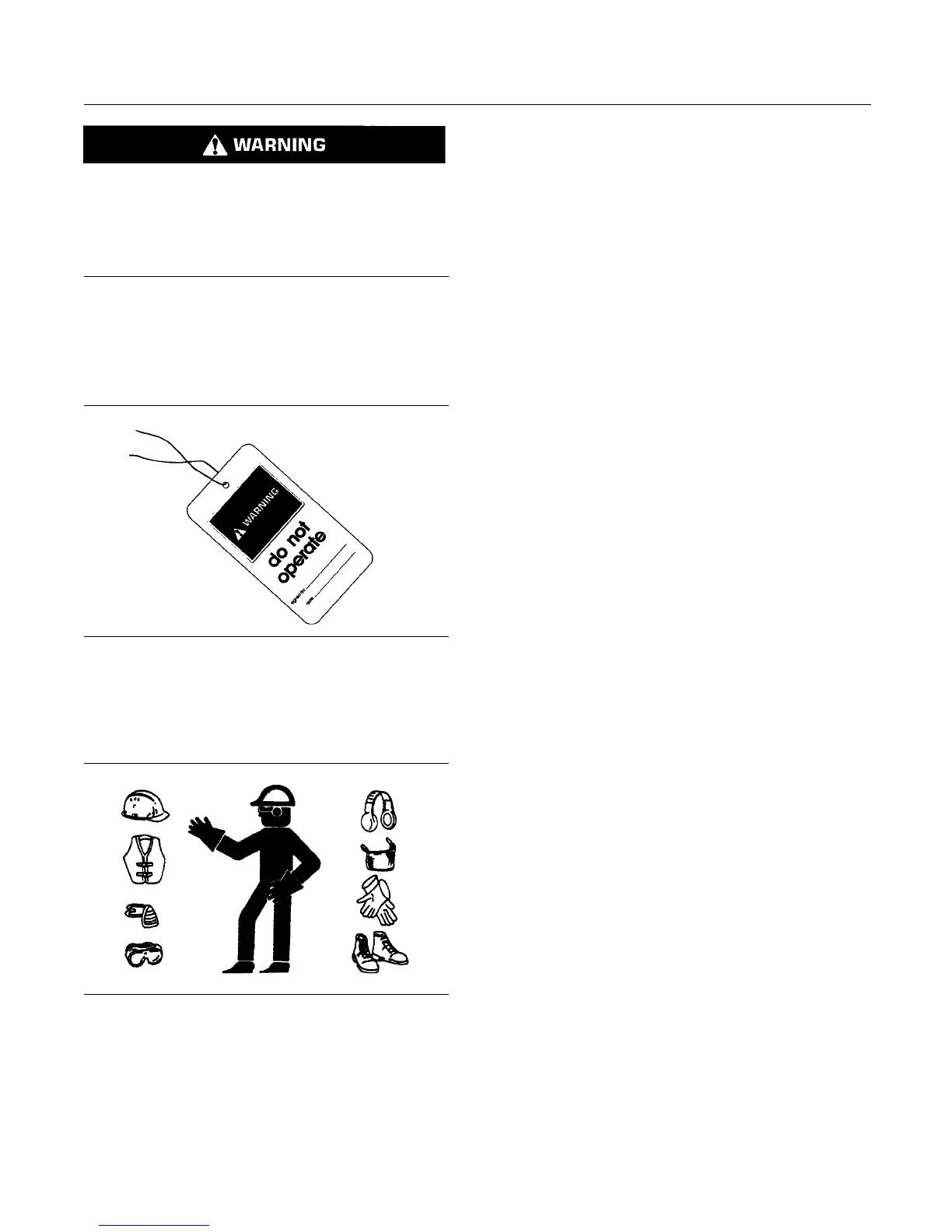
Attach a “Do Not Operate” warning tag or a similar
warning tag to the start switch or to the controls
before you service the equipment or before you
repair the equipment.
g00702020
Illustration 4
Wear a hard hat, protective glasses, and other
protective equipment, as required.
Do not wear loose clothing or jewelry that can snag
on controls or on other parts of the engine.
Make sure that all protective guards and all covers
are secured in place on the engine.
Keep the engine
free from foreign material. Remove
debris, oil, tools, and other items from the deck, from
walkways, and from steps.
Never put maintenance fluids into glass containers.
Drain all liquids into a suitable container.
Obey all local regulations for the disposal of liquids.
Use all cleani
ng solutions with care.
Report all necessary repairs.
Do not allow unauthorized personnel on the
equipment.
Ensure that the power supply is disconnected before
you work on the bus bar or the glow plugs.
Perform maintenance on the engine with the
equipment in the servicing position. Refer to the
OEM informat
ionfortheprocedureforplacingthe
equipment in the servicing position.
Pressure Air and Water
Pressurize
d air and/or water can cause debris
and/or hot water to be blown out. This could result in
personal injury.
The direct application of pressurized air or
pressurized water to the body could result in personal
injury.
When pressurized air and/or water is used for
cleaning,
wear protective clothing, protective shoes,
and eye protection. Eye protection includes goggles
oraprotectivefaceshield.
The maximum air pressure for cleaning purposes
must be below 205 kPa (30 psi). The maximum
water pres
sure for cleaning purposes must be below
275 kPa (40 psi).
Fluid Penetration
Pressure
can be trapped in the hydraulic circuit long
after the engine has been stopped. The pressure can
cause hydraulic fluid or items such as pipe plugs to
escape ra
pidly if the pressure is not relieved correctly.
Do not remove any hydraulic components or parts
until pre
ssure has been relieved or personal injury
may occur. Do not disassemble any hydraulic
components or parts until pressure has been relieved
or perso
nal injury may occur. Refer to the OEM
information for any procedures that are required to
relieve the hydraulic pressure.



 To Next Page