SEBU8191-01 33
Maintenance Section
Refill Capacities
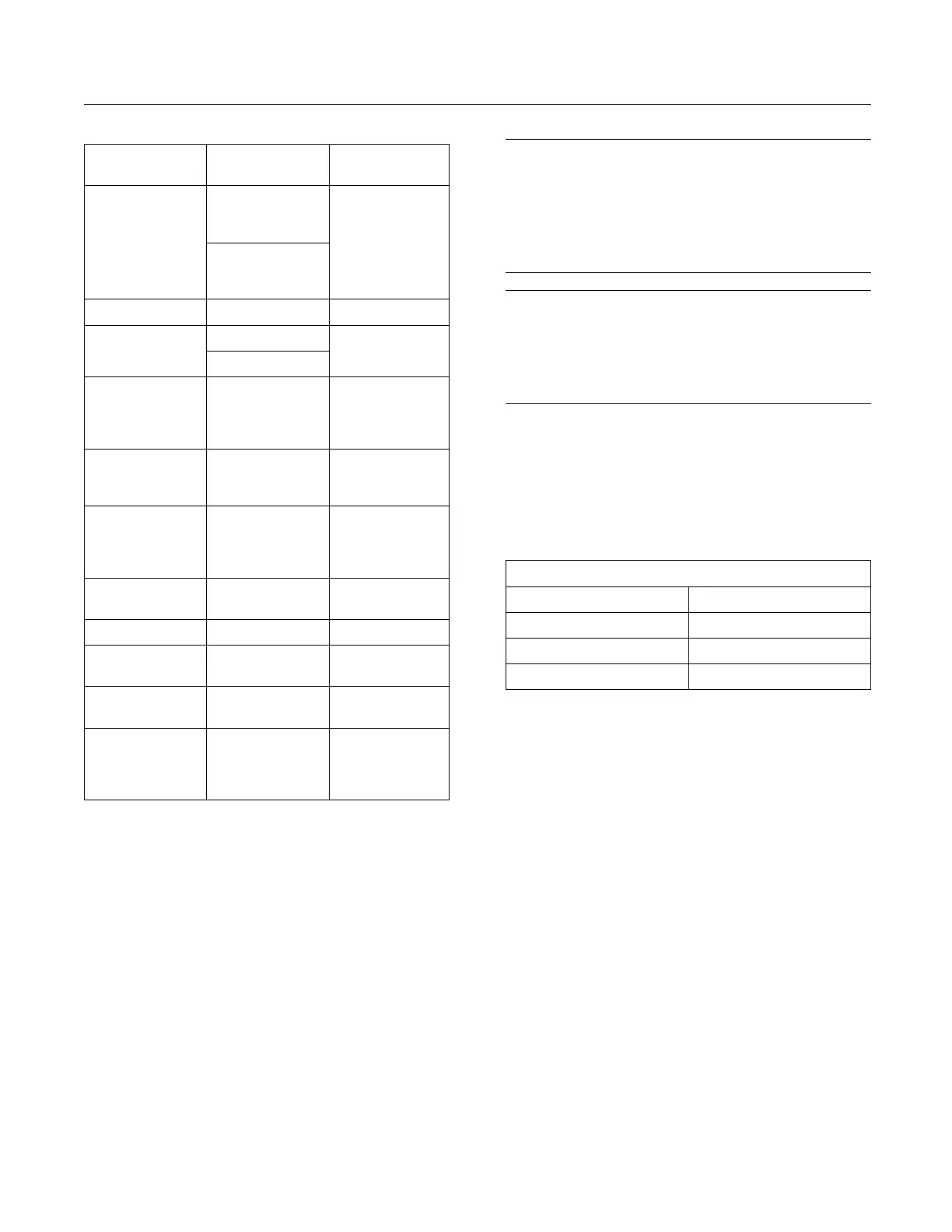
(Table 11, contd)
Copper Strip
Corrosion
No. 3 maximum
“D130”
10% at 282 °C
(540 °F)
maximum
Distillation
90% at 360 °C
(680 °F)
maximum
“D86”
Flash Point legal limit
“D93”
30 minimum
API Gravity
45 maximum
“D287”
Pour Point
6°C(10°F)
minimum
below ambient
temperature
“D97”
Sulfur
(1)
0.2% maximum “D3605”
or
“D1552”
Kinematic
Viscosity
(2)
2.0 cSt minimum
and 4.5 cSt
maximum at
40 °C (104 °F)
“D445”
Water and
Sediment
0.1% m
aximum
“D1796”
Water
0.1% maximum “D1744”
Sediment
0.05% maximum
(weight)
“D473”
Gum and Resins
(3)
10 mg per 100
mL maximum
“D381”
Lubricity
(4)
0.38 mm
(0.015 inch)
maximum at
25 °C (77 °F)
“D6079”
(1)
Perkins fuel systems and engine components can operate
on high sulfur fuels. Fuel s ulfur levels affect exhaust
emissions. H igh sulfur f uels also increase the potential
for c orrosion of internal components. Fuel sulfur levels
above 0.5 percent may significantly shorten the oil change
interval. For a dditional information, see this publication, “Fluid
Recommendations/Engine Oil” topic (Maintenance Section).
(2)
The values of the fuel viscosity are the values as the fuel
is delivered to the fuel injection pumps. If a fuel with a low
viscosity is used, c ooling of the fuel ma y be required to maintain
a 1 .4 cS t v iscos ity at the fuel injection pum p. Fuels with a high
viscosity might req uire fuel heaters in order to bring down the
viscos ity to a 20 cSt viscosity.
(3)
Follow the test conditions and procedures for gasoline (motor).
(4)
The lubricity of a fuel is a concern with low sulfur fuel. To
determine the lubricity of the fuel, use either the “ASTM D6078
Scuffing Load Wear Test (SBO CLE)” or the “ASTM D 6079 High
Frequency Reciprocating Rig (HFRR)” test. If the lubricity of a
fuel does not meet the minimum requirements, consult your
fuel supp lier. Do not treat the fuel without consulting the fuel
supplier. Some additives are not compatible. These additives
can cause problems in the fuel system.
NOTICE
Operating wit
h fuels that do not meet the Perkins rec-
ommendations can cause the following effects: Start-
ing difficulty, poor combustion, deposits in the fuel in-
jectors, redu
ced service life of the fuel system, de-
posits in the combustion chamber, and reduced ser-
vice life of the engine.
NOTICE
Heavy Fuel Oil (HFO), Residual fuel, or Blended fuel
must NOT be used in Perkins diesel engines. Severe
component wear and component failures will result if
HFO type fuels are used in engines that are configured
to use distillate fuel.
In extreme cold ambient conditions, you may use the
distillate fuels that are specified in Table 12. However,
the fuel that is selected must meet the requirements
that are specified in Table 11. These fuels are
intended to be used in operating temperatures that
are down to −54 °C (−65 °F).
Table 12
Distillate Fuels
(1)
Specification Grade
“MIL-T-5624R” JP-5
“ASTM D1655” Jet-A-1
“MIL-T-83133D” JP-8
(1)
The fuels that are listed in this Table may not m eet the
requirements that are specified in the “P erk ins Specifications
for Distillate D iesel Fuel” Table. Consult the supplier for th e
recommended additives in order to maintain the correct fuel
lubricity.
These fuels are lighter than the No. 2 grades of fuel.
The cetane number of the fuels in Table 12 must be
at least 40. If the viscosity is below 1.4 cSt at 38 °C
(100 °F), use the fuel only in temperatures below
0°C(32°F).Donotuseanyfuelswithaviscosity
of less than 1.2 cSt at 38 °C (100 °F). Fuel cooling
may be required in order to maintain the minimum
viscosity of 1.4 cSt at the fuel injection pump.
There are many other diesel fuel specifications that
are published by governments and by technological
societies. Usually, those specifications do not
review all the requirements that are addressed
in this specification. To ensure optimum engine
performance, a complete fuel analysis should be
obtained before engine operation. The fuel analysis
should include all of the properties that are listed in
Table 11.



 To Next Page