Chapter 3 N39453
Page 42
How to stop the engine
Stopping the engine
Cautions:
• Stopping the engine immediately after it has been working under load can result in overheating and
accelerated wear of the engine components.
• If the engine has been running at high loads, run at low load for at least three minutes to reduce and
stabalise the internal engine temperature before stopping the engine.
• Avoiding hot engine shutdowns will maximise turbocharger shaft and bearing life where tted.
Standard control panel - manual operation
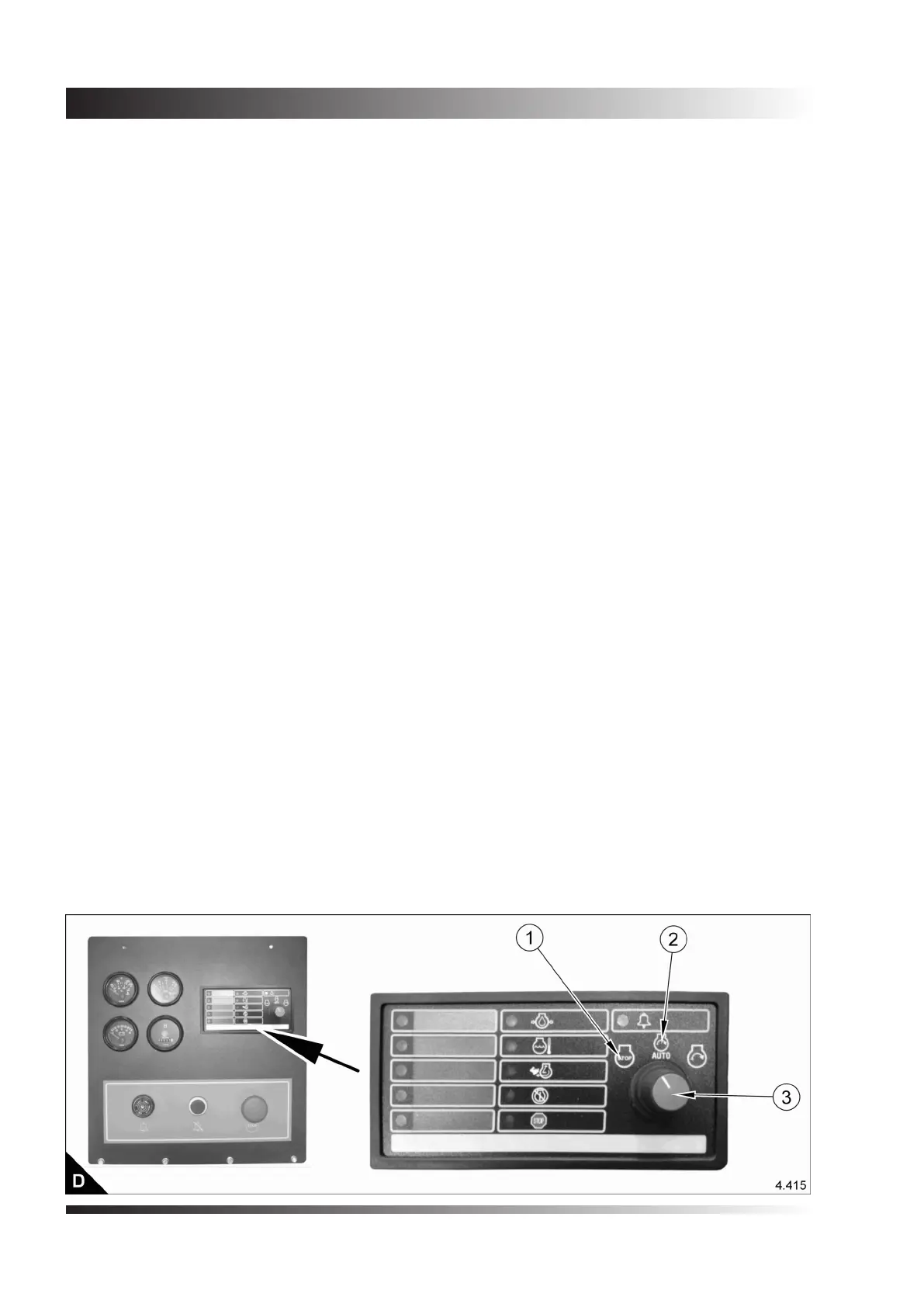
1. Turn the engine control (D3) to the AUTO position (D2). When the remote stop delay timer expires, the
engine will stop.
Note: If the remote start signal is removed with the control in manual start mode, the engine will continue to
run until the engine control switch (D3) is turned to the AUTO position (D2) and the remote stop delay timer
expires.
2. Turn the engine control switch (D3) to Stop/Reset (D1).
Standard control panel - automatic operation
1. Remove the remote start signal. When the remote stop delay timer expires, the engine will stop.
2. Turn the engine control switch (D3) to Stop/Reset (D1).
Note: The engine will stop immediately if the engine control switch (D3) is turned to the Stop/Reset position
(D1).
Adjustment of engine speed range
Note: Any adjustment to the engine speed is not permitted. Any interference with the fuel pump will invalidate
emission complience of the engine and warranty.
Running-in
A gradual running-in of a new engine is not necessary. Prolonged operation at light loads during the early life
of the engine can cause lubricating oil to enter the exhaust system. Maximum load can be applied to a new
engine as soon as the engine is put into service and the coolant temperature has reached a minimum of 60
O
C
(140
O
C).
Cautions:
• The engine will benet if the load is applied as soon as possible after the engine is put into service.
• Do not overload the engine.
Angle of tilt
For yachts with auxillary engines, it may be necessary to use the engine during operation against the wind.
In these conditions, an angle of tilt (port or starboard) of up to 25
O
continuous operation or 35
O
intermittent
operation is permissible.


 To Next Page