23
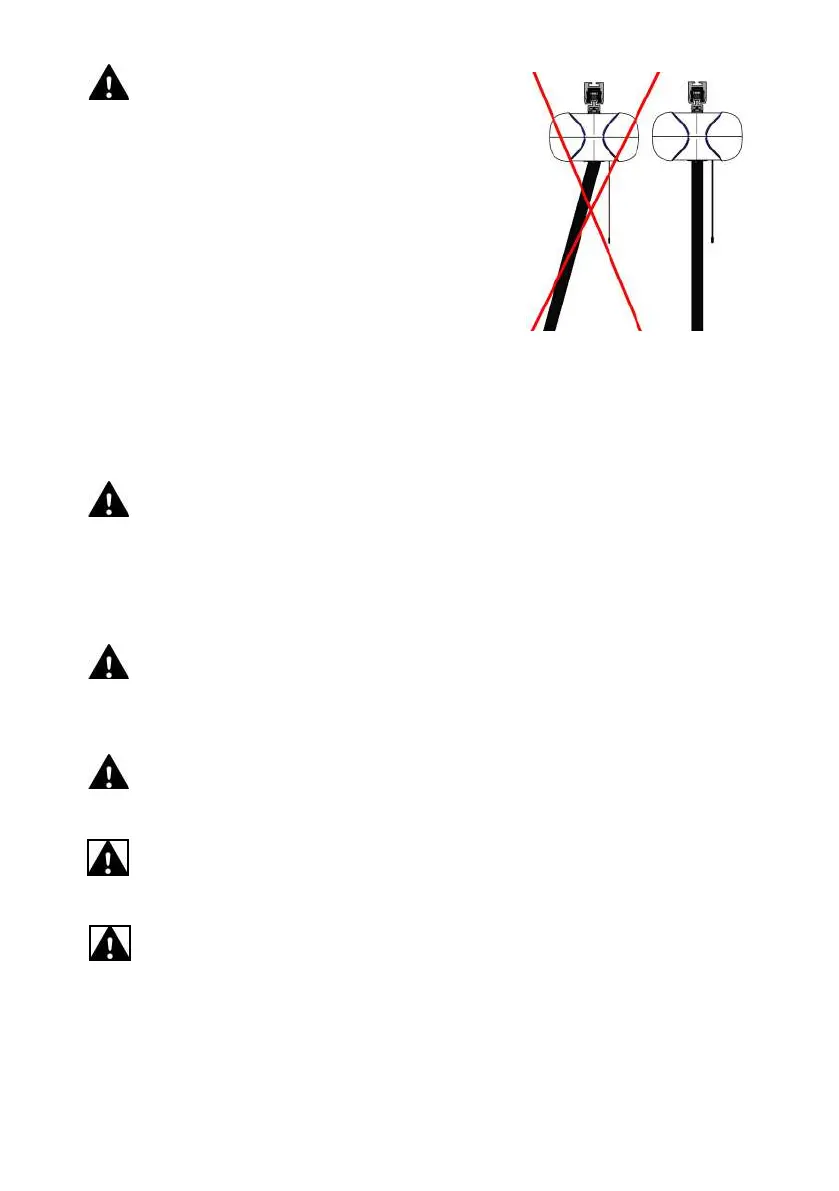
Always li the care recipient with a
straight hoisng belt hanging vercally
beneath the Ceiling Hoist (Figure 12).
This is important:
• with regard to the safety and comfort
of the care recipient.
• to avoid wear to the hoisng belt that
may occur if it rubs on the height limit
switch of the Ceiling Hoist.
• to prevent the height limit switch of
the Ceiling Hoist from being acvated
which means that the Ceiling Hoist
can only be lowered.
• Make sure there are no objects that can interfere with the running
way of the strap. Damage to the strap could cause a paent to fall!
A clinical assessment of the paent’s suitability for transfer must be
carried out by a qualied health professional prior to an aempt at
transfer. Among other things the pressure exerted by the sling on a
paent’s body and its potenal implicaons for the paent’s health
condion should be considered.
Move the li by pulling and pushing the spreader bar or use the
buon on the hand control when using a driven version; do not pull
or push on the paent!
When liing from a bed ensure that the bed safety side is in place to
prevent paents from falling.
Clean the Hoist and accessories before use by a dierent person in
order to reduce the risk of cross–contaminaon.
The products described are suitable for use within the
professional health care facility environment as well as the
home health care environment. Do not use for any special
environments.
Figure 12, correct and
incorrect posion of the
hoisng belt



 To Next Page