EasyManua.ls Logo

Powermatic PM2000B - User Manual

Powermatic PM2000B
52 pages
Print Icon
To Next Page IconTo Next Page
Loading...
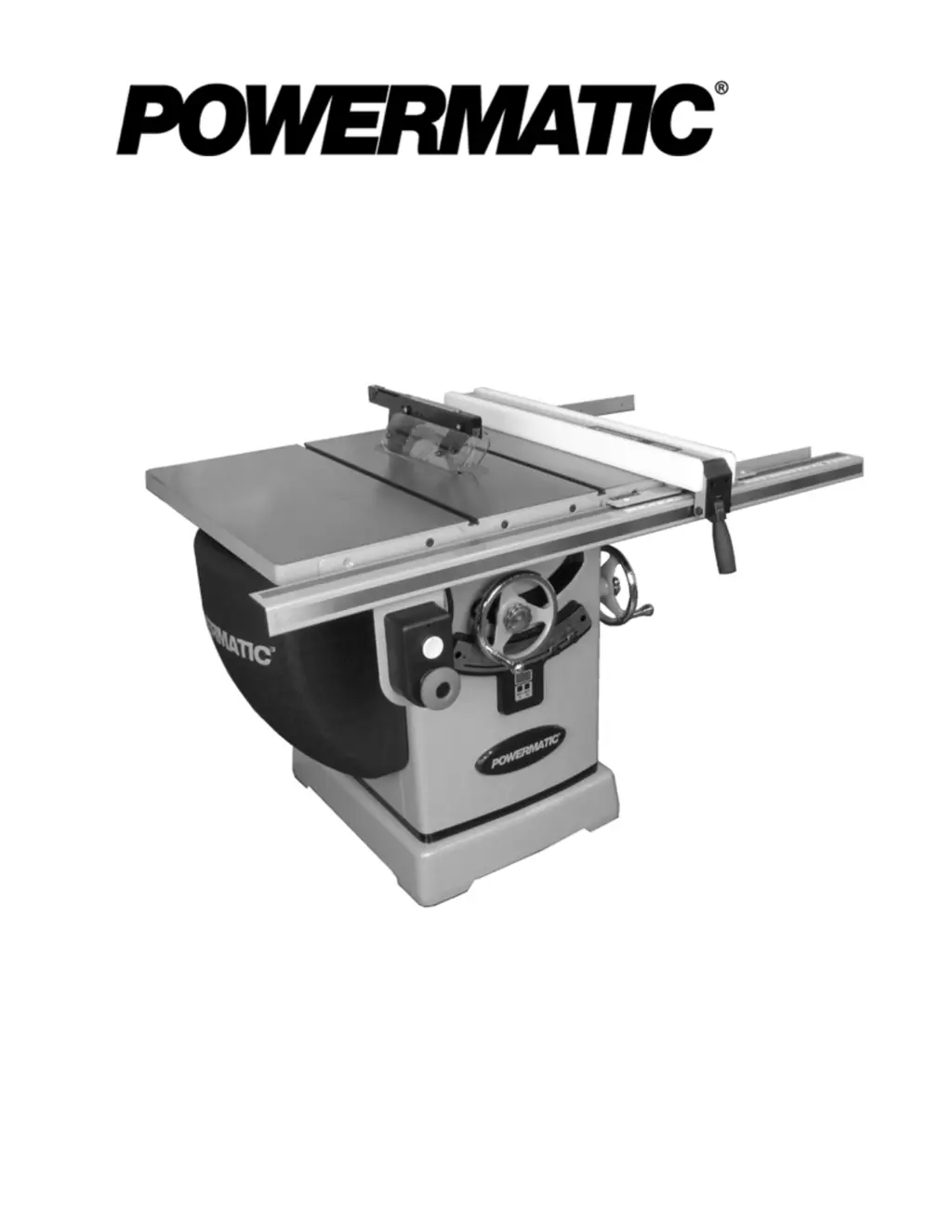
Operating Instructions and Parts Manual
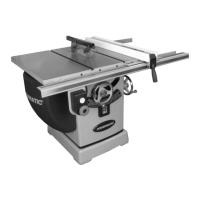
10-inch Cabinet Saw
Model PM2000B & PM2000BT
For models with serial no. 22022000B2883 and higher
Powermatic
427 New Sanford Road Part No. M-PM231B
LaVergne, Tennessee 37086 Edition 6 04/2023
Ph.: 800-274-6848 Copyright © 2017 Powermatic
www.powermatic.com

Table of Contents

Other manuals for Powermatic PM2000B

Questions and Answers

  • M
    Mark BarberAug 18, 2025
    Why does my Powermatic Saw motor start slowly?
    • M
      Margaret HickmanAug 19, 2025
      If your Powermatic Saw motor starts slowly or fails to reach full speed, it could be due to low voltage. Request a voltage check from your power company and correct any low voltage conditions. Another possibility is that the power line is overloaded, so correct this overload condition and consider using a dedicated circuit for the table saw. Undersized wires in the supply system could also be the cause, so increase the supply wire size. If these steps don't resolve the issue, the centrifugal switch may not be engaging, and it should be replaced by qualified personnel.
  • D
    David HendersonAug 21, 2025
    How to prevent Powermatic PM2000B Saw motor from overheating?
    • M
      Melissa MartinezAug 21, 2025
      If the motor of your Powermatic Saw overheats, it could be due to the motor being overloaded; try reducing the load on the motor. Another potential cause is improper cooling of the motor due to a lack of air circulation. Clean any sawdust from the fan and duct areas of the motor to improve cooling.
  • L
    Lori PetersAug 23, 2025
    What to do if my Powermatic PM2000B Saw won't start and the fuse blows?
    • K
      Kim PhillipsAug 23, 2025
      If your Powermatic Saw won't start and the fuse blows or the breaker trips, it could be due to a short circuit in the line cord or plug. Inspect the cord or plug for damaged insulation and shorted wires. Another cause might be a short circuit in the motor or loose connections. In this case, inspect all connections on the motor for loose or shorted terminals or worn insulation. Finally, check if you are using the correct fuses or circuit breakers in the power line, and install the correct ones if needed.
  • J
    Juan BautistaAug 26, 2025
    Why won't my Powermatic Saw start?
    • J
      Jennifer JonesAug 26, 2025
      If your Powermatic Saw will not start, there are several potential causes. First, check the plug connection to ensure there is incoming power. Second, make sure the safety key is installed in the switch. Third, low voltage could be the issue, so check the power line for proper voltage. Fourth, inspect all connections on the motor for loose or open connections. Finally, a damaged power cord could be the culprit, in which case you should replace the cord.
  • J
    Jason LeonAug 28, 2025
    What to do if my Powermatic PM2000B Saw motor stalls and blows fuses?
    • N
      Nicole BeckerAug 28, 2025
      If the motor of your Powermatic Saw stalls, resulting in blown fuses or a tripped breaker, it could be due to several reasons. The motor might be overloaded, so try to reduce the load on the motor. Inspect the connections on the motor for loose or shorted terminals or worn insulation. Low voltage could also be the cause, so correct any low voltage conditions. Finally, ensure that you have the correct fuses or circuit breakers installed in the power line.
  • L
    Lori MorrisAug 30, 2025
    What to do if Powermatic Saw motor stalls or workpiece burns?
    • K
      Kristopher TurnerAug 30, 2025
      If your Powermatic Saw motor stalls, or the workpiece binds or burns, several factors could be responsible. You might be using excessive feed, so reduce the feed rate. The blade could be dull or incorrect, so replace it with the proper type of blade for the cut needed. The miter slot could be misaligned, so realign the table to the blade.
  • C
    Corey JonesSep 1, 2025
    Why does my Powermatic Saw slow down when cutting?
    • M
      Melanie OrtegaSep 2, 2025
      If your Powermatic Saw machine slows or stalls when operating, it is likely that you are applying too much pressure to the workpiece. Try feeding the workpiece more slowly to resolve this issue.
  • D
    David ParkerSep 4, 2025
    What to do if Powermatic PM2000B will not start?
    • S
      Stephen WoodwardSep 4, 2025
      If your Powermatic Saw won't start, there are several potential causes: * **No incoming power:** Check the plug connection. * **Safety key removed:** Install the safety key. * **Low voltage:** Verify the power line has the correct voltage. * **Open circuit or loose connection:** Inspect all motor connections. * **Damaged power cord:** Replace the cord.
  • A
    Austin BrownSep 6, 2025
    Why does my Powermatic PM2000B Saw motor overheat?
    • A
      Angela ElliottSep 6, 2025
      Your Powermatic saw motor may overheat due to: * **Motor overload:** Reduce the load on the motor. * **Improper cooling:** Clean sawdust from the fan and duct areas to improve air circulation.
  • L
    Lauren GreenSep 8, 2025
    What to do if Powermatic PM2000B motor stalls, resulting in blown fuses or tripped breaker?
    • K
      Kelly HillSep 8, 2025
      If your Powermatic saw motor stalls and blows fuses or trips the breaker, consider these possibilities: * **Motor overload:** Reduce the load on the motor. * **Short circuit or loose connections:** Check the motor connections for shorts, loose terminals, or worn insulation. * **Low voltage:** Correct any low voltage conditions. * **Incorrect fuses or breakers:** Install the correct fuses or circuit breakers.

Summary

Safety Warnings

Kickback Prevention

Explains kickback causes and prevention methods, including tips for protection against ejected workpieces.

About This Manual

Terminology

Specifications

Kit Configurations

Lists available machine configurations and corresponding stock numbers for different models.

Setup and Assembly

Shipping Contents

Lists all components included in the shipping package for verification.

Tools Required for Assembly

Specifies the necessary tools for correctly assembling the table saw.

Unpacking and Cleanup

Provides instructions for safely unpacking and cleaning the machine surfaces.

Installing Extension Wings

Details the procedure for attaching and leveling the extension wings.

Handwheel, Knobs, Levers

Instructions for installing and securing handwheels, knobs, and levers.

Rails and Fence

Guide for mounting the rails and Accu-Fence assembly to the saw.

Motor Cover

Steps for installing the motor cover onto the saw.

Table Insert

Procedure for installing and ensuring the table insert is flush with the surface.

Installing and Removing Blade

Safe procedures for installing and removing the saw blade.

Installing Guard;Knife Assembly

Instructions for installing the blade guard and riving knife assembly.

Anti-Kickback Pawls

Detailed steps for installing the anti-kickback pawl safety feature.

Blade Guard

Guidance on correctly installing the blade guard assembly.

Dust Port

Information on connecting a dust collection system to the saw.

Electrical Connections

Grounding Instructions

Explains the critical importance and procedure for proper electrical grounding.

Voltage Conversion (3-phase model only)

Details the process for converting voltage settings on 3-phase models.

Extension Cords

Recommendations for selecting appropriate extension cords for safe operation.

Magnetic Switch and Safety Key

Operation and safety features of the magnetic switch and key.

Adjustments

Tools Required for Adjustments

Lists the tools necessary for performing various machine adjustments.

Fence Alignment

Procedure to align the rip fence accurately with the saw blade.

Blade Raising and Tilting

Instructions for adjusting the blade height and tilt angle for cuts.

Caster Mechanism

How to engage and disengage the machine's caster system.

Miter Gauge

Details on setting angles, indents, fence, and squaring the miter gauge.

Blade Tilt Stop Adjustment

Procedure to set and verify the 90° and 45° blade tilt stops.

Riving Knife Alignment

Ensures proper lateral and proximity alignment of the riving knife with the blade.

Table to Blade Alignment

Procedure to check and ensure the table is square to the saw blade.

Belt Adjustment

Instructions for adjusting drive belt tension and replacement.

DRO Calibration and Operation

Steps for calibrating and operating the Digital Readout (DRO) system.

Operations

Kickback Prevention

Lists conditions causing kickbacks and methods to prevent them.

Rip Sawing

Explains the process and safety precautions for ripping wood with the grain.

Resawing

Details on performing resawing operations safely on the table saw.

Crosscutting

Instructions for performing crosscuts using the miter gauge.

Bevel and Miter Operations

Guidance on performing angled cuts (bevels) and miters.

Dado Cutting

Instructions for cutting grooves (dadoes) and rabbets with a dado insert.

Safety Devices

Feather Board

Information on using feather boards for workpiece control and safety.

Push Stick and Push Block

Explains the importance and usage of push sticks and blocks for safety.

Maintenance

General Inspection

Guidance on routine inspection of machine components for wear and damage.

Cleaning

Daily and weekly cleaning procedures for maintaining the saw.

Lubrication

Procedures for lubricating critical moving parts for smooth operation.

Arbor;Arbor Bearing Removal

Information regarding the removal of the arbor for bearing replacement.

Additional Servicing

Notes on servicing that should be performed by authorized personnel.

Optional Accessories

Troubleshooting

Motor and Electrical Problems

Table listing common motor and electrical issues and their remedies.

Mechanical and Operational Problems

Table listing common mechanical and operational issues and their remedies.

Replacement Parts

Table and Cabinet Assembly - Parts List

List of part numbers and descriptions for the table and cabinet assembly.

Motor and Trunnion Assembly - Parts List

List of part numbers and descriptions for the motor and trunnion assembly.

Blade Guard Assembly - Parts List

List of part numbers and descriptions for the blade guard assembly.

PM2000 B Miter Gauge Assembly - Parts List

List of part numbers and descriptions for the PM2000B miter gauge.

PM2000 BT Miter Gauge Assembly - Parts List

List of part numbers and descriptions for the PM2000BT miter gauge.

Motor Cover Assembly - Parts List

List of part numbers and descriptions for the motor cover assembly.

Electrical Connections Diagrams

Wiring diagram - 3 HP, 230 V, 1 PH

Wiring diagram for the 3HP, 230V, 1PH motor configuration.

Wiring diagram - 5 HP, 230 V, 1 PH

Wiring diagram for the 5HP, 230V, 1PH motor configuration.

Wiring diagram - 5 HP, 230 V, 3 PH

Wiring diagram for the 5HP, 230V, 3PH motor configuration.

Wiring diagram - 5 HP, 460 V, 3 PH

Wiring diagram for the 5HP, 460V, 3PH motor configuration.

Warranty and Service

Powermatic PM2000B Specifications

General IconGeneral
TypeCabinet Saw
Motor Power3 HP
Blade Diameter10 inches
Max Depth of Cut at 90 Degrees3-1/8 inches
Motor Voltage230V
Table Size27 x 40 inches
Maximum Rip Capacity50 inches
Arbor Size5/8 inches

Related product manuals