13.0 Troubleshooting
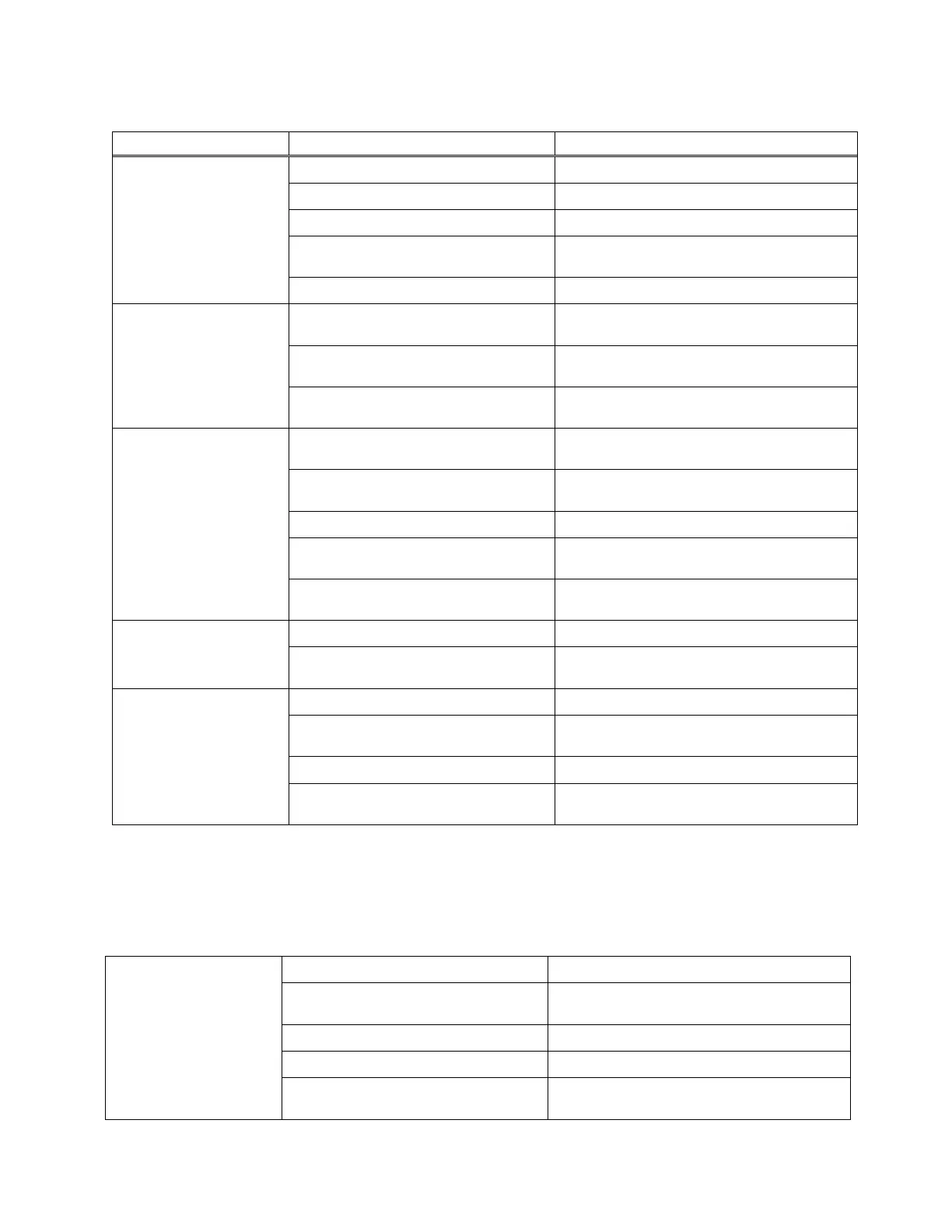
13.1 Motor and Electrical Problems
Safety key removed from switch.
Check power line for proper voltage.
Open circuit in motor or loose
connection.
Inspect all connections on motor for loose or
open connections.
Saw will not start: fuse
blows or breaker trips.
Short circuit in line cord or plug.
Inspect cord or plug for damaged insulation
and shorted wires.
Short circuit in motor or loose
connections.
Inspect all connections on motor for loose or
shorted terminals or worn insulation.
Incorrect fuses or circuit breakers in
power line.
Install correct fuses or circuit breakers.
Motor starts slowly or
fails to reach full speed.
Request voltage check from power company
and correct low voltage condition.
Correct overload condition. Use dedicated
circuit for table saw.
Undersized wires in supply system.
Increase supply wire size.
Centrifugal switch not engaging.
Replace centrifugal switch (qualified
personnel only).
Have motor checked by a qualified
inspector. Repair or replace.
Improper cooling of motor; lack of air
circulation.
Clean sawdust from fan and duct areas of
motor.
Motor stalls, resulting in
blown fuses or tripped
breaker.
Short circuit in motor or loose
connections.
Inspect connections on motor for loose or
shorted terminals or worn insulation.
Correct low voltage conditions.
Incorrect fuses or circuit breakers in
power line.
Install correct fuses or circuit breakers.
Table 4
13.2 Mechanical and Operational Problems
Motor stalls or workpiece
binds or burns.
Replace blade; use proper type of blade for
cut needed.
Realign fence (see Accu-Fence manual).
Have motor checked by a qualified
inspector. Repair or replace.


 To Next Page