Eureka3 User Manual
Eureka3 Page 16
4 Deployment
4.1 Choosing the Transducer Type
In most cases, accelerometers will be adequate (either built in or external). The accelerometers
provide ease and flexibility of deployment.
Consider the (optional) hydrophones for:
• Large diameter pipes (typically >300mm)
• Plastic pipes
• Locations with excessive ambient noise.
4.2 Attach Transducers
4.2.1 Accelerometers
The transmitters have integral magnets in the base and a built in accelerometer; this normally provides
good results where the location for the transmitter does not need to be above ground. If the transmitter
needs to be on the ground surface for adequate radio reception then a remote accelerometer should
be used.
1. Connect the accelerometer to a metal fitting (preferred surface: unpainted, rust-free, clean
metal).
2. Ensure a rigid physical contact.
3. Check the connection by listening via headphones (connected to PrimeTouch).
4.2.2 Hydrophones
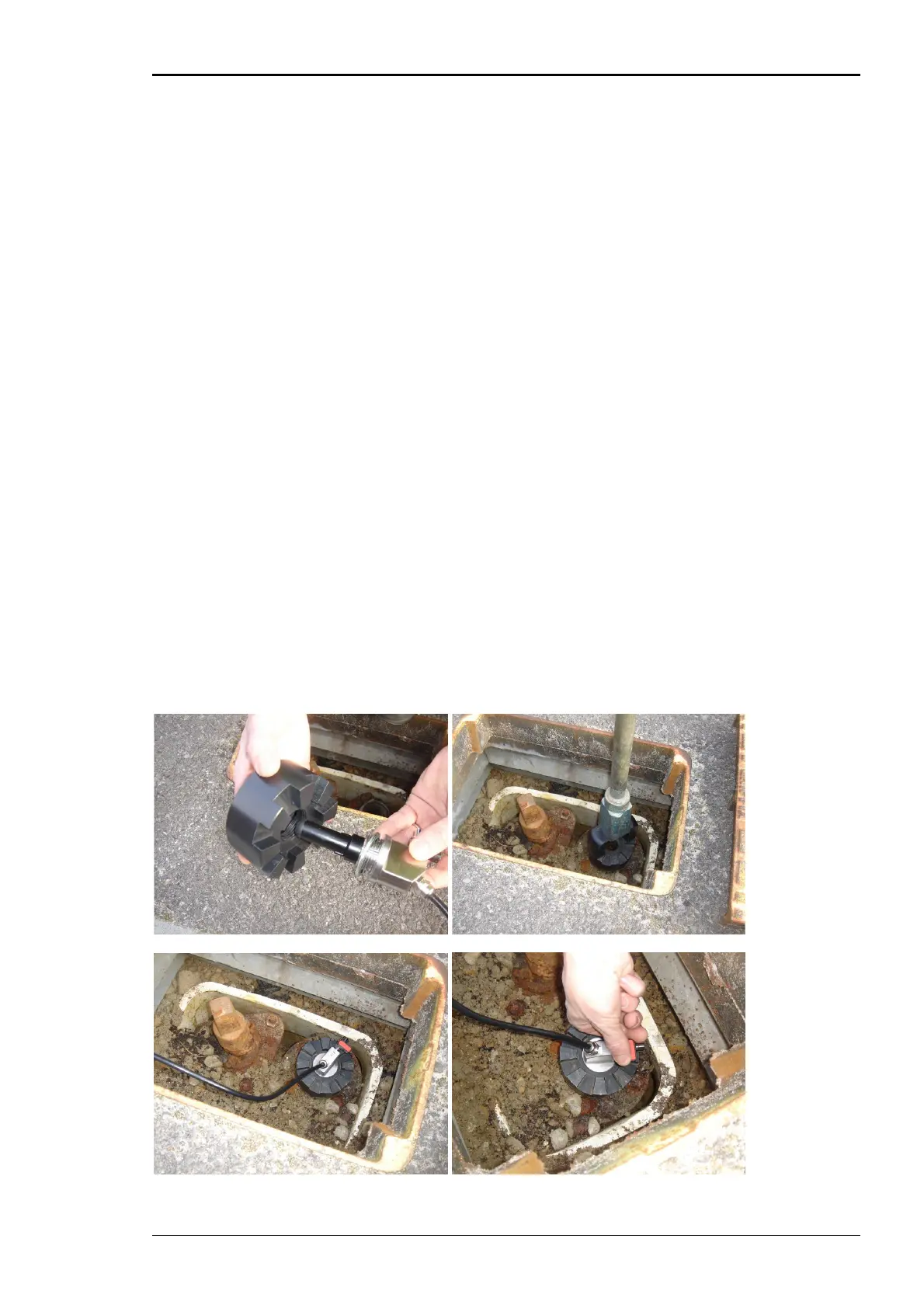
The standard hydrophone is mounted in a hydrant cap for use with any hydrant fitting. When fitting a
hydrophone to a hydrant, follow this procedure.


 To Next Page