27
Travelling Information
Note: Laws and regulations for travelling with Li-Ion batteries or shipping Li-Ion batteries may differ
from country to country.
The resistance meter operates with a 3 cell Li-Ion battery pack with less than 100 watt hours (Wh).
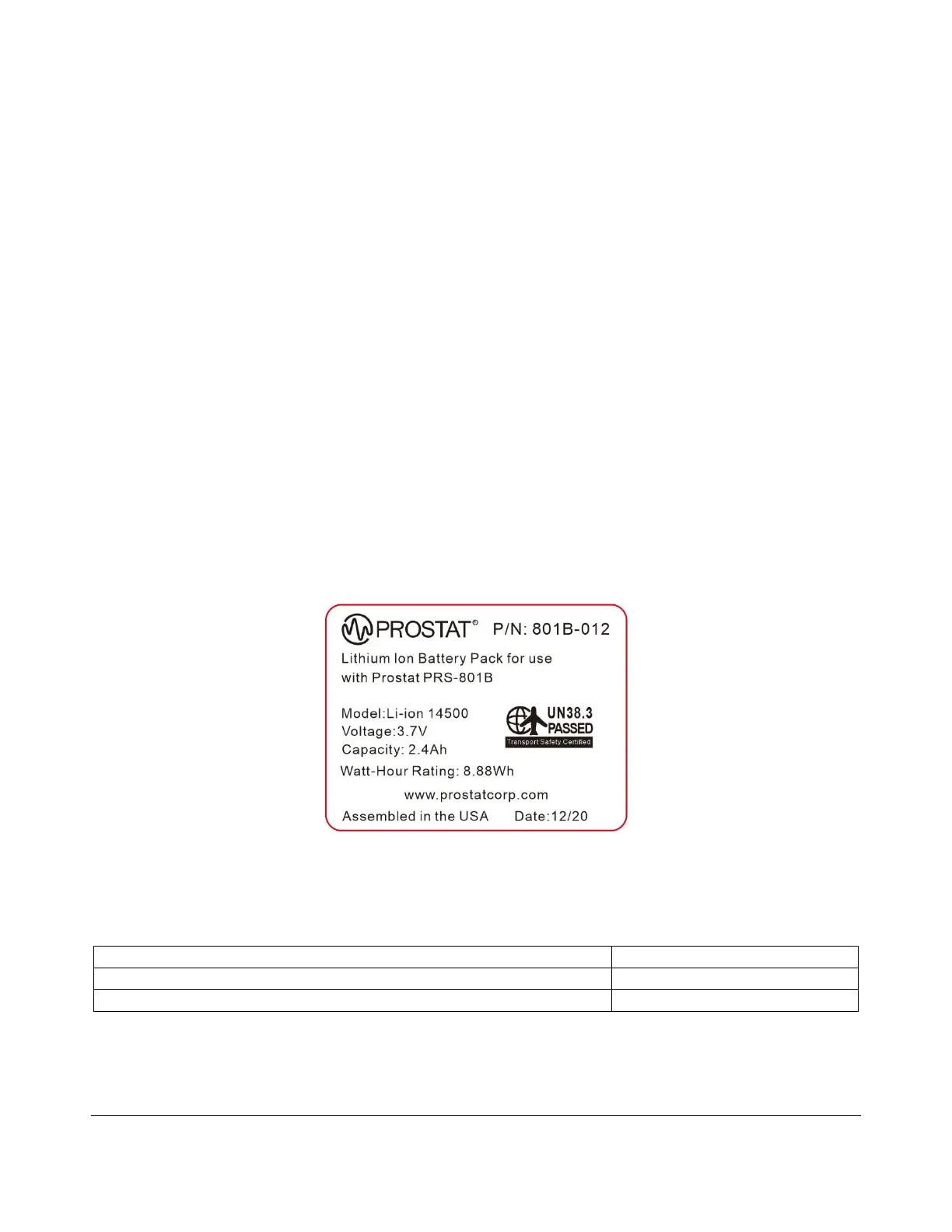
The 801B-012 has been tested and passed UN38.3 Transport Safety Certified. The battery pack is
conveniently located under the battery cover and can easily be disconnected from the circuit if
required.
Travelling with the resistance meter
Per Federal Aviation Administration (FAA) regulations, devices containing lithium ion batteries should
be carried in carry-on baggage. If you plan to have your meter in a checked baggage, it must be
completely powered off and protected to prevent unintentional activation or damage. It is
recommended that you disconnect the battery during travel.
Travelling with a spare battery pack
The 801B-012 battery packs have been tested and were found to comply with the criteria of “UN
Model Regulations, Manual of Test and Criteria, ST/SG/AC.10/11/Rev.7 Part III, subsection 38.3”, also
known as “UN38.3”.
If you plan on travelling a spare 801B-012 battery pack, per FAA regulations, you must keep the spare
Li-Ion battery pack in your carry-on baggage in the aircraft cabin.
Packing Instructions (P.I.)
1
When battery is packaged separately (e.g. a replacement battery pack):
IATA P.I. 965 Section IB applies
When battery is packaged with the resistance meter, not contained in it:
IATA P.I. 966 Section II applies
When battery is contained within the resistance meter, then packaged:
IATA P.I. 967 Section II applies
1
Per IATA 2021 regulations. Regulations subject to change without notice.


 To Next Page