nVent.com | 8
INSTALLATION AND WIRING Section 2
2.1 INTRODUCTION
This section includes information regarding the initial inspection, preparation for use, and
storage instructions for the C910-485 Heat Trace controllers.
2.2 INITIAL INSPECTION
Inspect the shipping container for damage. If the shipping container or cushioning
material is damaged, it should be kept until the contents of the shipment have been
verified and the equipment has been checked mechanically and electrically. If the
shipment is incomplete, there is mechanical damage, a defect, or the controller does not
pass the electrical performance tests, notify the nearest nVent representative. If the
shipping container is damaged, or the cushioning material shows signs of stress, notify
the carrier as well as your nVent representative. Keep the shipping materials for the
carrier’s inspection.
2.3 INSTALLATION LOCATION
The wide ambient operating temperature range of the controller permits installation in
most locations. Considerations should include accessibility for maintenance and testing
and the location of existing conduits.
2.4 MOUNTING PROCEDURES
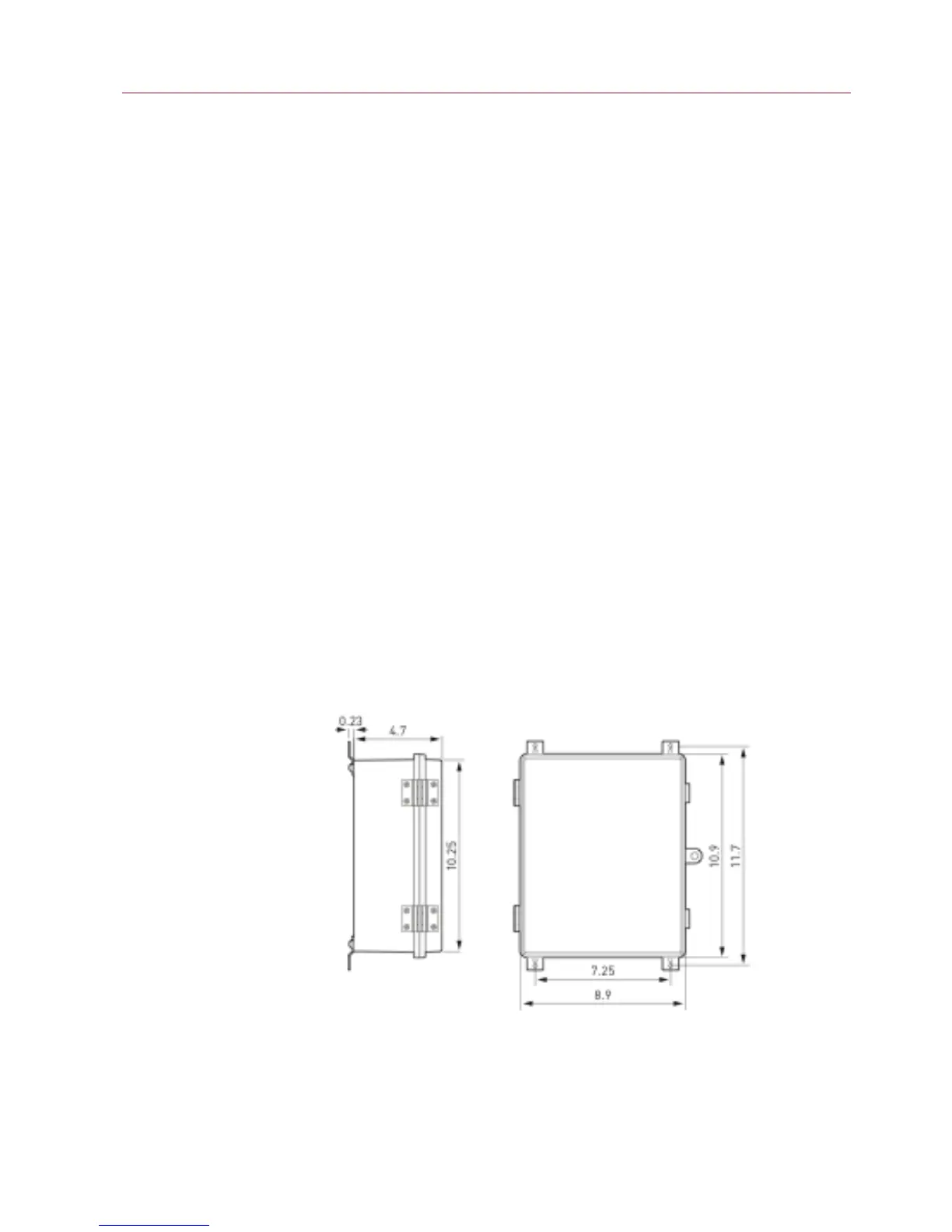
The mounting template is shown in Figure 2.1.
Drill conduit entry holes prior to mounting. Conduit entries should be made in the bottom of
the enclosure if possible to reduce the possibility of water entry from condensation or
leakage. Conduit entries must be drilled or punched using standard industry practices. Use
bushings suitable for the environment and install such that the completed installation remains
waterproof. Grounding hubs and conductors must be installed in accordance with Article 250
of the National Electrical Code and Part I of the Canadian Electrical Code.
Figure 2.1 – Mounting Hole Template


 To Next Page