EasyManua.ls Logo

Raymarine p70r - User Manual

Raymarine p70r
122 pages
Print Icon
To Next Page IconTo Next Page
Loading...
INSTALLATION & OPERATION
INSTRUCTIONS
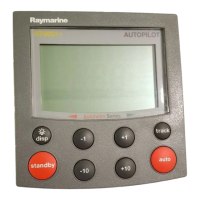
p70/p70R Pilot Controller
© 2016 Raymarine UK Limited
81355-2Document number:
05-2016Date:
English (EN)

Table of Contents

Other manuals for Raymarine p70r

Questions and Answers

  • T
    Tommy YuAug 18, 2025
    What to do if instrument data is unavailable on Raymarine Marine Equipment displays?
    • R
      randy68Aug 18, 2025
      If instrument, engine, or other system data isn't showing on any Raymarine Marine Equipment displays, start by checking the data bus wiring and connections to ensure they are properly connected. Also, verify the overall integrity of the data bus wiring. Confirm that the source of the missing data, such as an ST70 instrument or engine interface, is operational. Check the power to the SeaTalk bus. If these steps don't resolve the issue, there may be a software mismatch and you should contact Raymarine technical support.
  • A
    Alexander JonesAug 20, 2025
    Why my Raymarine Marine Equipment system does not start up?
    • B
      Brandon EvansAug 20, 2025
      If your Raymarine Marine Equipment system or part of it fails to start, begin by inspecting the relevant fuses and breakers. Ensure the power supply cable is in good condition, with tight, corrosion-free connections. Verify that the power source provides the correct voltage and sufficient current.
  • C
    Craig FosterAug 22, 2025
    What to do if Raymarine Marine Equipment display behaves erratically?
    • A
      Anna OrozcoAug 23, 2025
      If your Raymarine Marine Equipment display is behaving erratically with frequent resets or system crashes, check the fuses and breakers. Ensure the power supply cable is sound, with tight and corrosion-free connections, and that the power source provides the correct voltage and current. Make sure the front bezel is correctly fitted and all buttons operate freely. If problems persist, go to www.raymarine.com and click on support for the latest software downloads. As a last resort, perform a factory reset via Menu > System Setup > Settings and Data Reset, but remember this will erase stored settings and data; save important data to a CF card beforehand.
  • T
    Troy SantiagoAug 26, 2025
    What to do if my Raymarine Marine Equipment display behaves erratically?
    • K
      Kathleen CarrAug 26, 2025
      If your Raymarine Marine Equipment display behaves erratically with frequent unexpected resets or system crashes, first check the relevant fuses and breakers. If the issue persists, a factory reset may be needed. Be aware that this will erase all settings and data stored on the product, so save any important data to a memory card beforehand.
  • M
    Michelle PerezAug 27, 2025
    How to fix a Raymarine Marine Equipment that won't turn on?
    • J
      joann64Aug 27, 2025
      If your Raymarine Marine Equipment product does not turn on or keeps turning off, begin by checking the fuses, breakers, and their connections, replacing any that are blown or tripped. If fuses continue to blow, inspect for cable damage, broken connector pins, or incorrect wiring. Also, verify the power cable is securely inserted, check for damage or corrosion, and flex the cable to see if it causes a reboot. Ensure the vessel's battery voltage is adequate, and the terminals and cables are clean, secure, and free from corrosion. Finally, use a multi-meter to check for high voltage drop across connectors and fuses.
  • M
    Micheal SchwartzAug 30, 2025
    What to do if my Raymarine Marine Equipment won't boot up?
    • J
      jessica91Aug 30, 2025
      If your Raymarine Marine Equipment product will not boot up and is stuck in a reboot loop, check the power supply and connections as you would if the product wouldn't turn on at all. In case of software corruption, try re-flashing the latest software from the Raymarine website. As a last resort, perform a ‘Power on Reset’. Note: This will delete all settings, presets, and user data, reverting the unit to factory defaults.
  • A
    Ashley SmithSep 2, 2025
    Why is instrument data missing on all my Raymarine Marine Equipment displays?
    • A
      Alison SmithSep 2, 2025
      If instrument, engine, or other system data is unavailable on all Raymarine Marine Equipment displays, verify the data bus (e.g., SeaTalkng) wiring and connections, ensuring the overall integrity of the wiring. Check the source of the missing data, such as the ST70 instrument or engine interface, to ensure it is operating correctly. Also, check the power to the SeaTalk bus. If a software mismatch is suspected, contact Raymarine technical support.
  • T
    thurstSep 4, 2025
    How to troubleshoot missing data on some Raymarine Marine Equipment displays?
    • J
      Jason MooreSep 4, 2025
      If instrument or other system data is missing from some Raymarine Marine Equipment displays but not all, check that all required equipment is connected to the SeaTalkhs switch. Verify the status of the SeaTalkhs Switch and inspect SeaTalkhs cables for damage. If the issue persists, contact Raymarine technical support as there may be a software mismatch.
  • J
    joneskathleenSep 6, 2025
    Why is instrument data missing from all my Raymarine Marine Equipment displays?
    • M
      Melissa RivasSep 6, 2025
      If instrument, engine, or other system data is unavailable at all Raymarine Marine Equipment displays, check the data bus wiring and connections. Also, check the data source (e.g., instrument display or engine interface) to ensure it is operating correctly.
  • M
    Mark TorresSep 9, 2025
    Why is instrument data missing from some of my Raymarine Marine Equipment displays?
    • M
      Michael MorrisSep 9, 2025
      If instrument or other system data is missing from some, but not all, Raymarine Marine Equipment displays, check that all required equipment is connected to the network.

Summary

Important Information and Safety

Safety Warnings

Comprehensive list of warnings and precautions for safe operation and installation.

Product Handling and Environment

Information on TFT displays, water ingress, disclaimer, and disposal guidelines.

EMC and Installation Requirements

Guidance on minimizing interference and correct installation practices.

Compliance and Warranty

Declaration of conformity, warranty registration, and usage limitations.

Document and Product Information

Document Information

Details about the manual, applicable products, and software revision.

Product Overview

Description of the p70 and p70R controllers and their features.

Planning the Installation

Installation Checklist and Preparation

Steps for planning, tools required, and pack contents.

Compatibility and Software Updates

Compatible autopilot systems and software update procedures.

System Protocols

Overview of SeaTalkng, NMEA 2000, and SeaTalk data protocols.

Location Requirements and Dimensions

Factors for selecting an installation site and unit dimensions.

Cables and Connections

General Cabling Guidance

Best practices for cable routing, strain relief, and shielding.

Connections Overview

Identifying connectors and suitable cables for the unit.

SeaTalkng Power and Network

Power supply and connection methods for the SeaTalkng network.

SeaTalk and NMEA 2000 Connectivity

Connecting to SeaTalk and NMEA 2000 networks.

Installation

Mounting Procedures

Step-by-step guide for flush mounting the p70/p70R unit.

Getting Started

Pilot Controls and Functions

Layout and operation of p70/p70R buttons and rotary control.

Initial Power Up and Setup Wizard

Powering on, startup wizard, and basic configuration.

Pilot Modes Overview

Explanation of available autopilot modes like Auto, Track, Wind Vane.

Display and Data Settings

Adjusting brightness, color, and selecting preferred data sources.

Commissioning - Evolution Autopilot System

Installation and System Differences

Installation references and Evolution vs SPX commissioning.

Response Levels and Setup Wizard

Setting response levels, initial setup, and using the Set-up Wizard.

Dockside Calibration

Step-by-step calibration for vessels with/without rudder transducer.

Hard-Over Time and Compass Linearization

Setting hard-over time and initial compass calibration.

Compass Lock and System Monitoring

Locking settings and system adaptation for compass accuracy.

Commissioning - SPX and SmartPilot Systems

Installation and Response Levels

Installation references and pilot response adjustment.

Initial Setup and Power Up

Pre-requisites, commissioning process, and powering on the unit.

Set-up Wizard and Dockside Calibration

Using the setup wizard and dockside calibration procedures.

Sea Trial Calibration

Open water calibration steps including compass swing and auto learn.

Autopilot Operation Checks

Checking rudder gain, counter rudder, damping, and autoTrim settings.

Pilot Modes

Auto Mode Operations

Engaging and changing course in Auto mode.

Mode Menu and Fishing Patterns

Accessing different modes and using fishing patterns.

Track Mode Navigation

Navigating to waypoints and routes using Track mode.

Wind Vane Mode and AutoTack

Steering relative to wind and AutoTack functionality.

Power Steer and Jog Steer

Direct steering control and tiller pilot ram control.

Shortcut Key Assignment

Assigning pilot modes to the left soft button for quick access.

Pilot Views

Available Pilot Views

Listing of different display configurations.

Graphical and Rolling Road Views

Displaying compass, data, and track information.

Large, Standard, and 2 D Views

Different display layouts for heading and data display.

Multiple View and Data Box Customization

Configuring data boxes within display views.

Pilot Controller Alarms

Alarm Types and Actions

Detailed list of alarms, their causes, and recommended actions.

Set Up Menu Options

Set Up Menu Overview

General structure of the setup menu for controller configuration.

Autopilot Calibration Menus

Options for Vessel, Drive, Sailboat, and Commissioning settings.

User Preferences

Customizing time, date, units, language, and variation settings.

System Set-up and Diagnostics

Network groups, brightness, data sources, and system self-tests.

Maintenance

Routine Checks and Cleaning Practices

Regular checks and general product cleaning guidelines.

Display Screen and Case Care

Specific instructions for cleaning the screen and unit case.

Sun Cover Cleaning

Instructions for cleaning the supplied sun cover.

System Checks and Troubleshooting

General Troubleshooting Approach

General guidance for diagnosing and correcting problems.

Power Up and Data Issues

Troubleshooting startup problems and data unavailability.

Miscellaneous Issues and Resets

Erratic behavior, software issues, and factory reset procedure.

Technical Specification

Product Specifications

Electrical, environmental, display, and conformance details.

Technical Support

Product Support and Servicing

Contact information and service details for Raymarine products.

Learning Resources

Accessing video tutorials, training courses, and FAQs.

Spares and Accessories

Spare Parts List

List of available spare parts like bezels and sun covers.

SeaTalkng Cables and Kits

Various SeaTalkng cables, connectors, and kits.

SeaTalk Accessories

Accessories for the SeaTalk network.

Supported NMEA 2000 PGN List

Software Releases

Raymarine p70r Specifications

General IconGeneral
Display TypeLCD
Resolution320 x 240 pixels
Waterproof RatingIPX6
ConnectivitySeaTalkng
Operating Temperature-15°C to +55°C
TypeAutopilot Control Unit
CompatibilityRaymarine Autopilot Systems
Display Size3.5 inches
Operating Voltage10-32V DC

Related product manuals